Drone Authority · Comparison
DJI Neo 2 vs DJI Neo
Honest synthesis from researching published specs and owner feedback. We do not run a test lab.
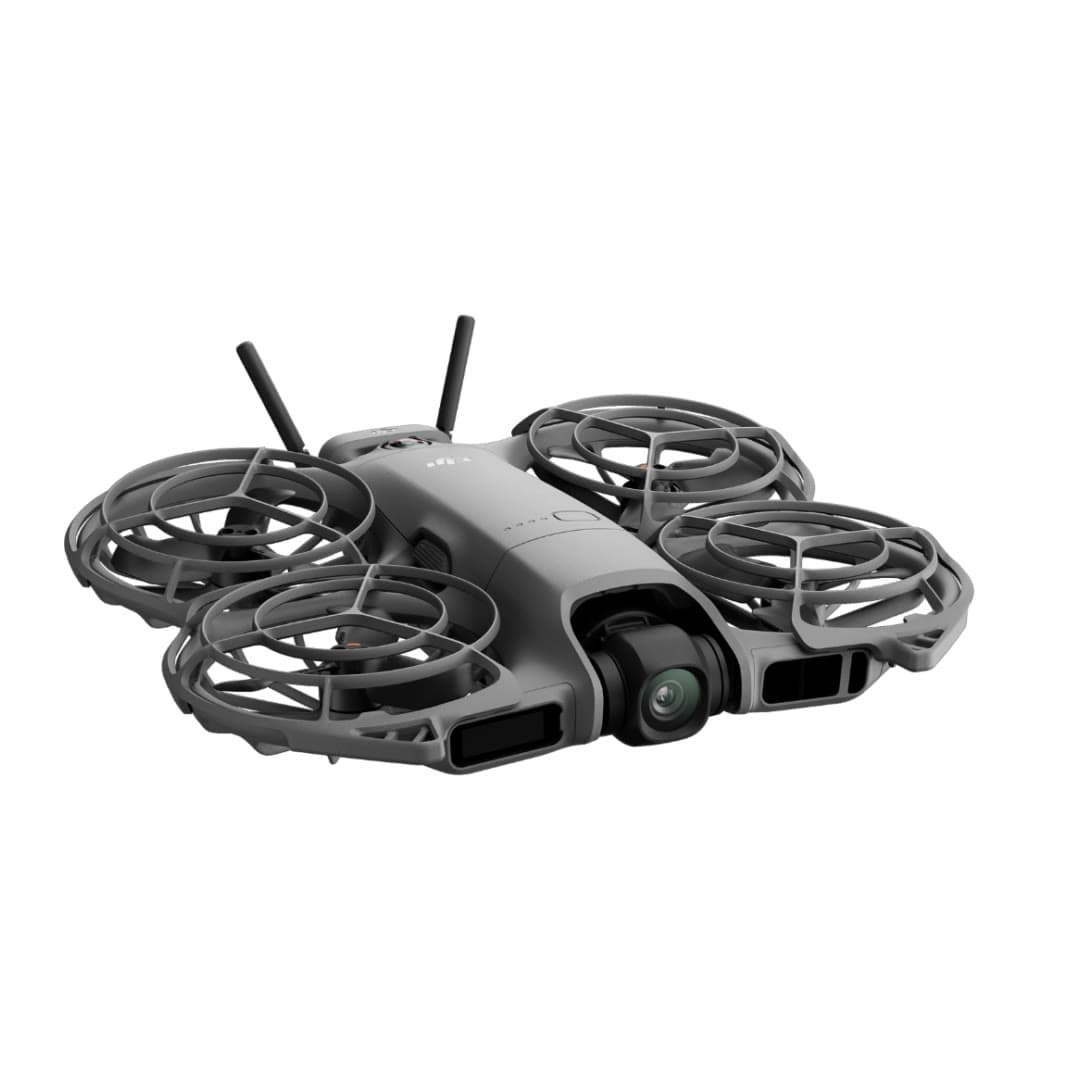
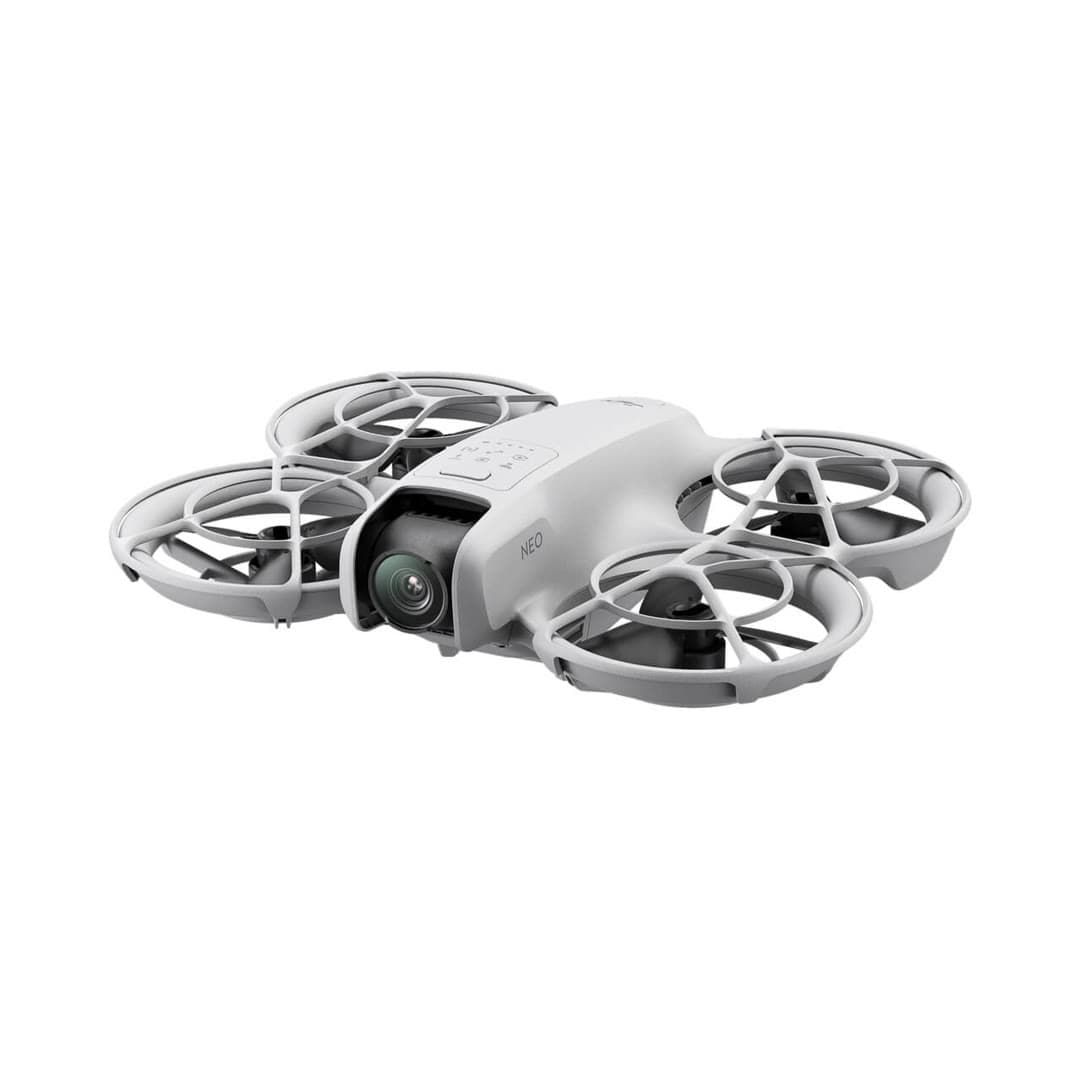
Neo 2 is a substantial capability upgrade, not a cosmetic refresh. It adds a two-axis gimbal, 4K/60, faster ActiveTrack, omnidirectional sensing with forward LiDAR, gesture control, and much more storage. The original Neo stays compelling when low cost and normal U.S. availability matter more than advanced tracking or obstacle sensing.
The short answer
The DJI Neo 2 is the meaningful hardware upgrade: it adds a two-axis gimbal, 4K/60, faster tracking, gesture control, return-to-palm, 49 GB of storage, and omnidirectional vision with forward LiDAR. Buy the original Neo when the lowest price and a normal U.S. purchase path matter most; buy Neo 2 through a carefully verified seller when automatic self-filming is central enough to justify the regional-support uncertainty.
Buying disclosure: price links in this comparison are affiliate links. If you buy through one, Drone Authority may earn a commission at no extra cost to you. Full disclosure
If tracking safety matters most
DJI Neo 2
Neo 2's omnidirectional sensing, LiDAR, and faster ActiveTrack create a much stronger autonomous follow system.
If you want the cheapest palm camera
DJI Neo
The original Neo keeps the core palm-launch experience at the lower catalog price band.
If you care about footage quality
DJI Neo 2
The two-axis gimbal and 4K/60 are meaningful upgrades over the original Neo's 4K/30 system.
If you want a straightforward U.S. purchase
DJI Neo
The original Neo has the more normal U.S. retail and support path; Neo 2 buyers must verify seller and region details.
If you fly under Part 107
DJI Neo 2
Both aircraft must be registered for Part 107 work, so the Neo 2's capability gains matter more than either model's recreational weight exemption.
| Spec | | |
|---|---|---|
| Takeoff weight / registration | 151 g; about 160 g with O4 transceiver | 135 g |
| Video and stabilization | 4K/60; 4K/100 slow motion; 2-axis gimbal | 4K/30; 1-axis gimbal |
| Tracking | ActiveTrack with Cycling; 12 m/s published max | Simpler tracking; 8 m/s published max |
| Obstacle sensing | Omnidirectional vision plus forward LiDAR | No obstacle sensing |
| Published flight time | 19 min max without the transceiver | 18 min max |
| Control options | Palm, gesture, phone, RC, motion controller, or goggles; transceiver required for RC/goggles | Palm, phone, RC, motion controller, or goggles |
| Published video link maximum | Wi-Fi 500 m; O4 10 km with the required hardware | Wi-Fi 50 m; O4 10 km with the required hardware |
| Internal storage | 49 GB | 22 GB |
| U.S. buying path / price band | No normal official U.S. launch; $300 - $400 catalog band | Established U.S. supply; $200 - $250 catalog band |
Highlighted cells mark our editorial pick for that row, based on researching published specs and owner feedback, not lab testing. A row with no highlight is a genuine toss-up. See each drone's full review for the detail behind these calls.
Either way, sort out the legal side first
Do I need a license to fly this?01
Neo 2 fixes the original model's largest constraints
The original Neo uses a one-axis mechanical tilt gimbal, records up to 4K/30, stores 22 GB internally, and relies on positioning sensors rather than an active omnidirectional obstacle-avoidance system. It remains effective for close palm-launched QuickShots and simple social clips.
Neo 2 moves to a two-axis gimbal, 4K/60 in normal use, controller-enabled 4K/100 slow motion, 49 GB of internal storage, and an omnidirectional monocular vision system supplemented by forward LiDAR and downward infrared sensing. These are DJI's published capabilities, not a claim that we conducted a controlled tracking test.
02
Tracking and sensing improve; pilot responsibility does not
DJI raises the published tracking-speed ceiling from 8 m/s on Neo to 12 m/s on Neo 2 and adds dedicated cycling behavior, gesture control, SelfieShot, and return-to-palm. That makes Neo 2 much closer to a self-contained follow camera for running and riding.
The new sensing system still depends on light, texture, direction, mode, and obstacle size. Thin twigs, wires, leaves, glare, low contrast, and fast closing speeds can defeat vision systems. Full propeller guards reduce some contact damage; they do not make unsupervised tracking through clutter safe.
03
Control-path and U.S. availability costs are easy to miss
Neo 2 weighs 151 grams without its digital transceiver and 160 grams with it. Palm, gesture, and phone control are built around close capture; the optional transceiver is needed for the O4 controller and goggles path. Budget for the actual control system rather than comparing drone-only prices.
Neo 2 has official DJI specifications and regional storefronts, but not a normal direct DJI U.S. retail launch. The original Neo has the simpler domestic ownership path. Both can qualify for the recreational sub-250-gram registration exception in standard configurations, while every Part 107 aircraft must be registered.
Evidence file
Sources behind this comparison
- DJIUSA (authorized DJI reseller): Neo 2 U.S. listing and specifications
Manufacturer weight, camera, gimbal, sensing, tracking, control, storage, and battery specifications.
- DJI Neo specifications
Manufacturer weight, camera, stabilization, control, and battery claims for the original aircraft.
- FAA drone registration guidance
Official U.S. registration rules for recreational and Part 107 flight.
Buyer questions
What usually decides it
- Is Neo 2 a big upgrade over Neo?
- Yes. The second gimbal axis, 4K/60, omnidirectional sensing with forward LiDAR, faster tracking, gesture control, return-to-palm, and larger internal storage address most of the original Neo's obvious limits.
- Does Neo 2 need the digital transceiver?
- Not for palm, gesture, or close phone control. The optional transceiver enables the O4 path used with compatible controllers and goggles, adds weight, and changes the complete system price.
- Do Neo and Neo 2 need FAA registration?
- Both are below 250 grams in the configurations discussed and can qualify for the exception when flown only for recreation. Every Part 107 aircraft must be registered, and all recreational pilots still need TRUST.
Keep comparing
The next useful matchups
DJI Neo vs Potensic Atom
These two sit at the bottom of the price ladder but aim at different jobs. The Neo is a hands-free selfie flyer in the DJI ecosystem; the Atom is a more traditional camera drone with a real mechanical gimbal and no DJI supply worries. Here is the breakdown.
Open comparison →DJI Neo vs DJI Flip
The Neo is the cheaper, lighter route to automatic clips of yourself. The Flip costs roughly twice as much because it is also a conventional camera drone: it adds a larger sensor, a three-axis gimbal, RAW photos, longer flights, and more wind margin. The right answer depends on whether you want a flying selfie camera or a compact aircraft for deliberate aerial photography.
Open comparison →DJI Neo 2 vs DJI Flip
Neo 2 is the better pocket follow camera: it is lighter, faster to deploy, easier to position with gestures, and equipped with broader obstacle sensing. Flip is the better camera drone: it records RAW photos and 10-bit D-Log M video through a three-axis gimbal, flies longer, and accepts microSD storage. Choose the Neo 2 when filming yourself is the main job; choose Flip when the files matter more than the setup time.
Open comparison →DJI Neo 2 vs DJI Mini 5 Pro
These are not cheaper and more expensive versions of the same drone. Neo 2 is a palm-launched follow camera made to film its owner with very little setup. Mini 5 Pro is a conventional camera drone built for deliberate framing, RAW photos, 10-bit video, longer flights, and stronger files. Buy for the footage you need to bring home, not for the newer badge.
Open comparison →Aircraft to operation
Before first launch
Buying the aircraft is one decision. Use this sequence to get from the box to a deliberate, legal first flight.
Aircraft under consideration
DJI Neo 2 and DJI Neo
DJI Neo 2: 151 g; 160 g with O4 transceiver · DJI Neo: 135 g (recreational registration exempt)
- 01Check registration
Aircraft status
Set the registration path
DJI Neo 2 and DJI Neo are listed below 250 g in these configurations. Recreational-only use may qualify for the weight exception, but every Part 107 aircraft must be registered.
- 02Start the airspace check
Launch location
Check the exact airspace
The aircraft does not decide whether a location is clear. Check the launch point, planned altitude, date, and time for controlled airspace, restrictions, and local launch rules.
- 03Check commercial requirements
Only when it is work
ConditionalDecide whether Part 107 applies
A small drone does not create a business-use exception. If the flight serves a client, employer, listing, monetized project, or another non-recreational purpose, check the Part 107 path first.
- 04Open the first-flight checklist
Props still off
Run the first-flight preflight
Confirm aircraft condition, firmware, battery health, controller link, home point, return-to-home settings, weather, people, obstacles, and the lost-link plan before takeoff.
Affiliate relationships do not determine our comparison winners. Read how we make money. Price bands were reviewed with the evidence above and can move quickly, especially for DJI products without a normal U.S. launch.