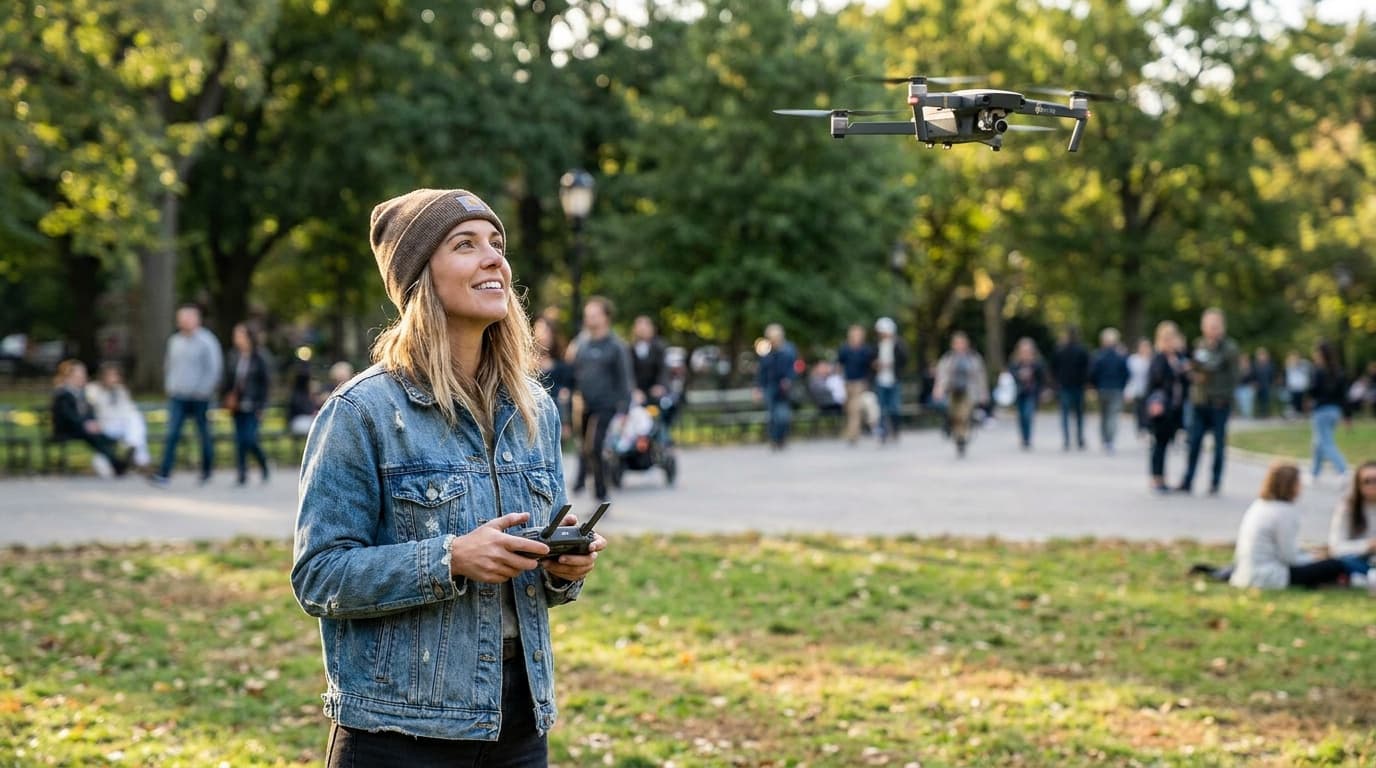
If you fly purely for enjoyment, you do not need a Part 107 license. You fly under the Exception for Limited Recreational Operations, Section 44809 of U.S. law. The trade for skipping the license: you must pass the free TRUST test and satisfy every condition that applies. If the flight does not fit the exception, it needs Part 107 or another applicable operating authority.
Key facts
- The exception
- 49 U.S.C. § 44809: Limited Recreational Operations
- Required test
- TRUST (free, online, questions correctable to 100%)
- License needed
- No Part 107, but TRUST is mandatory
- Registration
- Only for drones 250 g (0.55 lb) and heavier ($5, covers your whole fleet, 3 years)
- Remote ID
- Required for any drone that must be registered
- Altitude
- 400 ft above ground level in uncontrolled airspace
- What counts as recreational
- Purely personal enjoyment: no business or compensation
The TRUST test
TRUST is The Recreational UAS Safety Test. It is mandatory for every flyer operating under the recreational exception. Approved administrators let you correct every answer to 100 percent before issuing the completion certificate.
Free
No cost, ever. Offered by FAA-approved test administrators online.
Correctable to 100%
Review and correct every missed answer before the certificate is issued.
Online
FAA-approved administrators deliver the same FAA-developed education and test.
Carry the certificate
Save the completion certificate and present it if FAA or law enforcement asks.
Save the certificate before closing the page
Test administrators do not retain a certificate record. Download, print, or save the certificate immediately. If you lose it, the FAA directs you to retake TRUST.
The nine conditions of recreational flight
To stay under the exception, every one of these must be true. Miss one and the flight falls under Part 107 instead.
- 1
Fly only for recreational purposes: strictly personal enjoyment.
- 2
Follow the safety guidelines of an FAA-recognized community-based organization.
- 3
Keep the drone within your visual line of sight, or within sight of a visual observer beside you.
- 4
Never interfere with, and always yield to, any crewed aircraft.
- 5
Get prior FAA authorization before flying in controlled airspace, and stay within the authorized altitude and area.
- 6
In Class G uncontrolled airspace, stay at or below 400 feet above ground level.
- 7
Pass the TRUST test and carry proof of completion when you fly.
- 8
Register when required, mark the number outside, carry proof, and meet Remote ID unless an exception applies.
- 9
Do not operate in a way that endangers the safety of the national airspace system.
What counts as “recreational”?
The single test is whether the flight is for your own personal enjoyment and nothing else. The moment a flight touches a business purpose, you have left the exception.
Still recreational
- Flying around your yard or a park for fun
- Personal vacation footage you don't monetize
- Practicing flight skills as a hobby
Not recreational
- Footage for a client or your own business
- Volunteer imagery for an organization
- Photos for a listing, inspection, school, or nonprofit
These need Part 107 instead.
Tool
Do I need a license?
Two questions to confirm whether you're recreational or commercial.
Related rule
Registration
When the 250 g threshold kicks in and how to register at FAADroneZone.
Sources
Rules reviewed July 20, 2026; verify at faa.gov/uas. Educational, not legal advice.