The direct answer
No, do not deliberately fly up to a hawk, goose, or bear.
There is no single national wildlife radius that turns a close approach into a legal flight. Federal species laws, federal land rules, state harassment and hunting laws, local closures, and the animal's response can all control the operation. Part 107 and an airspace authorization only solve aviation questions. They are not wildlife permits.
Immediate abort signs
Looking up, alarm calling, freezing, bunching, leaving a nest or den, fleeing, flushing, charging, or attacking.
The three examples
The view from above. The rules from the ground.
They may all appear inside the same camera interface. Legally and behaviorally, they are not the same subject.
01 · Wildlife read
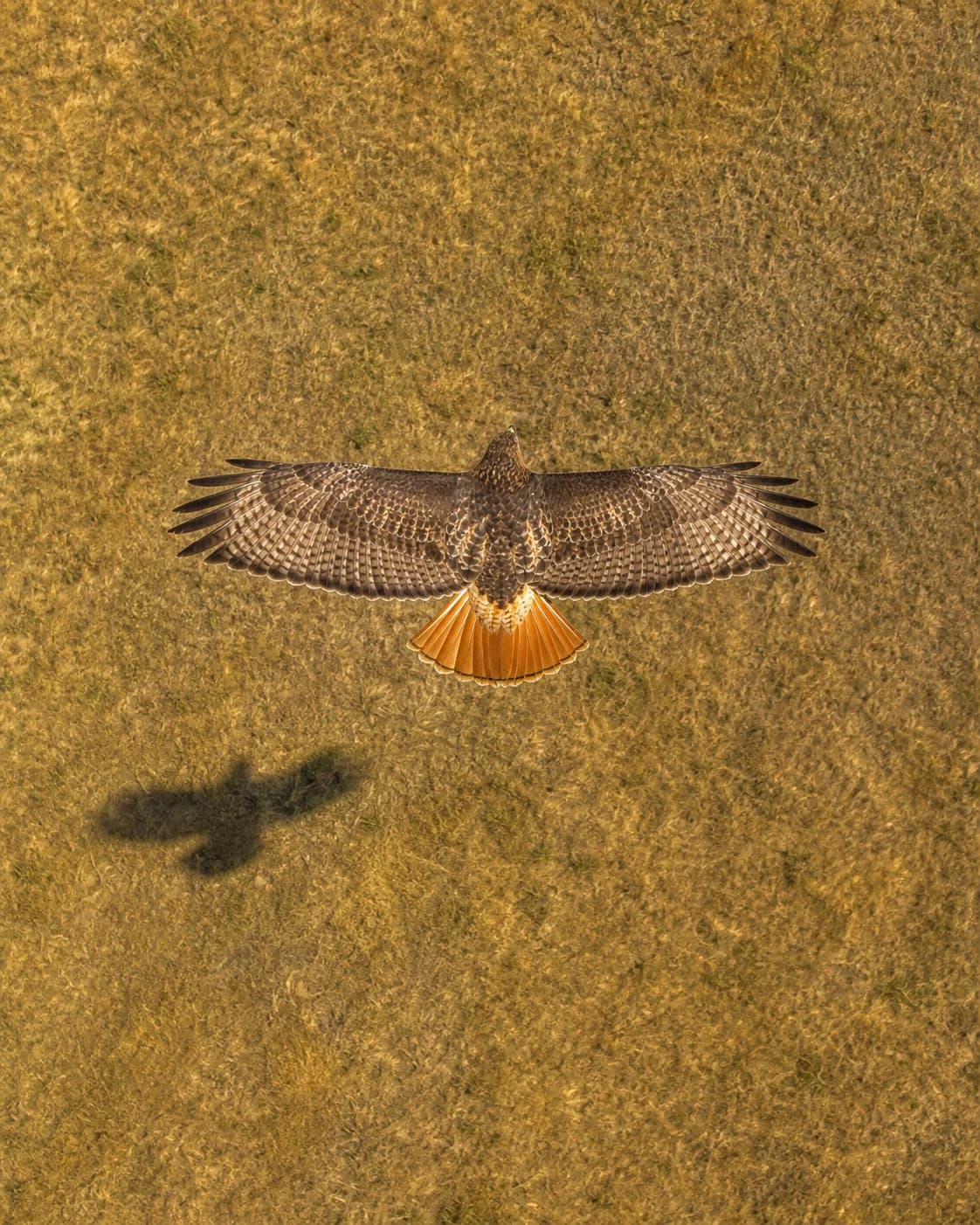
Hawk
Do not approach
Most native hawks are covered by the Migratory Bird Treaty Act. The federal statute is about unauthorized take, not every distant observation, but chasing or provoking a protected bird can create legal and safety problems. The FAA also warns that raptors may attack drones near nesting and hunting areas. Eagles have an additional, stricter disturbance law.
02 · Wildlife read
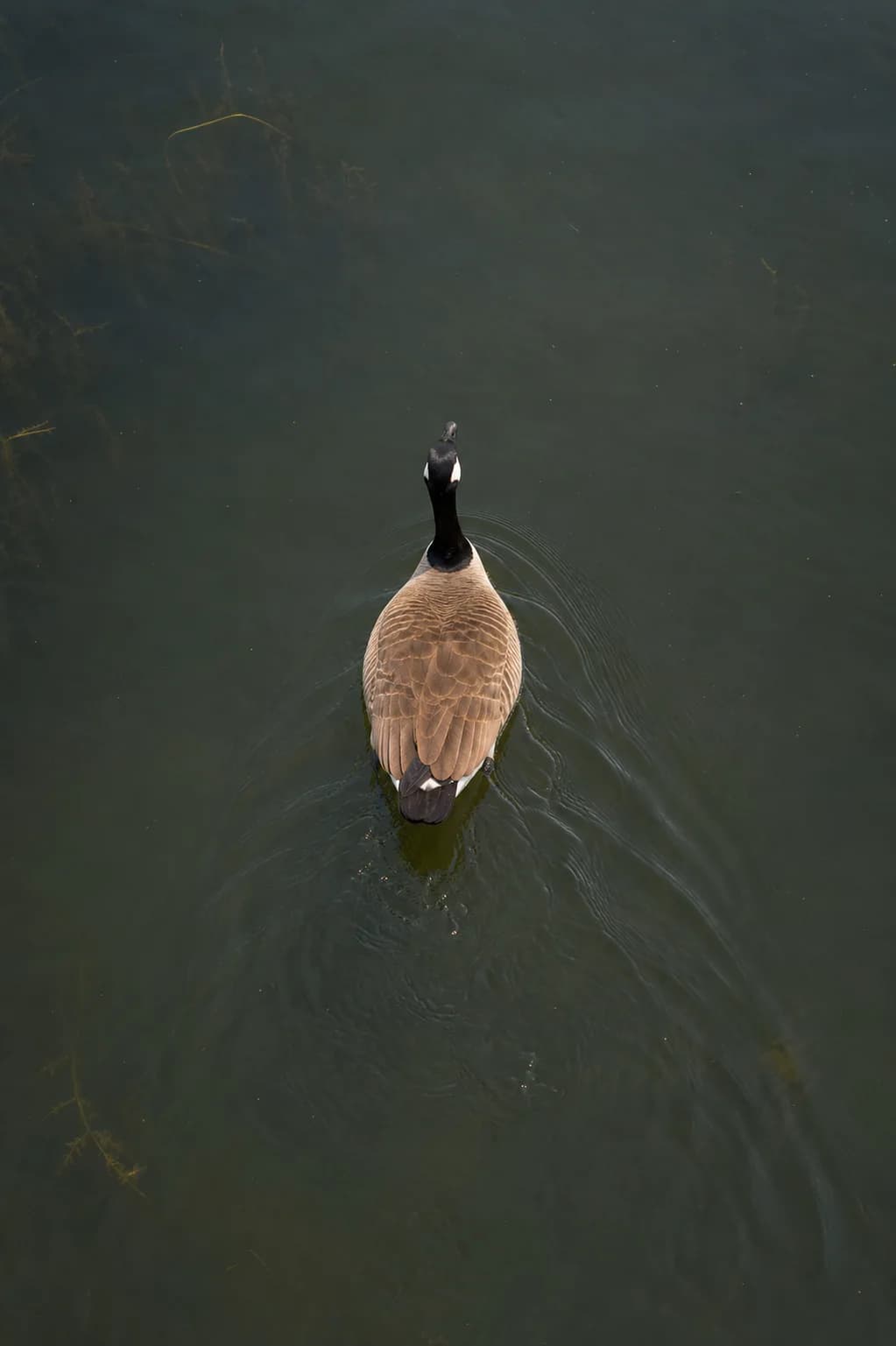
Goose
Do not chase, herd, or flush
Native geese and many other waterbirds are protected migratory birds. State wildlife rules may directly prohibit harassment or driving wildlife, and hunting rules commonly prohibit drone scouting. A goose that calls, bunches with the flock, walks away, or takes flight is not cooperating with the shot; it is telling you to leave.
03 · Wildlife read
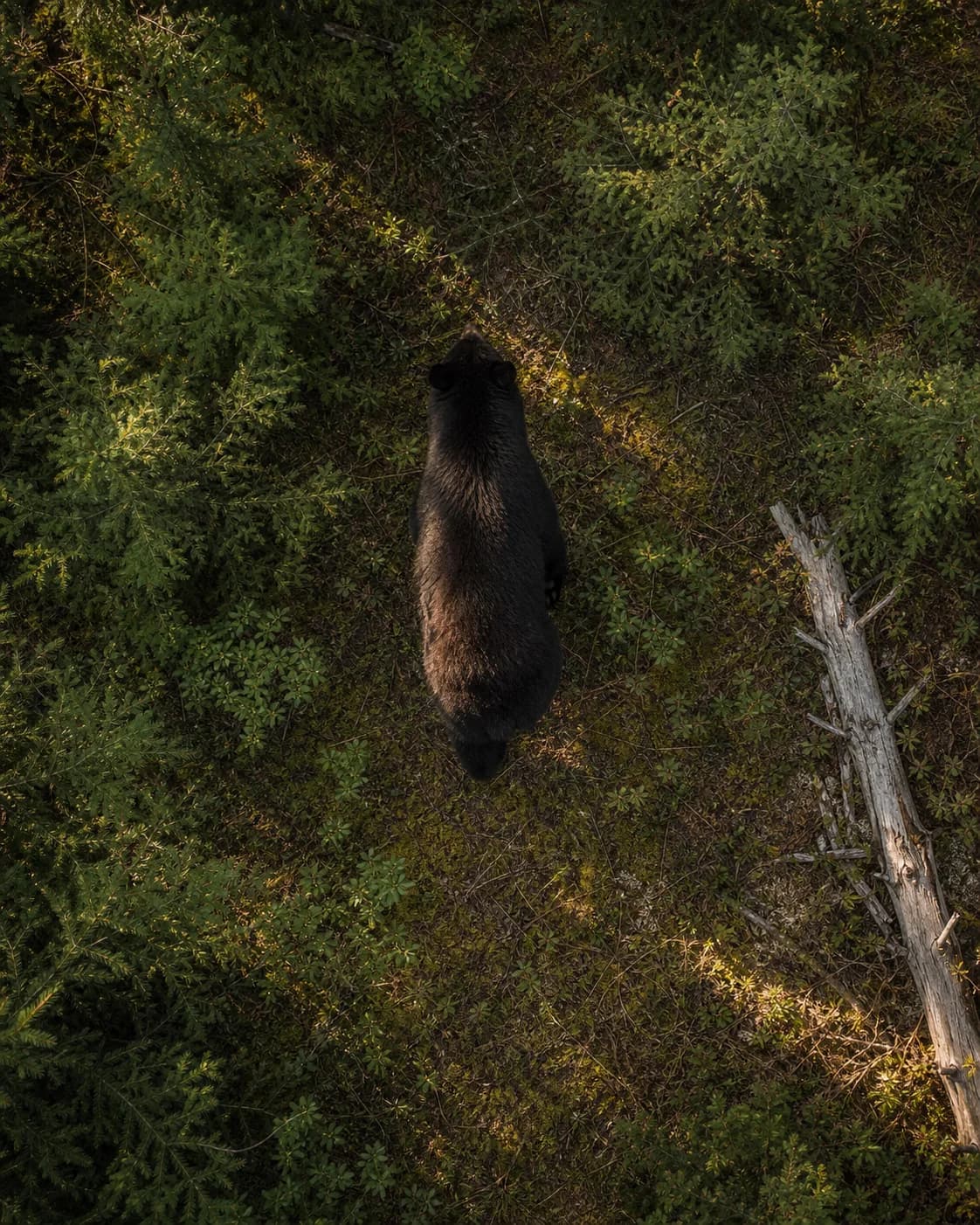
Bear
Do not track or hover over it
The bird laws are not the main issue, but state harassment and hunting rules, park or refuge closures, endangered-species protections where applicable, and site rules still can prohibit the flight. A drone can change feeding, travel, denning, or protective behavior without giving you a dramatic visible reaction.
Wildlife interaction check
Is this wildlife shot actually available?
Choose the animal, place, purpose, and observed response. This is a conservative planning screen, not a permit or legal clearance.
Default rule
Do not approach for the shot
Distant observation only
Do not fly up to the bird for a closer shot.
Most native hawks, geese, and other native birds are federally protected from unauthorized take, and state harassment laws may be broader. Raptors, geese, gulls, and crows may also attack a drone that enters a nesting or feeding area.
Start farther away, avoid nests and flocks, and leave before behavior changes.
Birds
Avoid nests, feeding flocks, colonies, and any pursuit.
Land mammals
Do not track, hover over, herd, or test their reaction.
Marine wildlife
NOAA viewing rules and federal harassment law apply.
The legal stack
Five layers can stop the same flight
- 01
FAA flight rules
Airspace, authorization, visual line of sight, altitude, people, aircraft safety, and temporary restrictions still apply. The FAA also says low-altitude UAS flights should avoid prolonged or repetitive operations near noise-sensitive areas and warns that raptors, geese, gulls, and crows may attack drones.
- 02
Federal species protections
The Migratory Bird Treaty Act protects listed native migratory birds from unauthorized take. The Bald and Golden Eagle Protection Act separately prohibits take that includes disturbing eagles at the statutory threshold. The Endangered Species Act defines take to include harass, harm, pursue, hunt, capture, or collect listed wildlife, subject to the rule that applies to the species. Marine mammals have their own federal harassment law.
- 03
The land manager
National wildlife refuges prohibit unauthorized takeoff, landing, and aircraft operation that disturbs wildlife. National Park Service units generally prohibit public launch, landing, or operation from park lands and waters. State wildlife areas, state parks, forests, tribal lands, and local preserves each have their own rules.
- 04
State wildlife and hunting law
State rules may prohibit intentional harassment, herding, driving, scouting, locating, pursuing, or aiding in the take of wildlife. California, for example, defines harassment around disruption of normal behavior and publishes drone-specific operating guidance. Colorado prohibits drone scouting as an aid to hunting. Those are examples, not a national rule.
- 05
Species, season, and observed behavior
A nesting colony, den, calving area, migration stop, feeding flock, mother with young, sick animal, or stressed animal calls for a larger buffer or no flight. A posted distance is a minimum. It does not authorize a flight that still causes disturbance.
About distance
Do not invent one universal number
Some rules and agency guidance use actual distances. Others turn on disturbance or harassment. California's wildlife agency, for example, recommends launching and landing at least 300 feet from wildlife and not flying lower than 100 feet over it. That is useful California guidance, not a nationwide safe harbor. NOAA generally recommends viewing whales, dolphins, porpoises, and seals from at least 1,000 feet away by air, with stricter rules for some species and regions. A 400-foot drone ceiling does not cancel a 1,000-foot wildlife separation; it means the shot may not be available to an ordinary drone operation.
Field protocol
Plan a route that avoids wildlife
Check the place before the species
Identify the land manager and read the unit rules. A wildlife refuge, national park, state wildlife area, beach closure, nesting island, or seasonal protection zone can end the plan before takeoff.
Look before arming
Scan for nests, dens, colonies, feeding flocks, young animals, migration activity, carcasses, and other signs. Ask the land manager about seasonal closures that may not appear in an airspace app.
Use a wildlife observer
Give one crew member the sole job of watching animals and calling the abort. The remote pilot still must maintain visual line of sight and yield to crewed aircraft.
Start distant and never close for a reaction
Use a longer lens, crop, or a different ground position. Do not use subject tracking to pursue an animal or repeat passes to get it to look at the camera.
Pre-commit the abort signs
Stop at attention, alarm calls, posture change, interrupted feeding or nursing, movement away, bunching, flushing, charging, or attack. The goal is to leave before the behavior escalates.
Do not publish sensitive locations casually
Nest, den, roost, rare-species, rehabilitation, and research locations can attract more disturbance. Generalize or withhold coordinates when disclosure creates a conservation risk.
If the frame you want needs to be closer than the buffers allow, the answer is usually not a drone at all: a ground position and a long lens get the intimate shot without the disturbance. Our sister site Aperture Authority's wildlife photography guide covers the telephoto technique, settings, and fieldcraft for exactly that approach.
Research and commercial work
A good purpose is not an automatic exception
Conservation surveys, documentaries, damage control, news, and public-safety work can require land-use authorization, state scientific permits, federal migratory-bird or eagle permits, endangered-species authorization, NOAA marine mammal permits, tribal approval, and an agency-approved disturbance protocol. Part 107 covers the aircraft operation. It does not authorize wildlife take.
Document the species, season, permit, observer, buffer, abort criteria, flight path, data handling, and responsible agency before launch.
Continue planning
Put the rule into the rest of the mission
Primary sources
Verify the exact animal and place before flight
- FAA Aeronautical Information Manual, UAS environmental best practices
- U.S. Fish and Wildlife Service, Migratory Bird Treaty Act
- 50 CFR 10.13, protected migratory bird list
- 50 CFR 10.12, wildlife definitions including take
- U.S. Fish and Wildlife Service, Bald and Golden Eagle Protection Act
- U.S. Fish and Wildlife Service, national wildlife refuge drone FAQ
- U.S. Fish and Wildlife Service, Endangered Species Act definition of take
- National Park Service, uncrewed aircraft systems
- NOAA Fisheries, marine life viewing guidelines
- California Department of Fish and Wildlife, legal and responsible drone operations
- Colorado Parks and Wildlife, hunting and wildlife rules
Reviewed September 27, 2026. Wildlife rules vary by species, season, land unit, state, tribe, and purpose. This guide is educational and is not legal advice or flight authorization.