Drone Authority · Comparison
DJI Neo 2 vs DJI Flip
Honest synthesis from researching published specs and owner feedback. We do not run a test lab.
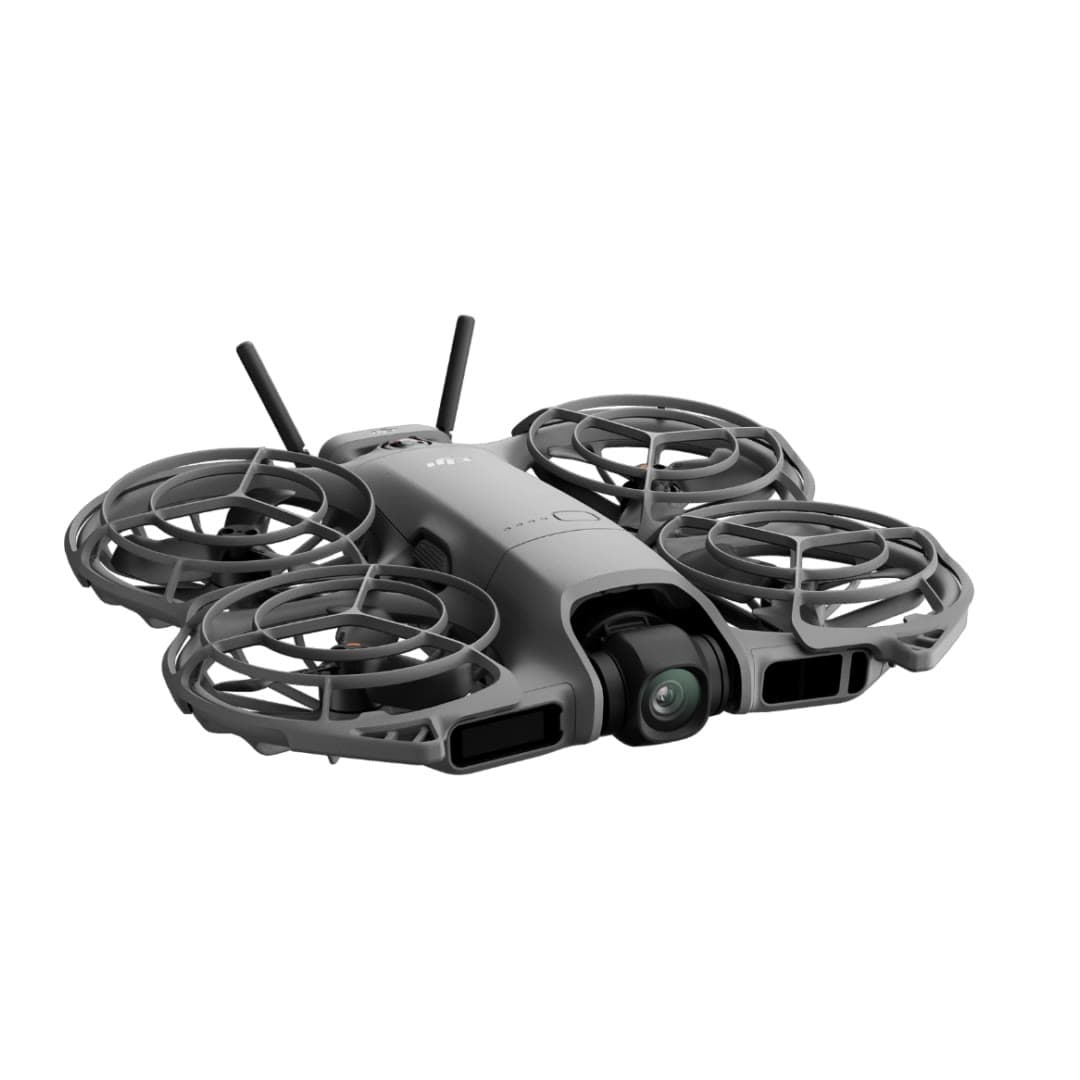
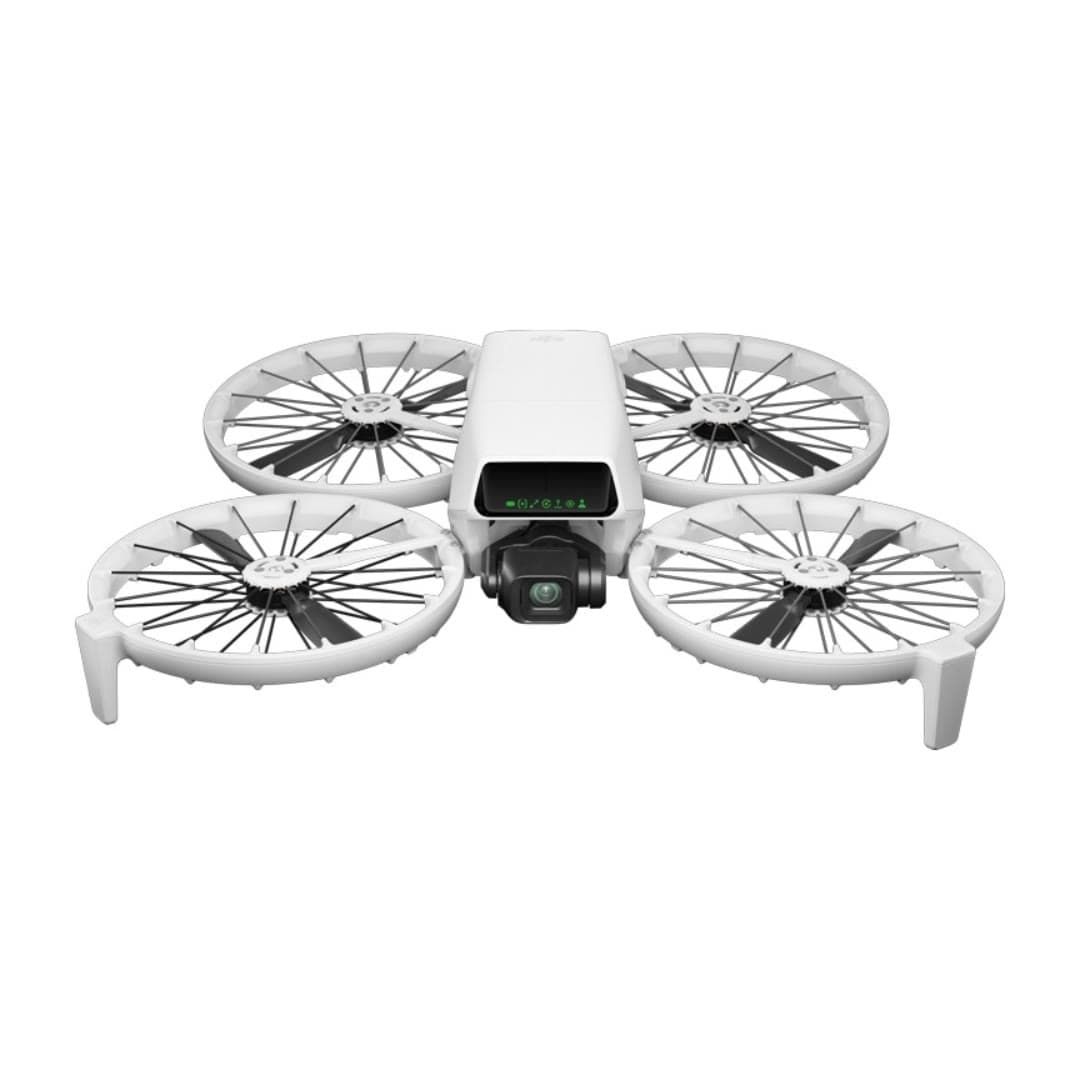
Neo 2 is the better pocket follow camera: it is lighter, faster to deploy, easier to position with gestures, and equipped with broader obstacle sensing. Flip is the better camera drone: it records RAW photos and 10-bit D-Log M video through a three-axis gimbal, flies longer, and accepts microSD storage. Choose the Neo 2 when filming yourself is the main job; choose Flip when the files matter more than the setup time.
The short answer
Buy the DJI Neo 2 when you want the smallest, fastest route to filming yourself. It adds gesture control, broader sensing, a protected fixed body, and an optional FPV path at 151 grams. Buy the DJI Flip when you want the stronger camera and a longer conventional flight: its 1/1.3-inch sensor, RAW photos, 10-bit D-Log M, three-axis gimbal, 31-minute published endurance, and microSD slot produce a much more flexible capture system.
Buying disclosure: price links in this comparison are affiliate links. If you buy through one, Drone Authority may earn a commission at no extra cost to you. Full disclosure
If you need to be in the shot
DJI Neo 2
Neo 2 is smaller, supports gesture positioning, and is built around getting a solo follow shot into the air with almost no setup.
If you want the stronger photo and video files
DJI Flip
Flip adds a larger sensor, RAW stills, 10-bit D-Log M, a higher bitrate, and a three-axis gimbal.
If you are nervous about tracking near obstacles
DJI Neo 2
Neo 2 has broader published sensing coverage, though neither aircraft can reliably detect every wire, branch, leaf, or low-contrast surface.
If one battery needs to cover several planned shots
DJI Flip
Flip's published 31-minute ceiling gives it much more scheduling margin than Neo 2's 19-minute maximum.
If you want to try FPV later
DJI Neo 2
Neo 2 can join a compatible goggles and motion-controller setup after adding the required digital transceiver.
If you want the simpler U.S. purchase
DJI Flip
Flip has the more established domestic buying path; Neo 2 buyers need to scrutinize region, bundle, returns, and support.
| Spec | | |
|---|---|---|
| Primary job | Fast self-filming, follow shots, and optional FPV | Guarded beginner camera drone and aerial photography |
| Takeoff weight | 151 g; 160 g with O4 transceiver | Under 249 g in the standard configuration |
| Camera | 1/2in, 12 MP; 4K/60 and controller-enabled 4K/100 | 1/1.3in, 48 MP; 4K/60 HDR and 4K/100 |
| Photo and color workflow | JPEG photos; Normal color | JPEG/DNG; 10-bit D-Log M |
| Gimbal | 2-axis mechanical plus electronic stabilization | 3-axis mechanical |
| Controller-free capture | Palm, gesture, or phone control | Palm, phone, or voice control |
| Obstacle sensing | Omnidirectional monocular vision plus forward LiDAR | Forward 3D infrared plus downward visual and infrared positioning |
| Published flight time | 19 min maximum; 17 min with propeller guards | 31 min maximum; 28 min maximum hover |
| Published wind resistance | 10.7 m/s | 10.7 m/s |
| Storage | 49 GB internal; no microSD | 2 GB internal plus microSD |
| Remote and goggles path | Optional transceiver enables O4 remotes, motion control, and compatible goggles | O4 remotes supported; no FPV goggles path |
| U.S. buying path | No normal official U.S. launch; verify seller, region, returns, and support | Established U.S. listings; verify current stock, seller, and warranty |
| Typical catalog price band | $300 - $400 | $440 - $520 |
Highlighted cells mark our editorial pick for that row, based on researching published specs and owner feedback, not lab testing. A row with no highlight is a genuine toss-up. See each drone's full review for the detail behind these calls.
Either way, sort out the legal side first
Do I need a license to fly this?01
The file matters more than the shared 4K label
Neo 2 uses a 1/2-inch 12-megapixel sensor, records JPEG stills and Normal-color video, and stabilizes the image with a two-axis mechanical gimbal plus electronic correction. DJI publishes 4K/60 in ordinary use and 4K/100 when the aircraft is paired with compatible motion or remote control. The output is designed for quick social clips and automatic follow shots rather than extensive color work or still-photo recovery.
Flip uses a larger 1/1.3-inch 48-megapixel sensor, records JPEG and DNG stills, offers 10-bit D-Log M, reaches 4K/100, and raises the maximum bitrate to 150 Mbps. Its three-axis gimbal removes another stabilization compromise. The larger file set is the reason to pay more: Flip gives a photographer or editor more control after landing, not merely a higher number on the box.
02
Both can fly without a controller, but Neo 2 goes further
Flip is not controller-only. DJI documents palm launch, phone control, voice control, and automatic modes including Follow, Dronie, Circle, Rocket, Spotlight, and DirectionTrack. A compatible O4 remote changes it into a conventional GPS camera drone with manual framing and a stronger link.
Neo 2 adds gesture positioning, return-to-palm, and a control path that can extend from phone use to a compatible remote, motion controller, or goggles after fitting the required digital transceiver. That makes Neo 2 the more adaptable self-filming aircraft. Flip remains the better choice when controller-free capture is useful but the same trip also needs deliberate landscapes, RAW photos, and longer manual flights.
03
Sensing coverage and propeller guards solve different risks
Neo 2 publishes omnidirectional monocular vision, forward LiDAR, and downward infrared sensing. Flip publishes forward 3D infrared sensing plus downward visual and infrared positioning. Flip's folding full-coverage guards reduce exposed-propeller contact, while Neo 2's broader sensing covers more approach directions. Neither system makes automatic tracking safe through clutter.
DJI says Flip's automatic braking is limited by mode and that intelligent functions, including subject tracking, do not support obstacle avoidance. Neo 2 sensing also depends on light, texture, direction, speed, firmware, and obstacle size. Thin branches, wires, leaves, reflective water, and low-contrast surfaces remain route-planning problems on both aircraft.
04
Flip gives a day outside much more scheduling margin
DJI publishes a 19-minute maximum for Neo 2 without the digital transceiver and about 17 minutes with the additional propeller guards. Independent Neo 2 testing cited in our full review reported materially shorter practical sessions with the transceiver attached. A useful Neo 2 day therefore depends on spare batteries and short, intentional takes.
Flip publishes up to 31 minutes of flight time and 28 minutes of hover time under controlled conditions. Its 2 GB of internal storage is only an emergency buffer, but the microSD slot makes long days easier to manage. Neo 2 reverses that arrangement with 49 GB built in and no removable-card path. Flip wins for repeated planned shots; Neo 2 keeps quick capture self-contained.
05
Range figures do not create a legal mission radius
Neo 2 uses a phone Wi-Fi link by default and can add O4 through its digital transceiver. Flip supports O4 remotes directly. Published transmission maxima describe controlled communication tests, not a distance a pilot may automatically use in the United States.
Under 14 CFR 107.31, the remote pilot, person manipulating the controls, or visual observer must be able to see the aircraft throughout a standard Part 107 flight. Recreational flyers also operate under a visual-line-of-sight rule. A stronger link adds interference margin and a steadier live view; it does not replace the pilot's legal and practical ability to see the drone.
06
U.S. availability changes the apparent price gap
Flip has an established U.S. retail history, while Neo 2 did not receive a normal direct DJI U.S. launch. A Neo 2 listing can vary by region, included transceiver, controller compatibility, charger, return policy, DJI Care eligibility, warranty route, and firmware support. Compare complete working kits, not drone-only prices.
Both aircraft are published below 250 grams in their standard configurations and can qualify for the recreational registration exception when the flight is exclusively recreational. Every aircraft flown under Part 107 must be registered. For registered use, verify the exact Remote ID declaration, serial, firmware, and any broadcast-module requirement rather than assuming a global DJI model automatically follows the same U.S. compliance path.
Evidence file
Sources behind this comparison
- DJIUSA (authorized DJI reseller): Neo 2 U.S. listing and specifications
Manufacturer weight, camera, gimbal, sensing, tracking, control, storage, endurance, wind, and transmission claims.
- DJI Flip specifications
Manufacturer weight, camera, files, gimbal, storage, sensing, endurance, wind, and transmission claims.
- DJI Flip FAQ
Manufacturer control methods, automatic modes, braking limits, controller compatibility, and palm-capture guidance.
- TechRadar DJI Neo 2 review
Independent week-long review covering tracking, image quality, sensing, storage, and U.S. launch status.
- TechRadar DJI Flip review
Independent handling, image-quality, wind-performance, bundle, and beginner-use assessment.
- Recent Neo 2 and Flip buyer discussion
Buyer and owner discussion used to identify the recurring camera, battery, portability, sensing, and controller questions; not treated as a specification source.
- FAA drone registration guidance
Official U.S. distinction between the sub-250-gram recreational exception and mandatory Part 107 registration.
- 14 CFR 107.31: visual line of sight
Current federal visual-line-of-sight requirement for small UAS operations under Part 107.
- FAA Remote ID guidance
Official Standard Remote ID, broadcast-module, and FRIA operating paths for registered aircraft.
Buyer questions
What usually decides it
- Is DJI Neo 2 better than DJI Flip?
- Neo 2 is better for instant self-filming, gesture control, broader sensing coverage, low carried weight, and optional FPV use. Flip is better for photo and video quality, longer flights, removable storage, and conventional camera-drone work. The better aircraft depends on whether you value the shot setup or the master file more.
- Which is better for a first drone?
- Neo 2 is the easier first self-filming camera because it can launch from a palm and position through gestures. Flip is the better first camera drone because it supports simple palm capture while also teaching conventional controller flight, exposure, RAW photography, and deliberate framing.
- Which has better image quality?
- DJI Flip. It combines a larger 1/1.3-inch sensor, 48-megapixel DNG stills, 10-bit D-Log M video, a 150 Mbps ceiling, and a three-axis gimbal. Neo 2 records useful social footage but has less room for color correction, still recovery, and complex motion.
- Which is better for follow shots?
- Neo 2 is the more complete follow-camera system because of its gesture control, return-to-palm behavior, compact fixed body, broader published sensing, and optional goggles path. Flip can follow without a controller, but DJI says its tracking modes do not support obstacle avoidance, so use either aircraft only on a visible, open route.
- Do Neo 2 and Flip need FAA registration?
- A standard configuration of either aircraft can qualify for the sub-250-gram exception when flown only for recreation. Every Part 107 aircraft must be registered regardless of weight. Added equipment can change weight, and registered use also requires a verified Remote ID path unless a specific exception applies.
- Which is better for hiking or travel?
- Neo 2 is easier to carry and faster to deploy for short clips of the traveler. Flip is the better choice when the trip deserves RAW photos, graded video, longer aerial passes, or several planned compositions. Three Neo 2 batteries can be more useful than one Flip battery, so compare complete kits rather than aircraft alone.
Keep comparing
The next useful matchups
DJI Neo vs DJI Flip
The Neo is the cheaper, lighter route to automatic clips of yourself. The Flip costs roughly twice as much because it is also a conventional camera drone: it adds a larger sensor, a three-axis gimbal, RAW photos, longer flights, and more wind margin. The right answer depends on whether you want a flying selfie camera or a compact aircraft for deliberate aerial photography.
Open comparison →DJI Flip vs DJI Mini 4 Pro
These two share a 1/1.3-inch sensor and can stay under 249 g in standard configurations, but they are not interchangeable cameras. The Flip prioritizes guarded palm-launch automation and price. The Mini 4 Pro adds omnidirectional sensing, native vertical capture, longer endurance, and the more flexible manual-flight workflow.
Open comparison →DJI Neo 2 vs DJI Mini 5 Pro
These are not cheaper and more expensive versions of the same drone. Neo 2 is a palm-launched follow camera made to film its owner with very little setup. Mini 5 Pro is a conventional camera drone built for deliberate framing, RAW photos, 10-bit video, longer flights, and stronger files. Buy for the footage you need to bring home, not for the newer badge.
Open comparison →DJI Neo 2 vs DJI Neo
Neo 2 is a substantial capability upgrade, not a cosmetic refresh. It adds a two-axis gimbal, 4K/60, faster ActiveTrack, omnidirectional sensing with forward LiDAR, gesture control, and much more storage. The original Neo stays compelling when low cost and normal U.S. availability matter more than advanced tracking or obstacle sensing.
Open comparison →Aircraft to operation
Before first launch
Buying the aircraft is one decision. Use this sequence to get from the box to a deliberate, legal first flight.
Aircraft under consideration
DJI Neo 2 and DJI Flip
DJI Neo 2: 151 g; 160 g with O4 transceiver · DJI Flip: Under 249 g
- 01Check registration
Aircraft status
Set the registration path
DJI Neo 2 and DJI Flip are listed below 250 g in these configurations. Recreational-only use may qualify for the weight exception, but every Part 107 aircraft must be registered.
- 02Start the airspace check
Launch location
Check the exact airspace
The aircraft does not decide whether a location is clear. Check the launch point, planned altitude, date, and time for controlled airspace, restrictions, and local launch rules.
- 03Check commercial requirements
Only when it is work
ConditionalDecide whether Part 107 applies
A small drone does not create a business-use exception. If the flight serves a client, employer, listing, monetized project, or another non-recreational purpose, check the Part 107 path first.
- 04Open the first-flight checklist
Props still off
Run the first-flight preflight
Confirm aircraft condition, firmware, battery health, controller link, home point, return-to-home settings, weather, people, obstacles, and the lost-link plan before takeoff.
Affiliate relationships do not determine our comparison winners. Read how we make money. Price bands were reviewed with the evidence above and can move quickly, especially for DJI products without a normal U.S. launch.