Drone Authority · Comparison
DJI Neo 2 vs DJI Mini 5 Pro
Honest synthesis from researching published specs and owner feedback. We do not run a test lab.
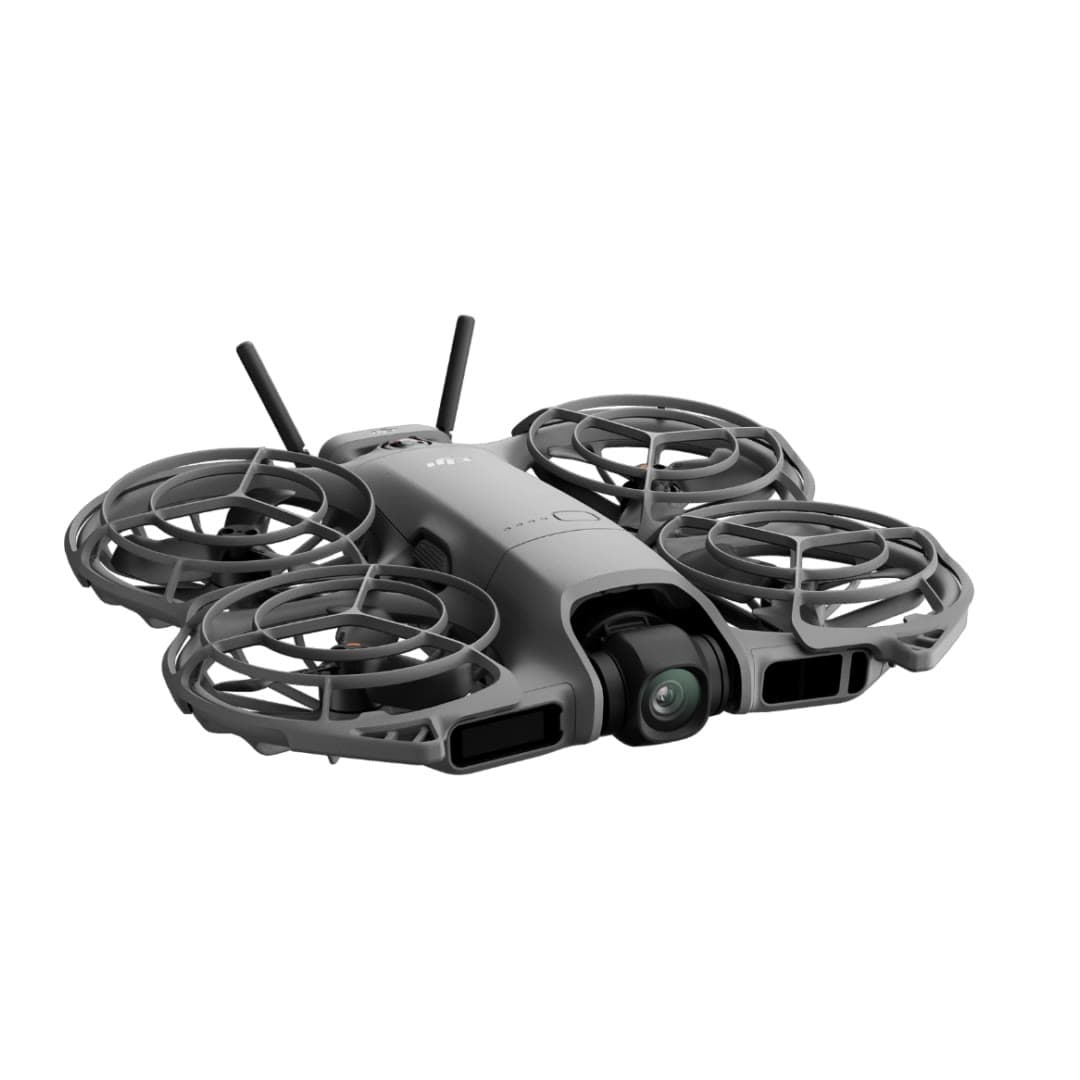
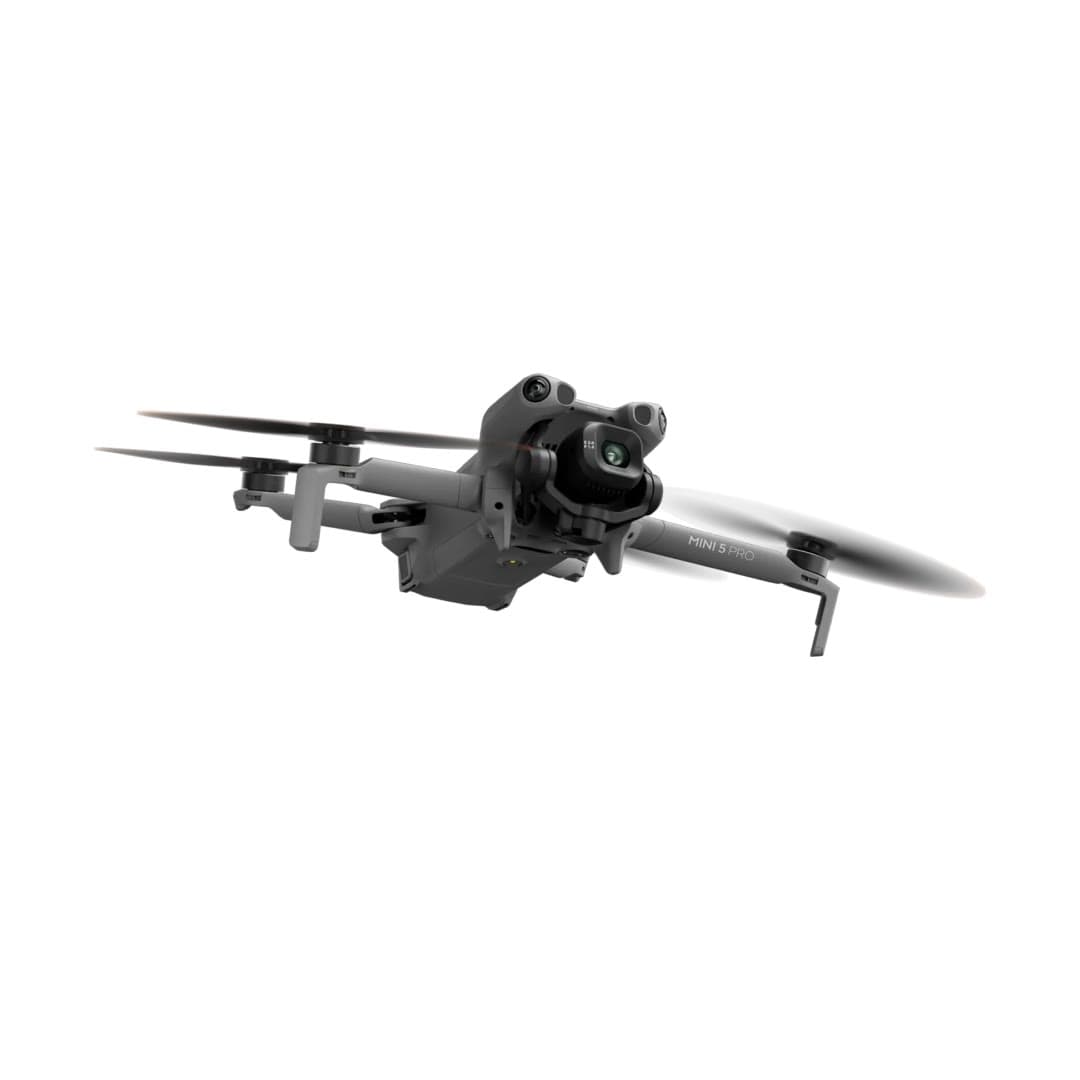
These are not cheaper and more expensive versions of the same drone. Neo 2 is a palm-launched follow camera made to film its owner with very little setup. Mini 5 Pro is a conventional camera drone built for deliberate framing, RAW photos, 10-bit video, longer flights, and stronger files. Buy for the footage you need to bring home, not for the newer badge.
The short answer
Buy the DJI Neo 2 when the point is to film yourself: it launches from a palm, tracks without a conventional remote, costs far less, and is comfortably below 250 grams in its published configurations. Buy the DJI Mini 5 Pro when the point is the image: its 1-inch sensor, RAW photos, 10-bit color, three-axis gimbal, longer endurance, and removable storage make it the serious camera platform. They overlap in tracking, but they do not solve the same shooting problem.
Buying disclosure: price links in this comparison are affiliate links. If you buy through one, Drone Authority may earn a commission at no extra cost to you. Full disclosure
If you need to be in the shot
DJI Neo 2
Neo 2 can launch from your palm and follow through gesture or phone control, so solo capture is the product rather than an extra mode.
If the finished image matters most
DJI Mini 5 Pro
The 1-inch sensor, RAW photos, 10-bit profiles, higher bitrate, and three-axis gimbal give Mini 5 Pro a much stronger capture and editing pipeline.
If you are learning to fly a camera drone
DJI Mini 5 Pro
Mini 5 Pro teaches the controller, framing, exposure, route planning, and file workflow used for deliberate aerial work.
If you want quick travel and family clips
DJI Neo 2
Neo 2 removes the controller setup and gets a usable follow shot before a conventional camera drone is even ready.
If you plan to deliver paid photo or video work
DJI Mini 5 Pro
Mini 5 Pro is the more capable production platform. Both aircraft still require FAA registration when operated under Part 107.
| Spec | | |
|---|---|---|
| Primary job | Hands-free self-filming and follow shots | Planned aerial photography and video |
| Camera | 1/2in, 12 MP; 4K/60 and controller-enabled 4K/100 | 1in, 50 MP; 4K/60 HDR and 4K/120 |
| Photo and color workflow | JPEG photos; Normal color | JPEG/DNG; 10-bit D-Log M and HLG |
| Gimbal | 2-axis mechanical plus electronic stabilization | 3-axis; true vertical capture; 225-degree roll range |
| Self-filming setup | Palm, gesture, or phone control without a remote | Controller-based flight with ActiveTrack 360 |
| Obstacle sensing | Omnidirectional monocular vision plus forward LiDAR | Omnidirectional binocular vision plus forward LiDAR |
| Published endurance | 19 min maximum; 17 min with propeller guards | 36 min maximum / 21 min typical; Plus 52 / 33 |
| Published wind resistance | 10.7 m/s | 12 m/s |
| Storage | 49 GB internal; no microSD | 42 GB internal plus microSD |
| Weight / U.S. registration | 151 g; 160 g with transceiver; recreational exception possible | Approx. 249.9 g +/- 4 g; weigh the aircraft before relying on the exception |
| Published transmission ceiling | Wi-Fi standard; optional O4 up to 10 km FCC | O4+ up to 20 km FCC |
| U.S. buying path | No normal official U.S. launch; verify seller, region, and support | No normal official U.S. launch; verify seller, region, and support |
| Typical catalog price band | $300 - $400 | $759 - $1,159 |
Highlighted cells mark our editorial pick for that row, based on researching published specs and owner feedback, not lab testing. A row with no highlight is a genuine toss-up. See each drone's full review for the detail behind these calls.
Either way, sort out the legal side first
Do I need a license to fly this?01
The job decides this before the specification table
Neo 2 is a self-filming camera that happens to fly. Palm takeoff, gesture control, phone control, automatic shot modes, and return-to-palm let one person record a walk, run, ride, or family moment without first building a controller-based flight plan. The enclosed form and low weight also make it easier to carry for a shot that may last only a minute.
Mini 5 Pro is a camera aircraft. The pilot controls position, altitude, lens direction, exposure, and route through a conventional remote, then brings home files intended for selection and editing. ActiveTrack can follow a subject, but it sits inside that larger piloting workflow. The extra setup is worthwhile when composition and the final deliverable matter more than appearing in the frame quickly.
02
Mini 5 Pro records a much stronger master file
DJI specifies a 1/2-inch 12-megapixel sensor, JPEG photos, Normal color, an 80 Mbps maximum bitrate, and a two-axis gimbal for Neo 2. It records 4K/60 in normal use and can reach 4K/100 when paired with motion or remote control. That is a large improvement over the original Neo, but the file is still designed for quick delivery rather than extensive grading or still-photo recovery.
Mini 5 Pro uses a 1-inch 50-megapixel sensor, records DNG stills and 10-bit D-Log M or HLG video, reaches 4K/120, and raises the published encoding ceiling to 130 Mbps. Its three-axis gimbal supports native vertical capture and a 225-degree roll range. WIRED's independent review reported strong shadow and highlight detail in testing. We have not yet published a controlled Drone Authority image comparison, so the verdict separates documented capability and independent observations from our own future field work.
03
Neo 2 wins when nobody is holding the controller
A higher tracking-speed number does not automatically make the better follow camera. DJI publishes a 12 m/s tracking ceiling for Neo 2 and 15 m/s for Mini 5 Pro, but Neo 2 is organized around selecting the subject, launch direction, distance, and shot without a standard remote. TechRadar's week-long review found it adept at tracking both walking and cycling subjects, while also identifying it clearly as a selfie-focused beginner drone.
Mini 5 Pro is the better choice when tracking is one shot inside a larger flight. The same battery can cover establishing views, top-downs, manual reveals, still photos, and a tracked pass. Neo 2 is the better choice when the creator needs the aircraft to behave more like a small camera operator than a piloted aerial platform.
04
Sensing and range numbers need context
Both aircraft publish omnidirectional vision and forward LiDAR, but neither system makes a route collision-proof. Neo 2 uses monocular vision and lists an effective horizontal sensing speed of 8 m/s. Mini 5 Pro uses binocular vision and lists forward sensing up to 15 m/s under its test conditions. Lighting, surface texture, obstacle size, direction, speed, firmware, and mode all affect what the aircraft can detect. Wires, twigs, leaves, glare, and low-contrast surfaces remain pilot problems.
The 10 km and 20 km FCC transmission figures are laboratory-style communication ceilings, not lawful mission distances. Under 14 CFR 107.31, the remote pilot, person manipulating the controls, or visual observer must be able to see the aircraft throughout the flight. Recreational pilots also operate under a visual-line-of-sight requirement. Choose a link for stability and interference margin, not as permission to fly until the screen disconnects.
05
Weight and U.S. support change the ownership math
Neo 2 is published at 151 grams without its digital transceiver and 160 grams with it. Mini 5 Pro is specified at approximately 249.9 grams with a plus-or-minus 4 gram tolerance, so a real aircraft can cross 250 grams before a filter, strobe, guard, or larger battery is added. The U.S. recreational registration exception applies only below 250 grams and only when the flight is exclusively recreational. Every Part 107 aircraft must be registered regardless of weight.
Neither model received a normal direct DJI U.S. retail launch. Third-party stock can differ by region, controller, charger, battery, firmware, return policy, DJI Care eligibility, and service path. Verify the exact bundle and seller before treating either price as comparable. Neo 2 carries less money risk; Mini 5 Pro asks the buyer to accept a much larger gray-market ownership exposure for its camera advantages.
06
A two-drone kit is not redundant
For a creator who owns both, the clean division is simple. Pack Neo 2 when you need yourself moving through the frame, a fast behind-the-scenes clip, or a shot where holding a controller defeats the idea. Pack Mini 5 Pro when you need planned composition, RAW stills, repeatable framing, longer time aloft, or files that will receive a real edit.
That division also keeps expectations honest. Neo 2 does not become a professional camera drone because it records 4K, and Mini 5 Pro does not become frictionless because it has subject tracking. Each is strongest when used for the workflow its body, controls, and file system were designed around.
Evidence file
Sources behind this comparison
- DJIUSA (authorized DJI reseller): Neo 2 U.S. listing and specifications
Manufacturer weight, camera, gimbal, sensing, tracking, storage, control, endurance, wind, and transmission claims.
- DJIUSA (authorized DJI reseller): Mini 5 Pro U.S. listing and specifications
Manufacturer weight tolerance, camera, file, gimbal, sensing, endurance, wind, storage, and transmission claims.
- TechRadar: DJI Neo 2 review
Independent week-long review covering walking and cycling tracking, image quality, obstacle sensing, and the selfie-camera workflow.
- WIRED: DJI Mini 5 Pro review
Independent field observations covering image latitude, wind behavior, low-light sensing, real aircraft weight, and U.S. availability.
- FAA drone registration guidance
Official U.S. distinction between the sub-250-gram recreational exception and mandatory Part 107 registration.
- 14 CFR 107.31: visual line of sight
Current federal visual-line-of-sight requirement for small UAS operations under Part 107.
- FAA recreational flyer rules
Official recreational visual-line-of-sight, TRUST, registration, airspace, and operating-purpose requirements.
Buyer questions
What usually decides it
- Is the DJI Mini 5 Pro better than the Neo 2?
- It is much better for image quality, RAW photography, color grading, longer flights, and deliberate aerial work. Neo 2 is better for fast, controller-free self-filming. Calling either one better without naming the job hides the main difference.
- Which is better for follow shots?
- Neo 2 is the more direct follow-camera experience because palm, gesture, and phone control do not require a conventional remote. Mini 5 Pro has capable tracking, but it remains a controller-based camera drone and is stronger when tracking is one part of a planned flight.
- Which has better image quality?
- Mini 5 Pro by a wide margin on paper and in the cited independent review. It combines a 1-inch sensor, DNG stills, 10-bit color profiles, 4K/120, a higher bitrate, and a three-axis gimbal. Neo 2 prioritizes speed and simplicity over post-production latitude.
- Do Neo 2 and Mini 5 Pro need FAA registration?
- Every aircraft flown under Part 107 must be registered. A Neo 2 can qualify for the sub-250-gram exception when flown only for recreation. Mini 5 Pro sits close enough to 250 grams that owners should weigh the exact ready-to-fly configuration before relying on that exception.
- Can I fly either drone out to its advertised transmission range?
- Not as an ordinary U.S. Part 107 flight. Published link distances describe controlled communication tests. The applicable visual-line-of-sight rule still requires the aircraft to remain visible throughout the flight unless separate authority applies.
- Does it make sense to own both?
- Yes, when the work is divided clearly. Neo 2 handles self-filming and quick follow clips; Mini 5 Pro handles planned aerial views, RAW stills, longer sessions, and footage intended for a more demanding edit.
Keep comparing
The next useful matchups
DJI Mini 5 Pro vs DJI Mini 4 Pro
The Mini 5 Pro is the camera-first upgrade: a 1-inch sensor, 4K/120, wider gimbal movement, and forward LiDAR. The Mini 4 Pro remains the more established compact system and the easier value decision in the U.S. Published flight and transmission figures are controlled-condition maximums, and the Mini 5 Pro's approximately 249.9 g weight can vary enough that owners should weigh the actual takeoff configuration.
Open comparison →DJI Neo 2 vs DJI Flip
Neo 2 is the better pocket follow camera: it is lighter, faster to deploy, easier to position with gestures, and equipped with broader obstacle sensing. Flip is the better camera drone: it records RAW photos and 10-bit D-Log M video through a three-axis gimbal, flies longer, and accepts microSD storage. Choose the Neo 2 when filming yourself is the main job; choose Flip when the files matter more than the setup time.
Open comparison →DJI Neo 2 vs DJI Neo
Neo 2 is a substantial capability upgrade, not a cosmetic refresh. It adds a two-axis gimbal, 4K/60, faster ActiveTrack, omnidirectional sensing with forward LiDAR, gesture control, and much more storage. The original Neo stays compelling when low cost and normal U.S. availability matter more than advanced tracking or obstacle sensing.
Open comparison →HOVERAir X1 Pro vs DJI Neo 2
These are autonomous follow cameras with different centers of gravity. X1 Pro is built around hands-free action-sports capture and is sold directly in the U.S.; Neo 2 is the more flexible small drone, with omnidirectional sensing, conventional DJI controller and goggles paths, and a lower catalog price, but no normal official U.S. launch.
Open comparison →Aircraft to operation
Before first launch
Buying the aircraft is one decision. Use this sequence to get from the box to a deliberate, legal first flight.
Aircraft under consideration
DJI Neo 2 and DJI Mini 5 Pro
DJI Neo 2: 151 g; 160 g with O4 transceiver · DJI Mini 5 Pro: 249.9 g design weight, approximately ±4 g
- 01Check registration
Aircraft status
Set the registration path
DJI Neo 2 and DJI Mini 5 Pro are listed below 250 g in these configurations. Recreational-only use may qualify for the weight exception, but every Part 107 aircraft must be registered.
- 02Start the airspace check
Launch location
Check the exact airspace
The aircraft does not decide whether a location is clear. Check the launch point, planned altitude, date, and time for controlled airspace, restrictions, and local launch rules.
- 03Check commercial requirements
Only when it is work
ConditionalDecide whether Part 107 applies
A small drone does not create a business-use exception. If the flight serves a client, employer, listing, monetized project, or another non-recreational purpose, check the Part 107 path first.
- 04Open the first-flight checklist
Props still off
Run the first-flight preflight
Confirm aircraft condition, firmware, battery health, controller link, home point, return-to-home settings, weather, people, obstacles, and the lost-link plan before takeoff.
Affiliate relationships do not determine our comparison winners. Read how we make money. Price bands were reviewed with the evidence above and can move quickly, especially for DJI products without a normal U.S. launch.