Drone Authority · Review · Sub-250g flagship
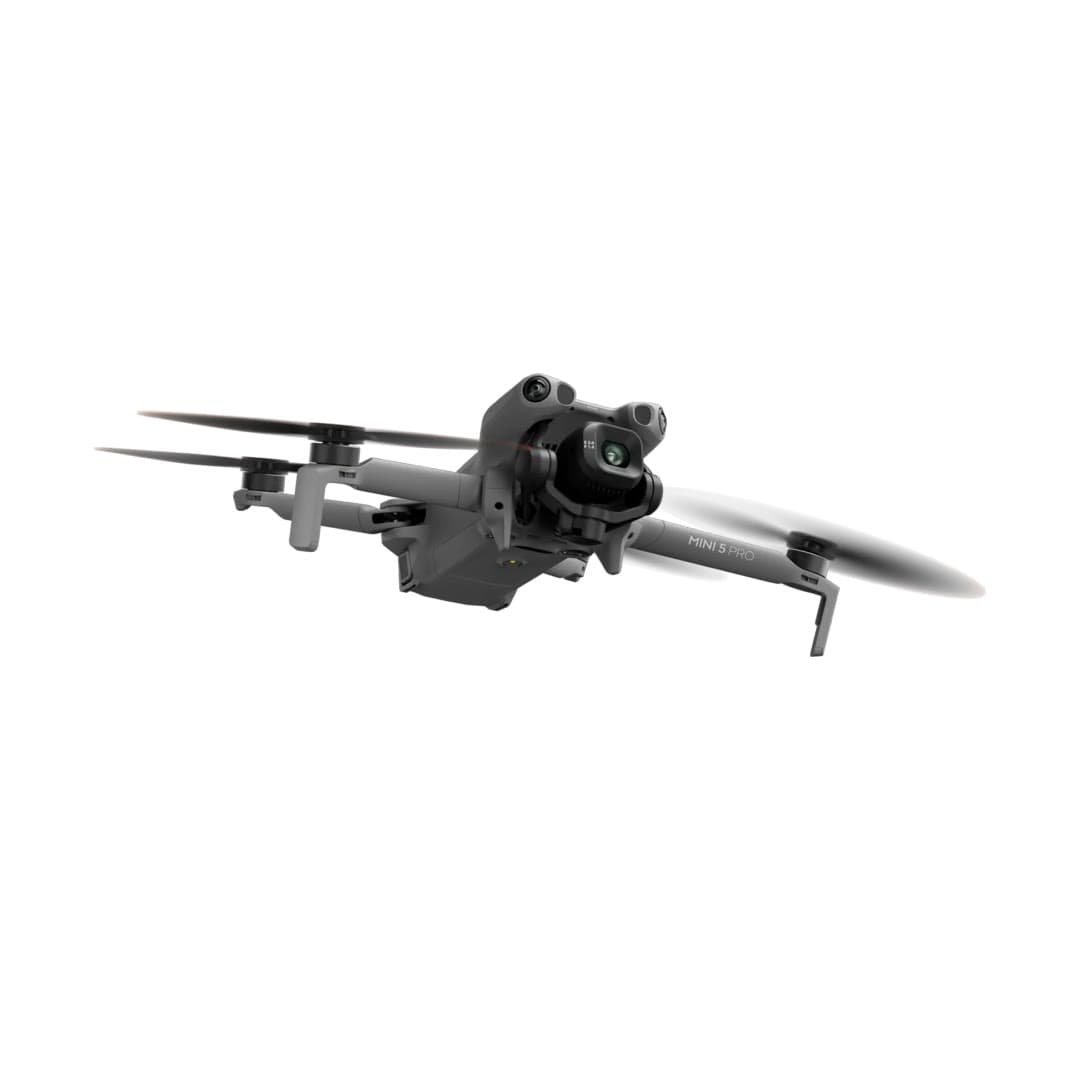
DJI Mini 5 Pro
Current status: sourced aggregate review. Original Drone Authority field testing is planned, and the complete protocol is published below.
The finding
Best Mini CameraCamera-first travelers who want a 1-inch sensor in the smallest serious platform and will verify actual takeoff weight and the U.S. support path.
Not officially sold in the U.S. (DJI import situation)Amazon price, subject to change. Affiliate link: we may earn a commission at no extra cost to you. Disclosure
- Our score
- 9.2/10
- Amazon price
- $759.00
- Category
- Sub-250g flagship
checked Sep 13
Published figures
- Weight
- 249.9 g design weight, approximately ±4 g
- Camera
- 1-inch 50MP; 4K/60 HDR, 4K/120
- Gimbal
- 3-axis; true vertical; 225-degree roll
- Flight time
- 36 min max / 21 typical; Plus 52 / 33
- Tracking
- ActiveTrack 360; up to 15 m/s spec
- Sensing
- Omnidirectional vision + forward LiDAR
Against the 250 g registration line
249.9 g
Below the line. Flown recreationally and unmodified, this aircraft does not need FAA registration. Any Part 107 flight still does, and added gear can push it over. Registration rules
Drone Authority score
Editorial composite from researching Mini 5 Pro. Not a lab measurement, not an aggregate of retailer stars.
9.2/10
- Flight and cameraCapability for its lane
- Excellent9.5
- Owner sentimentCross-checked owner reports
- Excellent9.0
- Build and reliabilityHardware and dependability
- Excellent9.0
- ValuePrice against category peers
- Excellent8.5
A 1-inch sensor, 4K/120, true vertical capture, and 225-degree roll in a near-250 g airframe.
Exceptional compact camera hardware, tempered by variable takeoff weight and third-party-only U.S. supply.
In its favour
- Best-in-class compact camera: 1-inch sensor, RAW stills, 10-bit D-Log M, and 4K/120
- True vertical capture and 225-degree gimbal roll expand the shot vocabulary
- Strong ActiveTrack, omnidirectional vision, forward LiDAR, and route-aware RTH
Buy it for this. Camera-first travelers who want a 1-inch sensor in the smallest serious platform and will verify actual takeoff weight and the U.S. support path.
Against it
- Actual standard-battery weight can exceed 250 g; Battery Plus always changes the weight category
- No normal DJI U.S. launch, so warranty, DJI Care, returns, and region support require verification
- Single fixed-aperture camera; Air 3S adds a real tele lens, wind margin, and easier support economics
Skip it if this matters. Actual standard-battery weight can exceed 250 g; Battery Plus always changes the weight category
Owner desk
Current U.S. supply watchLiving with the Mini 5 Pro.
Mini 5 Pro's nominal 249.9 g design target leaves no room for lazy assumptions. Owners should weigh the delivered aircraft with the actual battery and every mounted accessory.
Configuration
Near-threshold camera flagship
Weight
249.9 g design weight with published manufacturing tolerance
Legal configuration
Registration, Remote ID, and what changes them.
A Plus battery, strobe, filter, guard, landing gear, or manufacturing tolerance can move this aircraft above the recreational threshold.
- Recreational
- Do not rely on the model name alone. Weigh the ready-to-fly standard configuration; register if it is 250 g or more.
- Part 107
- Register every Mini 5 Pro used under Part 107.
- Remote ID
- Confirm the exact declaration, serial, region, and firmware for the unit before a registered flight.
- Control stack
- DJI Fly with supported Mini 5 Pro controllers
First 30 minutes
Set it up before the launch site.
- 01
Charge and inventory the whole system
Charge the aircraft battery and the supplied supported controller. Remove every transport protector, confirm the correct propellers, and inspect for shipping damage.
- 02
Activate in DJI Fly
Connect to the internet, activate the aircraft, bind any service plan, and complete every prompted aircraft, controller, and battery update before leaving home.
- 03
Set the safety envelope
Confirm return-to-home altitude, obstacle behavior, signal-loss action, units, storage location, and camera defaults. These are aircraft settings, not assumptions.
- 04
Run a close first hover
Use a wide legal area, wait for a stable home point, hover at eye level, test controls and braking, then verify return-to-home without sending the aircraft far away.
Compatible kit
What to buy first.
Add a second battery before buying cosmetic gear. Add the charging hub when the kit reaches three packs, then solve bright-sun exposure with filters made for the Mini 5 Pro camera.
What not to change
Do not assume Mini 4 Pro filters, guards, cases, or camera parts fit. Shared family naming is not a fit specification.
- Power
- Match Mini 5 Pro battery and hub listings exactly; record the assembled takeoff weight.
- Camera
- Use Mini 5 Pro-specific filters. Gimbal geometry and lens fit are not safely inferred from an older Mini.
- Case
- Confirm both aircraft and controller model. RC 2 and phone-controller cutouts are different.
Amazon links are affiliate links. We may earn a commission at no extra cost to you. Fit notes and ordering are editorial decisions.
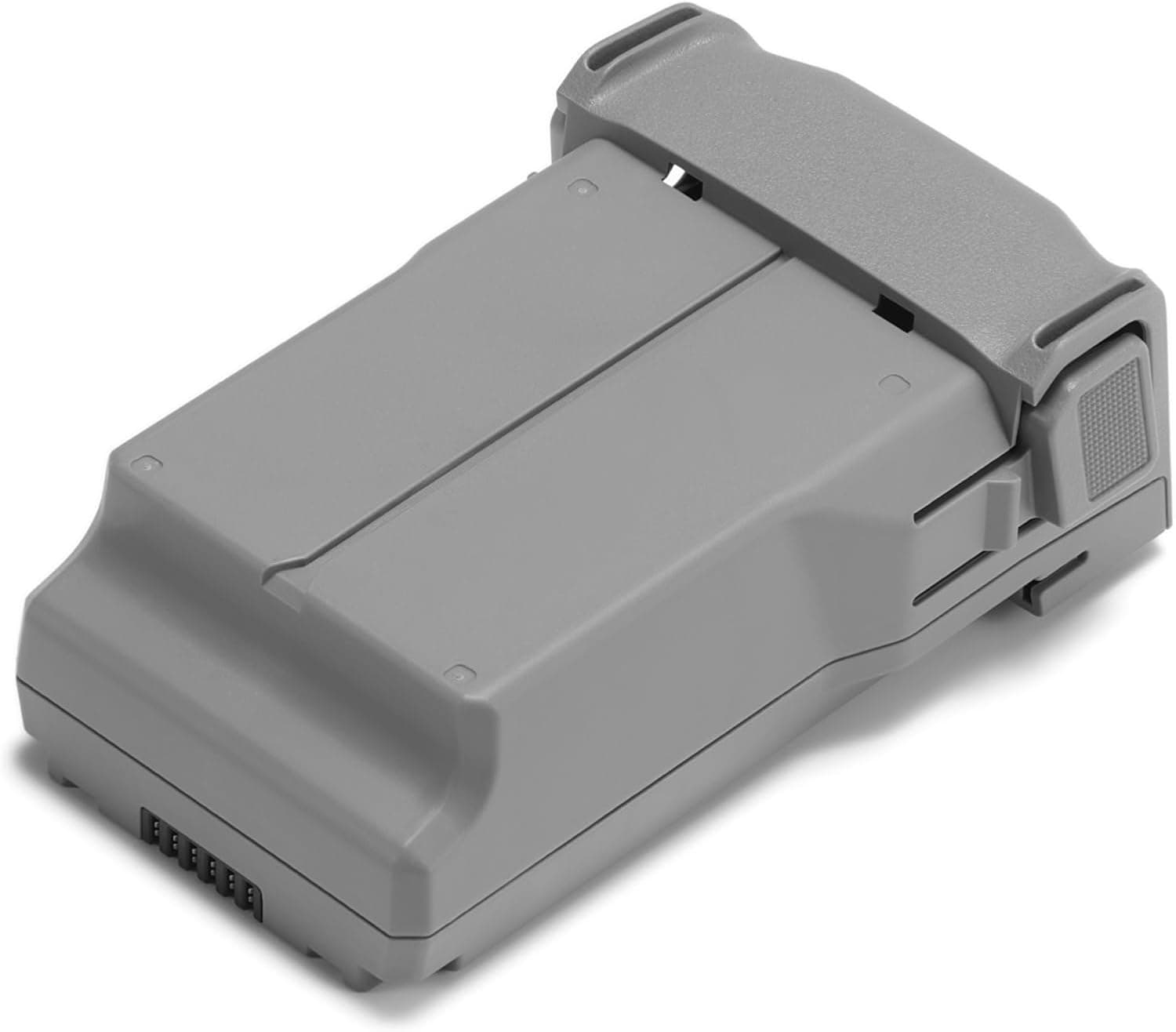
01 · Buy first
Mini 5 Pro Intelligent Flight Battery Plus
The Mini 5 pack for longer sessions, with a legal-weight caveat.
Check at Amazon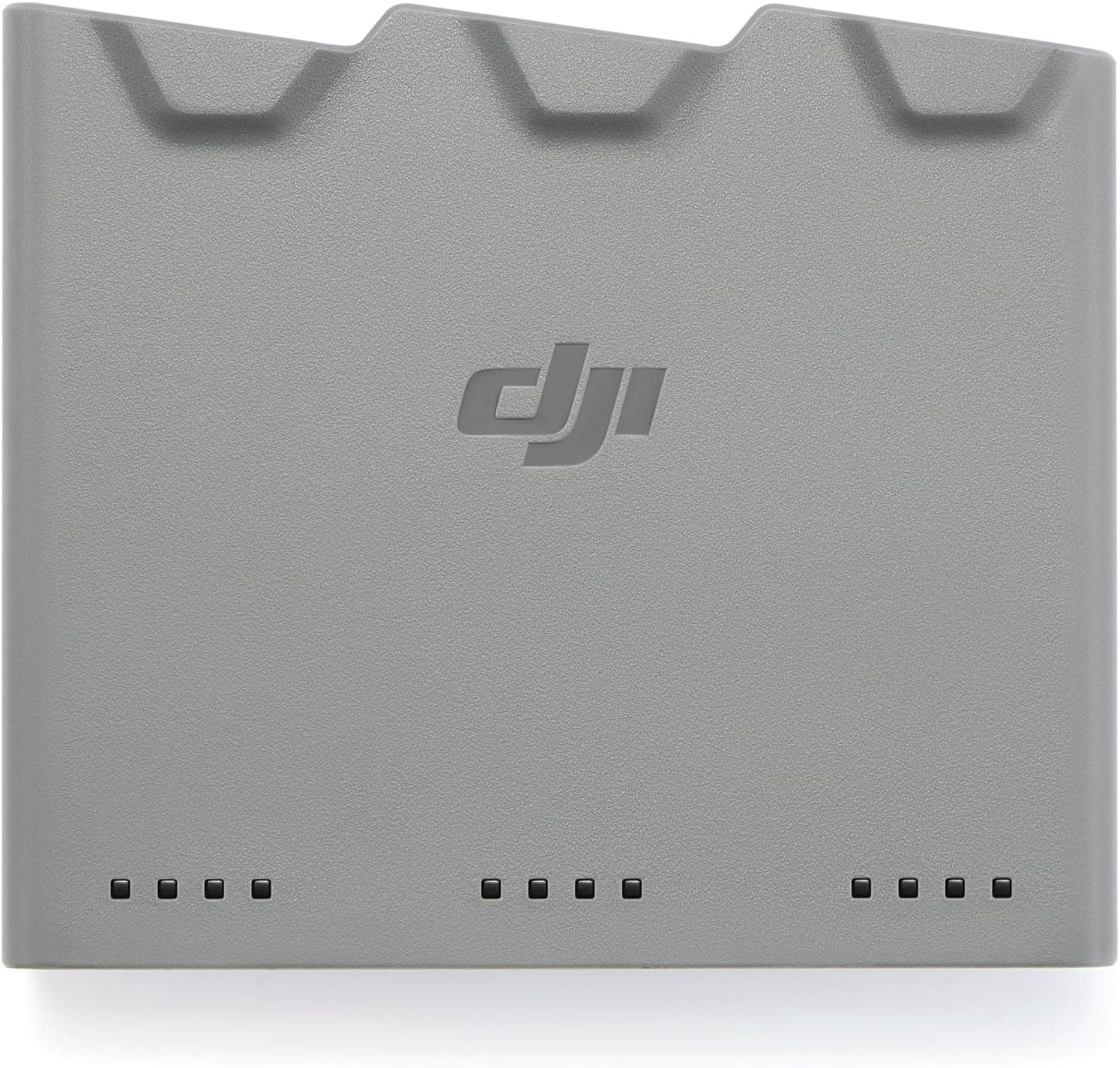
02 · Buy first
Mini 5 Pro Two-Way Charging Hub
The accessory that turns Mini 5 batteries into a field kit.
Check at Amazon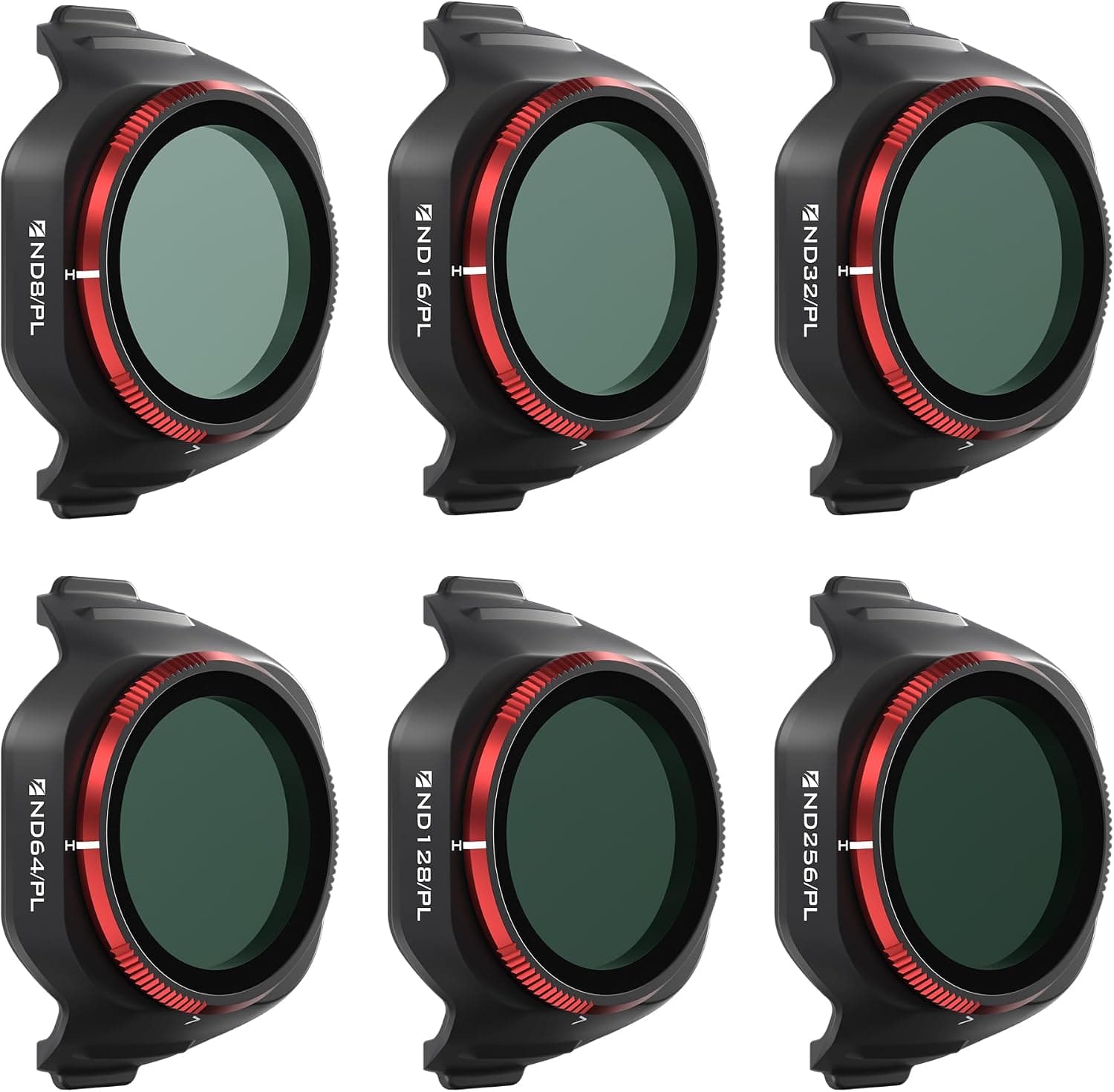
03 · Buy first
Mini 5 Pro Bright Day ND/PL Filter 6-Pack
The Mini 5 camera accessory most serious video buyers want first.
Check at Amazon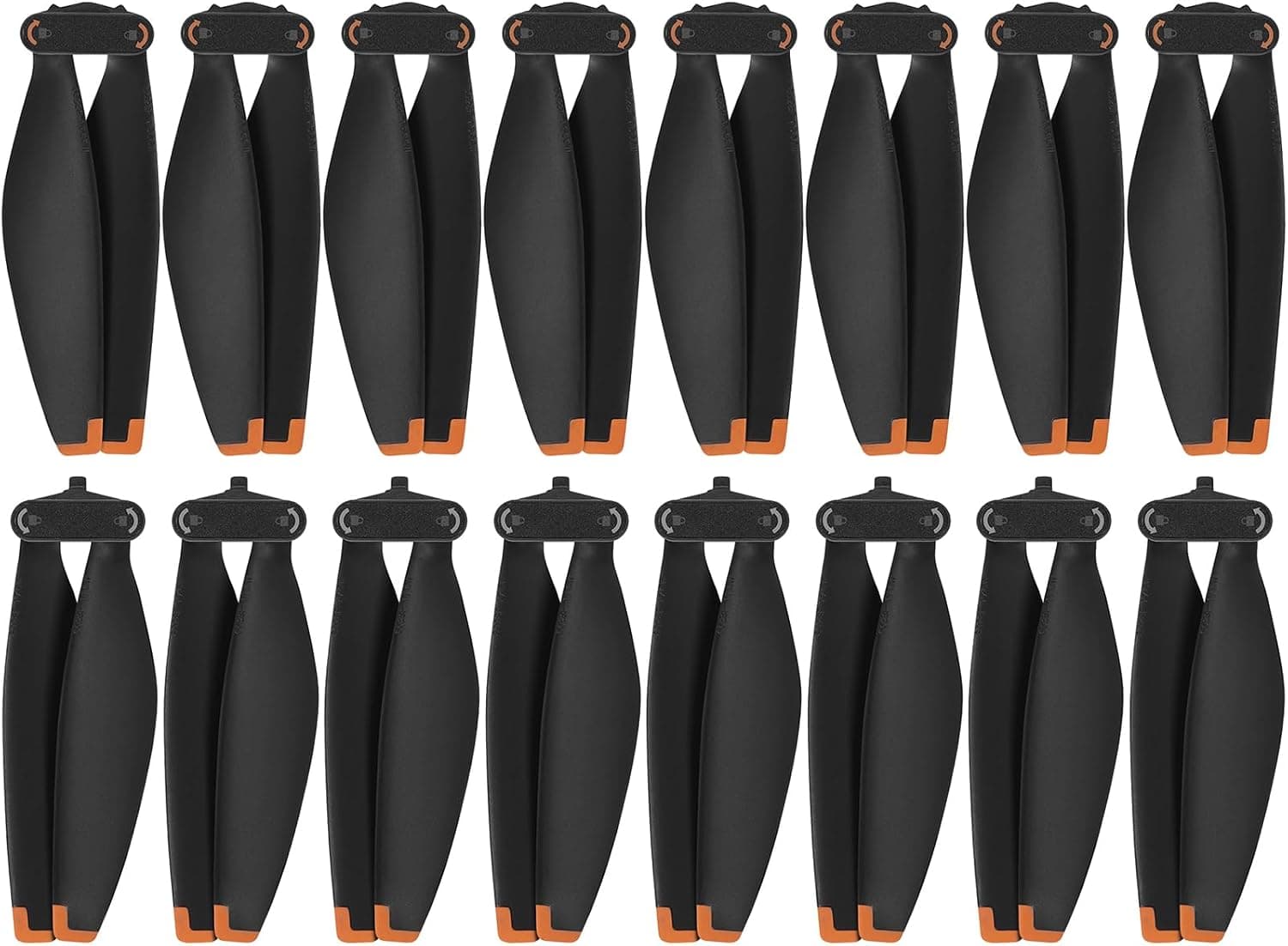
04 · Buy first
Mini 5 Pro Replacement Propeller Set
The cheap spare that prevents one nick from ending the day.
Check at Amazon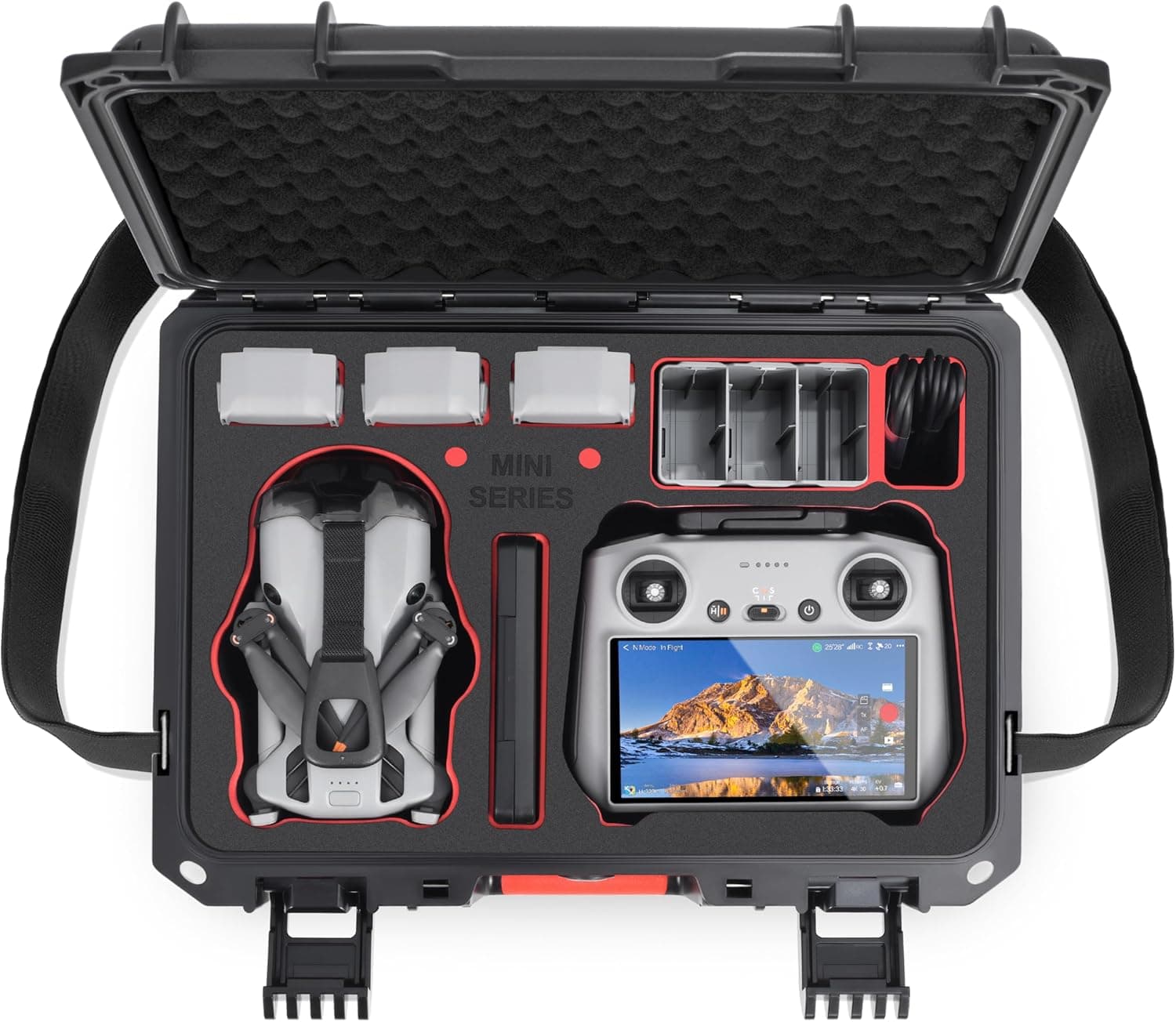
05 · Buy first
Mini 5 Pro Waterproof Hard Case
The practical case shape for a Mini 5 Fly More setup.
Check at Amazon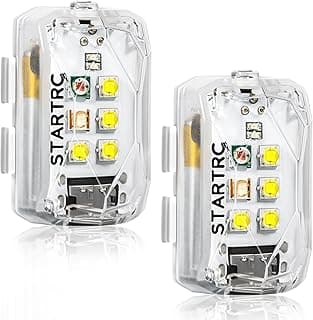
06 · Add later
Rechargeable Drone Strobe 2-Pack
A multi-drone strobe pair for pilots who move lights between aircraft.
Check at AmazonModel fit questions
- What should I buy first for a DJI Mini 5 Pro?
- A second battery is the highest-value first purchase for most owners. A charging hub becomes useful when several packs need to be managed, followed by exact-fit ND filters for deliberate video shutter control.
- Does a Mini 5 Pro Battery Plus affect the under-250 g rule?
- It can. Use the takeoff weight of the complete configuration, including the installed battery and attached accessories, before relying on an under-250 g recreational registration exception.
- Do Mini 4 Pro accessories fit the Mini 5 Pro?
- Do not assume they do. Batteries, filters, guards, cases, and gimbal parts should identify the exact supported model on the manufacturer or retailer listing.
Maintenance
What to check, and how often.
- Before every flight
- Inspect every propeller, motor bell, arm hinge, sensor window, and gimbal guard area. Replace a nicked or warped propeller instead of trying to straighten it.
- After dust, sand, salt, or moisture
- Power down, remove the battery, brush away loose debris, and let the aircraft dry fully. Do not use compressed air to drive grit into motors or gimbal bearings.
- Every 10 flights
- Review battery swelling, cell warnings, propeller screws, storage capacity, return-to-home altitude, and the app flight log.
- Before storage
- Let intelligent batteries manage themselves at room temperature, keep them out of a hot vehicle, and recheck charge state before the next job.
Troubleshooting
Common symptoms and what to check.
The aircraft drifts, will not hold position, or reports a compass warning
Move away from vehicles, reinforced concrete, speakers, and large metal objects. Confirm satellite status and follow the manufacturer calibration prompt only when the app asks for it.
Do not launch while position or compass warnings remain.
The horizon is tilted or footage vibrates
Remove the gimbal guard, inspect the gimbal dampers and propellers, clean the lens, and run the official gimbal calibration on a level surface.
Stop if the gimbal binds, chatters, or was struck hard enough to deform its mount.
Firmware update stalls or components show mismatched versions
Charge the aircraft and controller above the manufacturer minimum, keep every component powered and close together, use a stable network, and update each intelligent battery when required.
Do not fly through a version mismatch or repeated update failure. Use official support.
Official support
Manuals, firmware, parts.
Learn next
Where to go next.
- Registration checkerSee how weight, recreation, and Part 107 change the answer.
- First-flight checklistTurn setup into a controlled first launch.
- Can I fly here?Check airspace, authorization, TFRs, weather, and launch permission.
- Better aerial footageUse deliberate moves, exposure, and shot planning instead of relying on automation.
The short answer
Aggregate verdict: the DJI Mini 5 Pro is the strongest single-camera travel drone in the near-250-gram class, chiefly because its 1-inch sensor, f/1.8 lens, 10-bit D-Log M, true vertical capture, 225-degree roll range, LiDAR-assisted sensing, and mature tracking all improve the finished shot. The caveats are not small: DJI specifies a 249.9 g design weight with a ±4 g tolerance, the Plus battery moves it into a higher weight category, practical recording time can be far below the 36-minute maximum, and U.S. purchases still run through third-party rather than a normal DJI launch.
What changes the decision
01
The 1-inch camera is the upgrade
DJI pairs a 50-megapixel 1-inch CMOS sensor with a 24 mm-equivalent f/1.8 lens, JPEG and DNG stills, 4K/60 normal recording, 4K/120 slow motion, and 10-bit 4:2:0 HLG or D-Log M. Independent reviewers consistently found more useful low-light detail, cleaner shadows, and stronger highlight retention than smaller-sensor Mini models. The larger sensor is not just a badge; it expands when and how a small aircraft can deliver usable footage.
The camera is still a fixed-aperture, single-lens system. Bright daylight video often needs an ND filter to hold a deliberate shutter speed, and the 2x or 3x views are crops rather than a second optical camera. The Air 3S remains more versatile when a real 70 mm-equivalent tele camera, more wind margin, or longer practical endurance matters more than pack size.
02
The sub-250-gram claim requires a scale
DJI publishes a 249.9 g takeoff weight and explicitly allows approximately ±4 g for manufacturing variation. WIRED's review sample weighed above 250 g, and other reviewers have reported similar results. European C0 treatment is tied to the certified product configuration; a U.S. recreational pilot does not receive a blanket exception from the actual weight of an individual aircraft.
Weigh the ready-to-fly aircraft with the installed battery, propellers, card, and any accessory. If it is 250 g or more, register it for recreational use. Every Part 107 aircraft must be registered regardless of weight. DJI also states that the Intelligent Flight Battery Plus exceeds the C0/UK0 threshold, so the 52-minute configuration should never be described as a sub-250-gram setup.
03
The gimbal makes more than vertical video
The three-axis gimbal can rotate through a 225-degree roll range, turn the sensor for true 9:16 capture, and create deliberate horizon-roll moves without throwing away most of a horizontal frame. That is useful for social delivery, but the more interesting benefit is shot design: a compact aircraft can now produce controlled roll transitions and unusual reveals that previously required a larger platform or post-production crop.
The feature needs restraint. A rotating horizon becomes a gimmick quickly, and not every automated rotation returns to its exact start position. The field series will evaluate repeatability, horizon recovery, and how much usable resolution survives each delivery mode, not merely demonstrate that the gimbal moves.
04
Tracking and return-to-home are unusually capable
DJI specifies omnidirectional binocular vision supplemented by forward-facing LiDAR and a downward infrared sensor. TechRadar reported clean ActiveTrack 360 performance through woodland and a successful RTH route retrace under tree cover; Digital Camera World also reported reliable subject identification and tracking around trees. The official sensing specification lowers the vision-light requirement to more than 1 lux and gives the forward LiDAR a 0.5 to 25 m nighttime measurement range under stated reflectivity conditions.
That does not make night or clutter automatic. LiDAR is forward-facing, while the other directions still depend heavily on vision, surface texture, light, closing speed, and obstacle size. Thin branches, wires, moving obstacles, reflective surfaces, and an unexpected route remain pilot problems. Route memory also requires the right conditions and should be tested as a recovery layer, never used to justify an outbound path the pilot cannot safely monitor.
05
Thirty-six minutes is not thirty-six minutes of camera time
DJI publishes 36 minutes with the standard battery and 52 with Battery Plus in a controlled wind-tunnel profile. More usefully, DJI also publishes a typical-flight scenario: 21 minutes standard and 33 minutes Plus while recording 4K/60 in breeze, flying a route, maneuvering, hovering, and completing RTH. That typical figure belongs in a mission plan; the forced-landing maximum does not.
Independent results vary with the profile. Tom's Guide reported about 35 minutes on a windless out-and-back test, while TechRadar reported about 20 minutes in moderate breeze with 4K/60 and ActiveTrack. The spread is the point: battery claims are inseparable from wind, recording, speed, automation, reserve, and takeoff weight.
06
Mini 4 Pro and Air 3S bracket the decision
Mini 4 Pro remains the calmer value choice for buyers who already like its 1/1.3-inch camera, mature sensing, true vertical capture, and comfortably lighter standard configuration. The Mini 5 Pro earns the upgrade when low-light work, dynamic range, 4K/120, 42 GB of internal storage, stronger tracking, LiDAR-assisted low-light sensing, or the expanded roll range will change the output.
Air 3S uses a similar 1-inch wide camera and adds a real tele camera, more wind and endurance margin, and a larger platform. Mini 5 Pro wins when the smallest capable kit matters. Air 3S wins when the mission tolerates registration and bulk in exchange for two focal lengths and a less weight-constrained airframe.
07
U.S. price is not the whole ownership cost
Mini 5 Pro did not receive a normal direct DJI U.S. launch, although third-party U.S. inventory is available. A low listing price can reflect a different regional package, seller warranty, or support route. Before buying, confirm the exact battery, controller, charger, return window, DJI Care eligibility, firmware support, serial region, and who pays if the aircraft needs service.
That uncertainty does not make the aircraft unusable, but it changes the recommendation for working pilots. A readily supported Mini 4 Pro or Air 3S can be the better business asset even when Mini 5 Pro wins the image-quality comparison. Downtime and replacement access belong in a professional camera score.
What we will test, and how
Aggregate review published · original field series planned
This page currently synthesizes DJI's documentation and independent hands-on reporting. Our field series will publish the aircraft's actual takeoff weights, conditions, raw clips, repeat counts, and failed runs so the eventual verdict rests on reproducible evidence.
01
Configuration weight audit
Resolve the 249.9 g ±4 g question with actual ready-to-fly measurements.
- Protocol
- Use a calibrated 0.1 g scale and record aircraft, standard battery, Plus battery, propellers, card, filters, strobes, guards, and each complete launch configuration three times.
- Planned episode
- Is your Mini 5 Pro actually under 250 g?
02
Camera latitude and motion
Measure the one-inch advantage rather than admiring specification numbers.
- Protocol
- Shoot matched daylight, backlit, dusk, night, detail-chart, moving-subject, vertical, D-Log M, and 4K/120 scenes beside Mini 4 Pro and Air 3S; publish identical grades and downloadable crops.
- Planned episode
- Mini 5 Pro vs Mini 4 Pro vs Air 3S camera test
03
ActiveTrack repeatability
Score how reliably the aircraft follows, frames, and recovers across realistic movement.
- Protocol
- Repeat walking, running, cycling, orbit, switchback, brief occlusion, and backlit passes on one marked route. Log acquisition time, loss, reacquisition, framing error, interventions, and completion rate.
- Planned episode
- Mini 5 Pro tracking test: every miss included
04
Sensing and RTH layers
Separate forward LiDAR performance from vision-dependent directions and route-memory claims.
- Protocol
- Use foam gates and high-contrast suspended targets with a safety net in daylight and legal twilight. Test Brake, Bypass, manual RTH, low-battery RTH, and a safe route-retrace scenario with a spotter.
- Planned episode
- Mini 5 Pro night sensing and RTH, tested safely
05
Battery and wind matrix
Publish usable camera time instead of a forced-landing maximum.
- Protocol
- Run standard and Plus batteries through hover, fixed route, 4K/60, ActiveTrack, and wind profiles. Record weight, temperature, mean/gust wind, warning times, RTH point, landing percentage, distance, and recharge time.
- Planned episode
- 36 minutes vs reality: Mini 5 Pro battery test
06
VLOS link and working-day workflow
Test control quality and whether the compact kit really saves production time.
- Protocol
- Fly a surveyed route inside unaided VLOS with RC-N3 and RC 2. Log link warnings and response, then time setup, media transfer, battery turnaround, vertical/horizontal switching, and a three-location shoot day.
- Planned episode
- Mini 5 Pro range, RC 2, and a real shoot day
Safety boundary. All flights will remain within visual line of sight and use legal airspace and launch sites. No person, road traffic, wire, tree, or hard structure will be used as an obstacle target. Signal testing measures reliability inside VLOS, not DJI's one-way laboratory maximum.
Compare it with the real alternatives
- DJI Mini 5 Pro vs Mini 4 Pro: Is the Upgrade Worth It? (2026)DJI Mini 5 Pro vs Mini 4 Pro compared on camera, weight, flight time, sensing, U.S. availability, and registration. See which compact DJI fits your work.
- DJI Neo 2 vs Mini 5 Pro: Self-Filming or Camera Drone? (2026)DJI Neo 2 vs Mini 5 Pro compared for follow shots, camera quality, flight time, tracking, weight, and U.S. ownership. Pick the right DJI workflow.
Sources behind this review
Manufacturer specifications set the hardware claims. Independent reviews are used to test that positioning and surface the practical tradeoffs. We did not receive or fly a review unit.
- DJI Mini 5 Pro specifications
Primary source for weight tolerance, camera, gimbal, sensing, transmission, maximum and typical battery profiles, and Battery Plus classification.
- DJI Mini 5 Pro user manual
Primary operating source for intelligent modes, route memory, RTH, warnings, and limitations.
- DJI Store Mini 5 Pro product page
Manufacturer configuration, controller, camera, sensing, and regional bundle context.
- TechRadar Mini 5 Pro review
Independent woodland tracking, RTH, practical battery, image-quality, and weight analysis.
- Tom's Guide Mini 5 Pro review
Independent camera, low-light, sensing, flight, battery, and third-party U.S. availability assessment.
- WIRED Mini 5 Pro review
Independent measured-weight, coastal-wind, low-light sensing, camera, and practical endurance assessment.
- Digital Camera World Mini 5 Pro review
Independent RAW dynamic-range, hybrid-crop, controller, and subject-tracking assessment.
Before you choose
Is the DJI Mini 5 Pro really under 250 grams?
DJI lists a 249.9 g design weight with an approximately ±4 g manufacturing tolerance, so an individual aircraft can weigh 250 g or more. Weigh the ready-to-fly configuration. Battery Plus exceeds the C0/UK0 threshold, and every Part 107 aircraft must be registered regardless of weight.
Is Mini 5 Pro worth upgrading from Mini 4 Pro?
It is a meaningful upgrade for low light, dynamic range, 4K/120, internal storage, LiDAR-assisted sensing, stronger tracking, and creative gimbal movement. If the Mini 4 Pro already meets a daylight travel workflow, the image difference may not justify the cost and U.S. support uncertainty.
Is Mini 5 Pro better than Air 3S?
Mini 5 Pro is better for pack size and a near-250-gram standard configuration. Air 3S is the more capable all-around aircraft because it adds a true tele camera, more wind margin, longer practical endurance, and a less weight-constrained platform. Their wide cameras occupy a similar class.
How long does the Mini 5 Pro actually fly?
DJI publishes a 36-minute controlled maximum and a far more useful 21-minute typical recording scenario for the standard battery. Independent tests range from roughly 20 minutes with 4K/60, tracking, and breeze to about 35 minutes in a lighter windless out-and-back profile. Plan from your own logged conditions and preserve reserve.
Can Mini 5 Pro avoid obstacles at night?
Forward-facing LiDAR can improve forward sensing in low light, while the other directions still rely substantially on vision and environmental conditions. It is not an all-direction night-vision shield. Thin, low-contrast, reflective, or moving hazards can still be missed.
Is Mini 5 Pro officially sold by DJI in the United States?
It did not receive a normal direct DJI U.S. launch. Third-party U.S. stock exists, so buyers should verify seller identity, region, returns, warranty route, DJI Care eligibility, controller and battery configuration, and service support before ordering.
Ready to buy the DJI Mini 5 Pro?
Amazon price $759.00, checked Sep 13 and subject to change. Check availability before you commit. Buy through this link and we may earn a commission at no extra cost to you. Disclosure.
Compare with
DJI
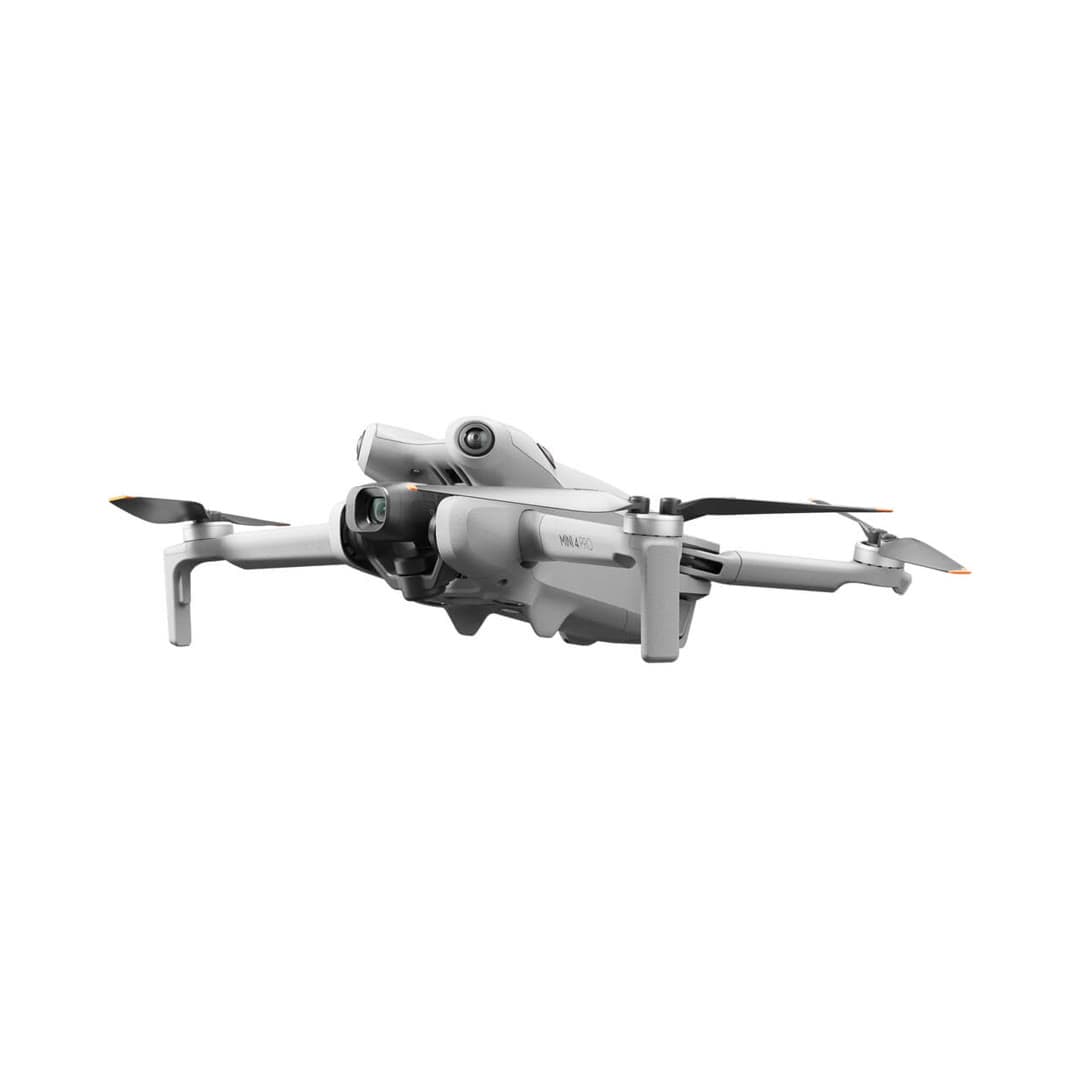
Mini 4 Pro
The drone most experienced flyers point beginners toward once budget allows: full omnidirectional obstacle sensing, long range, and excellent footage, all while staying under the 249 g recreational registration line.
Strengths
- Omnidirectional obstacle sensing, rare in a sub-250 g drone
- Strong 1/1.3-inch sensor with 4K/60 HDR and 10-bit D-Log M
- Long ~34-minute flight time and reliable O4 transmission
Tradeoffs
- Costs roughly double an entry drone once you add the controller
- Affected by the DJI import freeze: finite U.S. stock, drifting prices
- Overkill if you only want quick social clips
- Weight
- Under 249 g
- Camera
- 4K/60 HDR, 1/1.3in
- Flight time
- ~34 min (45 w/ Plus)
- Obstacle sensing
- Omnidirectional
- Transmission
- DJI O4, ~20 km
- Wind resistance
- Level 5
Best for: Buyers who want the best all-round Mini and can use the recreational sub-250 g registration exception with a standard configuration.
Amazon comes first when available. Official links stay visible for exact specs, stock, and manufacturer support. We may earn a commission at no extra cost to you. Disclosure
DJI
Air 3S
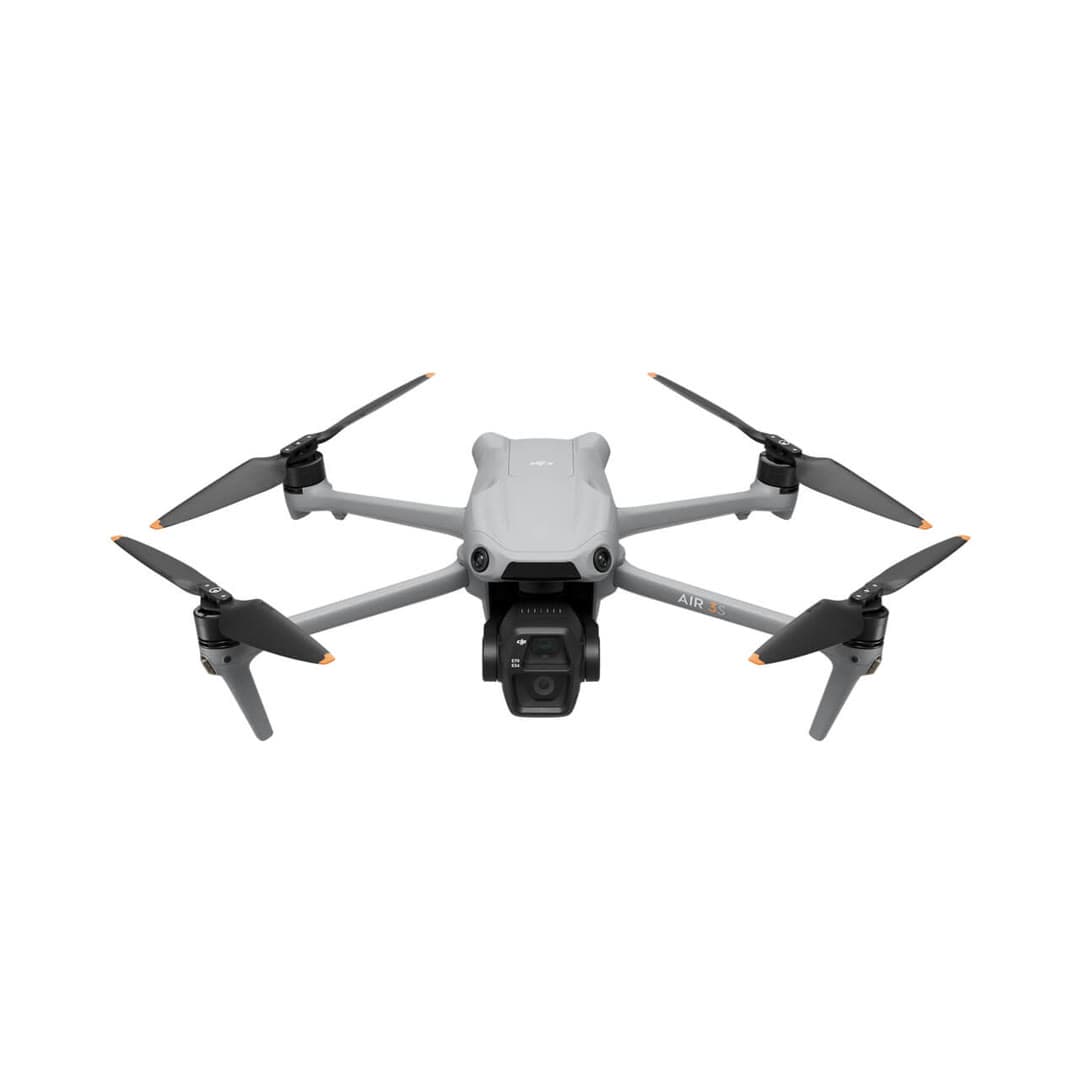
The everyday sweet spot of the DJI lineup: a 1-inch main camera plus a 70 mm telephoto, omnidirectional sensing with forward LiDAR, and a ~45-minute flight time: most of the Mavic's capability for roughly half the price.
Strengths
- Dual camera (1-inch wide + 70 mm tele) covers most real shots
- Long ~45-minute flight time and LiDAR-assisted obstacle sensing
- Far cheaper than the Mavic 4 Pro for everyday work
Tradeoffs
- Over 249 g, requires FAA registration
- Affected by the DJI import freeze; U.S. stock is finite
- Lacks the Mavic 4 Pro's 100MP Hasselblad and third tele lens
- Cameras
- 1in (24mm) + 70mm tele
- Flight time
- ~45 min
- Obstacle sensing
- Omni + forward LiDAR
- Transmission
- DJI O4
- Weight
- ~724 g (register)
- Wind resistance
- Level 5
Best for: Serious hobbyists and creators who want flagship-class results without flagship price.
Amazon comes first when available. Official links stay visible for exact specs, stock, and manufacturer support. We may earn a commission at no extra cost to you. Disclosure
Aircraft to operation
Before first launch
Buying the aircraft is one decision. Use this sequence to get from the box to a deliberate, legal first flight.
Aircraft under consideration
DJI Mini 5 Pro
DJI Mini 5 Pro: 249.9 g design weight, approximately ±4 g
- 01Check registration
Aircraft status
Set the registration path
DJI Mini 5 Pro is listed at 249.9 g design weight, approximately ±4 g. Recreational-only use may qualify for the sub-250 g exception. Part 107 flights still require registration, so confirm takeoff weight with the flight battery and accessories fitted.
- 02Start the airspace check
Launch location
Check the exact airspace
The aircraft does not decide whether a location is clear. Check the launch point, planned altitude, date, and time for controlled airspace, restrictions, and local launch rules.
- 03Check commercial requirements
Only when it is work
ConditionalDecide whether Part 107 applies
A small drone does not create a business-use exception. If the flight serves a client, employer, listing, monetized project, or another non-recreational purpose, check the Part 107 path first.
- 04Open the first-flight checklist
Props still off
Run the first-flight preflight
Confirm aircraft condition, firmware, battery health, controller link, home point, return-to-home settings, weather, people, obstacles, and the lost-link plan before takeoff.
How we score
The score is an editorial composite of four axes: flight and camera capability, owner sentiment drawn from published reviews, build and reliability, and value for the money. It reflects research and cross-checking rather than lab measurement, and we do not invent star counts. Prices are typical U.S. street bands and move around, especially for DJI while the import freeze lasts.
Affiliate relationships do not change our scores or rankings. Read the full affiliate disclosure.