Drone Authority · Comparison
DJI Mini 3 Pro vs DJI Mini 4 Pro
Honest synthesis from researching published specs and owner feedback. We do not run a test lab.
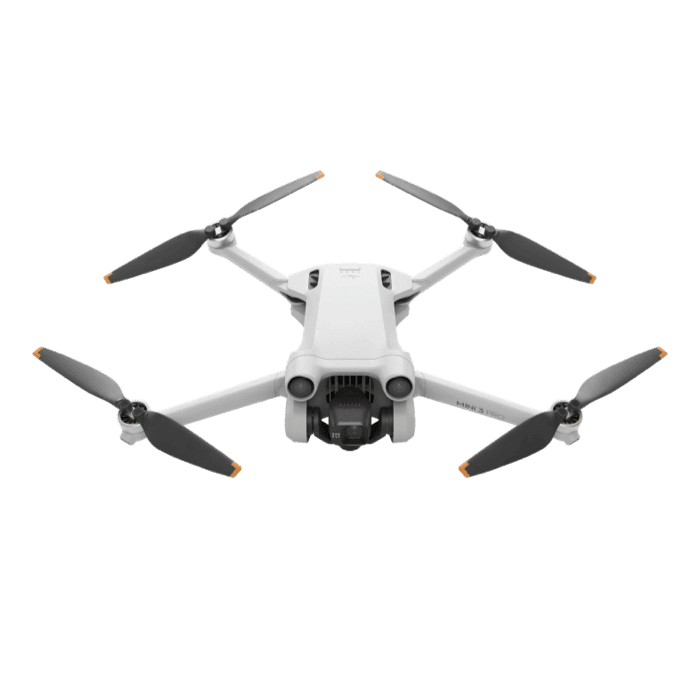
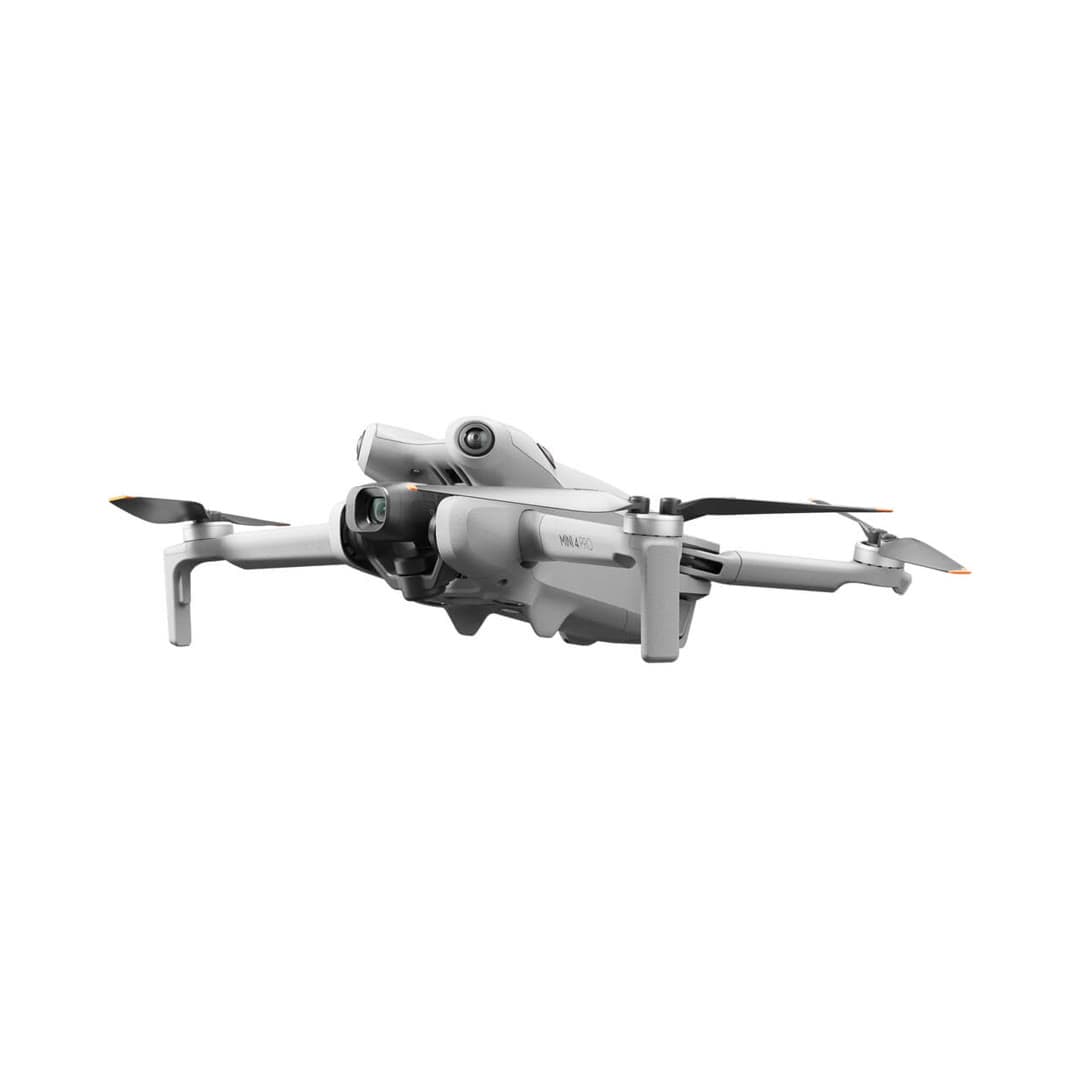
The Mini 3 Pro remains a capable lightweight camera drone, especially as a clean used kit. The Mini 4 Pro is the safer new-system choice: it fills the side and upward sensing gaps, moves to O4 transmission, adds faster slow motion and newer color workflows, and includes a small amount of internal storage. The right answer depends on the complete used-kit price, not the airframe name alone.
The short answer
Buy the Mini 4 Pro as a first serious camera drone or when omnidirectional sensing, O4 transmission, 4K/100 slow motion, D-Log M or HLG, and internal storage improve your actual work. Buy a Mini 3 Pro only as a carefully inspected used or refurbished value: the camera and native vertical workflow remain strong, but the complete kit should be meaningfully cheaper after healthy batteries, controller, accessories, and repair risk are counted. Existing Mini 3 Pro owners do not need to upgrade unless one of the newer capabilities fixes a repeated limitation.
Buying disclosure: price links in this comparison are affiliate links. If you buy through one, Drone Authority may earn a commission at no extra cost to you. Full disclosure
If you already own a Mini 3 Pro
DJI Mini 3 Pro
Keep it unless side and upward sensing, O4, 4K/100, or a newer controller ecosystem solves a real problem in your flights.
If you are buying your first serious camera drone
DJI Mini 4 Pro
The Mini 4 Pro is the more complete long-term system and removes several sensing blind spots.
If you found a clean used bargain
DJI Mini 3 Pro
A Mini 3 Pro can be excellent value when the aircraft is unbound, batteries are healthy, the gimbal is straight, and the complete kit is meaningfully cheaper.
If you track subjects near trees or structures
DJI Mini 4 Pro
The Mini 4 Pro has broader sensing coverage, but route planning and visual line of sight still matter.
| Spec | | |
|---|---|---|
| Standard takeoff weight | Under 249 g | Under 249 g |
| Camera | 1/1.3in, 48 MP, 4K/60 | 1/1.3in, 48 MP, 4K/60 HDR; 4K/100 slow motion |
| Vertical capture | Native rotating gimbal | Native rotating gimbal |
| Obstacle sensing | Forward, backward, downward | Omnidirectional vision + downward infrared |
| Transmission | DJI O3, 12 km published FCC maximum | DJI O4, 20 km published FCC maximum |
| Published flight time | 34 min standard; 47 min Plus | 34 min standard; 45 min Plus |
| Internal storage | None | 2 GB |
| Buying path | Used or refurbished; inspect condition | New, used, or refurbished; verify U.S. seller support |
| Our score | 8.4 / 10 | 9.0 / 10 |
Highlighted cells mark our editorial pick for that row, based on researching published specs and owner feedback, not lab testing. A row with no highlight is a genuine toss-up. See each drone's full review for the detail behind these calls.
Either way, sort out the legal side first
Do I need a license to fly this?01
The Mini 4 Pro closes the sensing blind spots
Mini 3 Pro sees forward, backward, and downward. It does not see laterally or upward, which matters when FocusTrack or a planned orbit moves the aircraft sideways. Mini 4 Pro uses an omnidirectional binocular vision system with a downward 3D infrared sensor, giving it much broader coverage during tracking and manual flight.
Neither aircraft is collision-proof. DJI requires adequate light and patterned surfaces for vision sensing, and wires, bare branches, glare, darkness, water, and low-contrast surfaces can still defeat detection. The Mini 4 Pro buys a larger safety margin; the pilot still chooses the route and maintains visual line of sight.
02
Shared sensor size does not mean identical production tools
Both aircraft use a 1/1.3-inch 48-megapixel sensor, an f/1.7 lens, DNG stills, a three-axis gimbal, and true vertical capture. Mini 3 Pro records up to 4K/60 and offers D-Cinelike. That remains enough for a large amount of travel, social, real-estate, and small-business work.
Mini 4 Pro adds 4K/100 slow motion, D-Log M and HLG color workflows, O4 transmission, and 2 GB of internal storage. O4 does not change visual-line-of-sight limits, but it provides a newer link and controller platform. Internal storage is only an emergency buffer, yet it can save a short flight when the microSD card is missing.
03
The used-kit total decides the value winner
Mini 3 Pro can publish a longer Plus-battery maximum, 47 minutes versus 45 for Mini 4 Pro, while both list 34 minutes with their standard battery. Those are controlled-condition ceilings, not useful on-station promises. Battery age, wind, temperature, transit, reserve, and repeated climbs matter more to a used buyer than a two-minute specification advantage.
Price the aircraft, controller, number and health of batteries, charger or hub, propellers, filters, case, account-binding status, repair history, and return policy together. A clean Mini 3 Pro kit can be the better value. A questionable kit or a price close to Mini 4 Pro turns the newer aircraft into the straightforward choice.
Evidence file
Sources behind this comparison
- DJI Mini 3 Pro support and specifications
Official Mini 3 Pro camera, sensing, flight-time, transmission, storage, controller, and support details.
- DJI Mini 4 Pro specifications
Official Mini 4 Pro camera, sensing, color, storage, battery, and O4 transmission details.
- Digital Camera World DJI Mini 3 Pro review
Independent camera review used to cross-check the Mini 3 Pro's image and vertical-capture strengths.
- DC Rainmaker DJI Mini 3 Pro in-depth review
Independent tracking and flight review used to cross-check lateral movement and practical endurance considerations.
- FAA drone registration guidance
Official U.S. registration rules for recreational and Part 107 operations.
Buyer questions
What usually decides it
- Is Mini 4 Pro image quality much better than Mini 3 Pro?
- Not in every ordinary shot. Both use a 1/1.3-inch sensor, an f/1.7 lens, DNG stills, and native vertical capture. Mini 4 Pro earns its advantage through 4K/100 slow motion, newer color workflows, sensing, transmission, and system flexibility rather than a simple sensor-size jump.
- Does Mini 3 Pro have side obstacle sensing?
- No. It senses forward, backward, and downward. Mini 4 Pro adds broader omnidirectional coverage, although neither system can detect every small, reflective, dark, or low-contrast obstacle.
- Can Mini 3 Pro and Mini 4 Pro use the same batteries?
- Some Mini 3-series and Mini 4 Pro batteries are cross-compatible, but weight and propulsion behavior can change by battery model. Match the exact DJI battery model and compatibility listing, then weigh the final aircraft rather than assuming every family battery preserves a sub-250-gram configuration.
- Which one should a new buyer choose?
- Choose Mini 4 Pro unless a verified Mini 3 Pro kit is substantially cheaper. The newer aircraft is the more complete long-term system; the older one wins only when condition and total price make the tradeoff worthwhile.
Keep comparing
The next useful matchups
DJI Mini 4 Pro vs DJI Air 3S
Both are excellent DJI drones, but they answer different questions. The Mini 4 Pro stays under the 249 g recreational registration line; the Air 3S adds a second telephoto camera and longer flights and requires registration. Part 107 use requires registration for either aircraft. Here is how they stack up and who each one is for.
Open comparison →DJI Flip vs DJI Mini 4 Pro
These two share a 1/1.3-inch sensor and can stay under 249 g in standard configurations, but they are not interchangeable cameras. The Flip prioritizes guarded palm-launch automation and price. The Mini 4 Pro adds omnidirectional sensing, native vertical capture, longer endurance, and the more flexible manual-flight workflow.
Open comparison →DJI Mini 4 Pro vs Autel Robotics EVO Lite+
This is really a question about ecosystems and risk. The Mini 4 Pro is the polished, sub-250g DJI choice; the EVO Lite+ offers a bigger 1-inch sensor with adjustable aperture from a non-DJI maker, but Autel has begun retiring its consumer lines. Both tradeoffs are worth weighing carefully.
Open comparison →DJI Mini 5 Pro vs DJI Mini 4 Pro
The Mini 5 Pro is the camera-first upgrade: a 1-inch sensor, 4K/120, wider gimbal movement, and forward LiDAR. The Mini 4 Pro remains the more established compact system and the easier value decision in the U.S. Published flight and transmission figures are controlled-condition maximums, and the Mini 5 Pro's approximately 249.9 g weight can vary enough that owners should weigh the actual takeoff configuration.
Open comparison →Aircraft to operation
Before first launch
Buying the aircraft is one decision. Use this sequence to get from the box to a deliberate, legal first flight.
Aircraft under consideration
DJI Mini 3 Pro and DJI Mini 4 Pro
DJI Mini 3 Pro: Under 249 g with standard battery · DJI Mini 4 Pro: Under 249 g
- 01Check registration
Aircraft status
Set the registration path
DJI Mini 3 Pro and DJI Mini 4 Pro are listed below 250 g in these configurations. Recreational-only use may qualify for the weight exception, but every Part 107 aircraft must be registered.
- 02Start the airspace check
Launch location
Check the exact airspace
The aircraft does not decide whether a location is clear. Check the launch point, planned altitude, date, and time for controlled airspace, restrictions, and local launch rules.
- 03Check commercial requirements
Only when it is work
ConditionalDecide whether Part 107 applies
A small drone does not create a business-use exception. If the flight serves a client, employer, listing, monetized project, or another non-recreational purpose, check the Part 107 path first.
- 04Open the first-flight checklist
Props still off
Run the first-flight preflight
Confirm aircraft condition, firmware, battery health, controller link, home point, return-to-home settings, weather, people, obstacles, and the lost-link plan before takeoff.
Affiliate relationships do not determine our comparison winners. Read how we make money. Price bands were reviewed with the evidence above and can move quickly, especially for DJI products without a normal U.S. launch.