Drone Authority · Review · Supported sub-250g camera drone
DJI Mini 3 Pro
Built from published specifications and cross-checked against the sources listed at the foot of this page. We have not flown this aircraft ourselves.
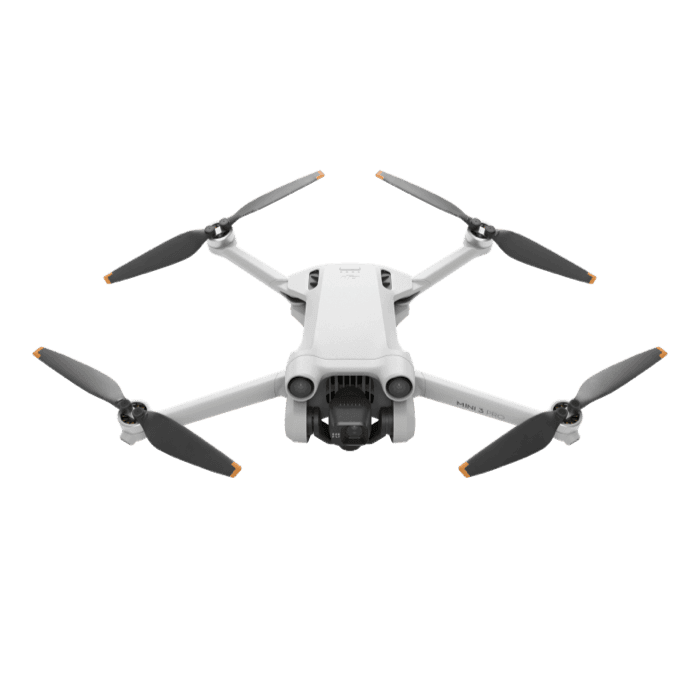
The finding
Installed-Base FavoriteOwners and careful used buyers who want a capable lightweight DJI without paying for the newest Mini generation.
Price band only. Affiliate link: we may earn a commission at no extra cost to you. Disclosure
- Our score
- 8.4/10
- Typical price
- $500 - $750 used or refurbished
- Category
- Supported sub-250g camera drone
Published figures
- Weight
- Under 249 g with standard battery
- Camera
- 1/1.3in, 48 MP; 4K/60
- Sensing
- Forward, backward, downward
- Flight time
- 34 min standard; 47 min Plus published max
- Control
- DJI RC or RC-N1
- App
- DJI Fly
Against the 250 g registration line
249 g
Below the line. Flown recreationally and unmodified, this aircraft does not need FAA registration. Any Part 107 flight still does, and added gear can push it over. Registration rules
Drone Authority score
Editorial composite from researching Mini 3 Pro. Not a lab measurement, not an aggregate of retailer stars.
8.4/10
- Flight and cameraCapability for its lane
- Excellent8.6
- Owner sentimentCross-checked owner reports
- Excellent8.7
- Build and reliabilityHardware and dependability
- Strong8.2
- ValuePrice against category peers
- Strong8.0
True vertical capture, 4K/60, and tri-directional sensing remain unusually capable at this weight.
Used value is strong only when battery health, controller, region, and repair history are clear.
In its favour
- 4K/60, D-Cinelike, RAW photos, and true vertical capture in a compact aircraft
- Forward, backward, and downward sensing plus FocusTrack
- Large installed base with official manuals and repair support
Buy it for this. Owners and careful used buyers who want a capable lightweight DJI without paying for the newest Mini generation.
Against it
- Discontinued from DJI's current camera-drone lineup
- Plus battery pushes the aircraft above 249 g
- No side or upward obstacle sensing and no internal storage
Skip it if this matters. Discontinued from DJI's current camera-drone lineup
Owner desk
Supported installed baseLiving with the Mini 3 Pro.
Mini 3 Pro ownership now starts with condition and configuration. Identify the battery, controller, aircraft serial, firmware, repair history, and every mounted accessory before treating a used kit as under 250 g or Remote ID ready.
Configuration
Supported sub-250 g camera flagship
Weight
Under 249 g with standard battery; about 290 g with Plus battery
Legal configuration
Registration, Remote ID, and what changes them.
The Intelligent Flight Battery Plus takes the aircraft above 249 g. A strobe, guard, mount, or other payload can also change weight and propulsion margin.
- Recreational
- A stock standard-battery configuration can qualify for the under-250 g recreational exception. The Plus battery and mounted accessories change that path.
- Part 107
- Register every Mini 3 Pro used under Part 107, regardless of battery or final weight.
- Remote ID
- The FAA lists an accepted Standard Remote ID declaration for DJI Mini 3 Pro. Confirm the exact serial range and current firmware before entering the aircraft in DroneZone.
- Control stack
- DJI Fly with DJI RC or RC-N1
First 30 minutes
Set it up before the launch site.
- 01
Charge and inventory the whole system
Charge the aircraft battery and DJI RC or RC-N1. Remove every transport protector, confirm the correct propellers, and inspect for shipping damage.
- 02
Activate in DJI Fly
Connect to the internet, activate the aircraft, bind any service plan, and complete every prompted aircraft, controller, and battery update before leaving home.
- 03
Set the safety envelope
Confirm return-to-home altitude, obstacle behavior, signal-loss action, units, storage location, and camera defaults. These are aircraft settings, not assumptions.
- 04
Run a close first hover
Use a wide legal area, wait for a stable home point, hover at eye level, test controls and braking, then verify return-to-home without sending the aircraft far away.
Compatible kit
What to buy first.
Use the shared standard battery and charging system first. Add spare propellers and a fitted case before considering landing gear, guards, or cosmetic accessories.
What not to change
Mini 3, Mini 3 Pro, and Mini 4 Pro share some power products. Filters, gimbal covers, guards, landing gear, and case foam still require an exact model statement.
- Battery family
- Use documented Mini 3-series batteries and distinguish standard from Plus weight.
- Body fit
- A fitted case, guard, or landing-gear accessory must name Mini 3 Pro, not merely Mini 3 series.
- Camera fit
- Use filters designed for the Mini 3 Pro camera and check gimbal freedom after installation.
Amazon links are affiliate links. We may earn a commission at no extra cost to you. Fit notes and ordering are editorial decisions.
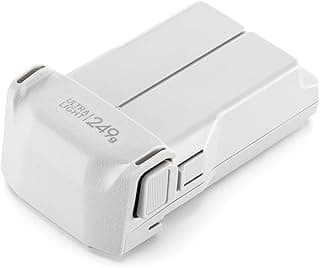
01 · Buy first
Mini 3 / Mini 3 Pro / Mini 4 Pro Intelligent Flight Battery
The first accessory most Mini pilots should buy.
Check at Amazon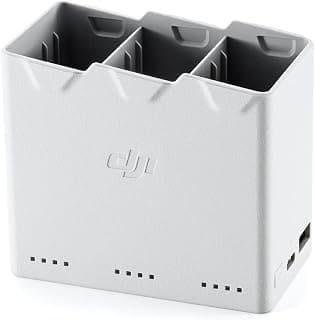
02 · Buy first
Mini 3 / Mini 4 Pro Two-Way Charging Hub
Turns loose batteries into an actual field workflow.
Check at Amazon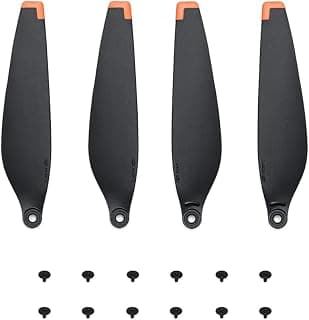
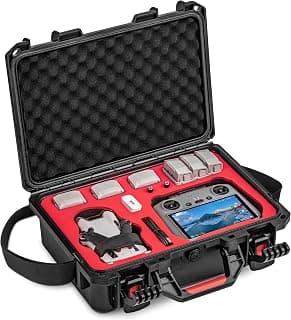
04 · Add later
Mini 3 / Mini 4 Pro Waterproof Hard Case
Overkill for a park, right for rough travel.
Check at Amazon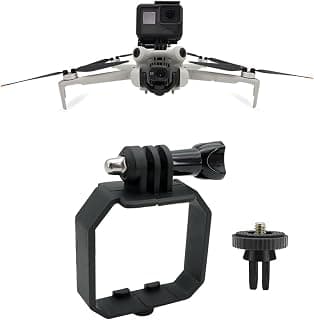
05 · Add later
Mini 4 Pro Top Expansion Bracket
A mounting helper for lights or action cameras.
Check at AmazonModel fit questions
- What Mini 3 Pro accessories should I buy first?
- A standard spare battery, the two-way charging hub for multi-pack kits, spare propellers, and a fitted case cover the useful basics.
- Does the Mini 4 Pro battery work with the Mini 3 Pro?
- DJI documents the standard Intelligent Flight Battery across Mini 3, Mini 3 Pro, and Mini 4 Pro. Confirm the live product listing and distinguish standard from Plus packs.
- Do Mini 3 accessories fit the Mini 3 Pro?
- Only when the product explicitly names both. Camera, obstacle-sensor, gimbal, and body geometry can make apparently similar accessories incompatible.
Maintenance
What to check, and how often.
- Before every flight
- Inspect every propeller, motor bell, arm hinge, sensor window, and gimbal guard area. Replace a nicked or warped propeller instead of trying to straighten it.
- After dust, sand, salt, or moisture
- Power down, remove the battery, brush away loose debris, and let the aircraft dry fully. Do not use compressed air to drive grit into motors or gimbal bearings.
- Every 10 flights
- Review battery swelling, cell warnings, propeller screws, storage capacity, return-to-home altitude, and the app flight log.
- Before storage
- Let intelligent batteries manage themselves at room temperature, keep them out of a hot vehicle, and recheck charge state before the next job.
Troubleshooting
Common symptoms and what to check.
The aircraft drifts, will not hold position, or reports a compass warning
Move away from vehicles, reinforced concrete, speakers, and large metal objects. Confirm satellite status and follow the manufacturer calibration prompt only when the app asks for it.
Do not launch while position or compass warnings remain.
The horizon is tilted or footage vibrates
Remove the gimbal guard, inspect the gimbal dampers and propellers, clean the lens, and run the official gimbal calibration on a level surface.
Stop if the gimbal binds, chatters, or was struck hard enough to deform its mount.
Firmware update stalls or components show mismatched versions
Charge the aircraft and controller above the manufacturer minimum, keep every component powered and close together, use a stable network, and update each intelligent battery when required.
Do not fly through a version mismatch or repeated update failure. Use official support.
A used aircraft will not bind, activate, or accept service
Confirm account binding, serial, seller release, controller compatibility, region, firmware, and Care eligibility before flying farther than a close test hover.
Stop if the seller cannot release the aircraft, the serial history is unclear, or DJI support flags the unit.
Official support
Manuals, firmware, parts.
Learn next
Where to go next.
- Registration checkerSee how weight, recreation, and Part 107 change the answer.
- First-flight checklistTurn setup into a controlled first launch.
- Can I fly here?Check airspace, authorization, TFRs, weather, and launch permission.
- Better aerial footageUse deliberate moves, exposure, and shot planning instead of relying on automation.
The short answer
The DJI Mini 3 Pro is still a strong lightweight camera drone when a complete, healthy used kit is meaningfully cheaper than a Mini 4 Pro. Its 1/1.3-inch camera, 4K/60 recording, DNG stills, D-Cinelike profile, true vertical capture, FocusTrack, and forward, backward, and downward sensing remain useful. Buy the condition, batteries, controller, and support path rather than the model name. If the price approaches a Mini 4 Pro, the newer aircraft's omnidirectional sensing, O4 link, 4K/100 slow motion, and internal storage make it the better long-term purchase.
What changes the decision
01
The camera has aged better than the safety system
DJI built the Mini 3 Pro around a 1/1.3-inch 48-megapixel sensor, a 24 mm-equivalent f/1.7 lens, a three-axis mechanical gimbal, JPEG and DNG stills, and video up to 4K/60. The gimbal physically rotates for full-resolution vertical capture, and D-Cinelike gives editors more room than a Normal-only workflow. Independent reviews found the image quality unusually strong for an aircraft below 249 grams.
Its sensing coverage is the generation marker. Forward, backward, and downward sensors support braking, bypass behavior, and FocusTrack, but there is no side or upward sensing. A tracking orbit or sideways move can therefore point the aircraft toward a blind direction. Treat the sensors as assistance during a visible, planned route, not as permission to send the aircraft through branches, wires, or structures.
02
A used Mini 3 Pro is a condition purchase
In 2026, the attractive listings are usually used, refurbished, or remaining stock. Confirm that the seller has removed account binding, then inspect the arms, motor mounts, shell seams, gimbal, camera horizon, sensor windows, propeller screws, battery contacts, and landing behavior. Ask for each battery's charge count and error history, then test hover, braking, return-to-home, recording, and gimbal movement in a clear area before trusting the aircraft farther away.
The complete kit matters more than a low airframe price. DJI RC and RC-N1 bundles have different phone and screen workflows, the aircraft has no internal storage, and an unhealthy battery or missing charger can erase the apparent savings. Official support, manuals, firmware tools, and repair intake still exist, but a clean serial and a realistic repair ceiling belong in the buying decision.
03
Battery choice changes both endurance and registration
DJI publishes up to 34 minutes with the standard battery and 47 minutes with the Intelligent Flight Battery Plus under controlled conditions. The Plus battery takes the aircraft above 249 grams. Mounted strobes, guards, filters, or other additions can also change the final takeoff weight, so weigh the aircraft in the configuration that will actually fly.
A standard-battery Mini 3 Pro used only under the recreational exception can qualify for the FAA's sub-250-gram registration exception. Every Part 107 aircraft must be registered regardless of weight. The FAA lists an accepted Standard Remote ID declaration for the Mini 3 Pro, but a used buyer should still confirm the exact serial, installed firmware, and DroneZone entry instead of assuming that every old configuration is ready for the intended operation.
04
Upgrade for a capability, not for a generation number
Mini 4 Pro keeps the same basic sensor size and native vertical idea while adding omnidirectional vision sensing, a downward infrared sensor, O4 transmission, 4K/100 slow motion, D-Log M and HLG workflows, and 2 GB of internal storage. Those changes matter for tracking, complex routes, signal resilience, slow-motion delivery, and the day a card is left at home. They do not make every Mini 3 Pro shot obsolete.
Existing owners should keep flying the Mini 3 Pro unless one of those differences solves a recurring problem. New buyers should choose the Mini 3 Pro only when its complete, inspected kit is substantially cheaper. The cost of healthy batteries, a compatible controller, any repair work, and a realistic return policy belongs in that comparison.
Travel, Remote ID, and support
- Battery on a plane
- Intelligent Flight Battery: 18.1 Wh, no airline approval needed; Intelligent Flight Battery Plus: 28.4 Wh, no airline approval needed. Spares ride in the cabin only. Battery airline check
- Remote ID
- Standard Remote ID built in. FAA declaration RID000000001. Requires aircraft firmware V01.00.04.00 or later, DJI Fly V1.7.8 or later. Remote ID lookup
- Maker support
- Latest firmware found: v01.00.0800 (July 11, 2024). Support tracker
Compare it with the real alternatives
Sources behind this review
Manufacturer specifications set the hardware claims. Independent reviews are used to test that positioning and surface the practical tradeoffs. We did not receive or fly a review unit.
- DJI Mini 3 Pro support and specifications
Official camera, sensing, battery, transmission, controller, storage, firmware, and accessory guidance.
- DJI Mini 3 Pro downloads
Current manuals, safety guidance, release notes, and DJI Assistant resources for a used-aircraft inspection.
- FAA Remote ID declaration for DJI Mini 3 Pro
Official accepted Standard Remote ID declaration referenced in the registration and owner guidance.
- Digital Camera World DJI Mini 3 Pro review
Independent camera review used to cross-check RAW detail, vertical capture, 4K/60 output, and digital-zoom limitations.
- DC Rainmaker DJI Mini 3 Pro in-depth review
Independent flight and tracking review used to cross-check lateral-sensing gaps, endurance, and wind behavior.
- DJI Mini 4 Pro specifications
Official successor specifications used for the current-generation buying comparison.
Before you choose
Is the DJI Mini 3 Pro still worth buying in 2026?
Yes, when a complete kit with healthy batteries, a compatible controller, a clean serial, and a return path is meaningfully cheaper than a Mini 4 Pro. At similar total prices, buy the Mini 4 Pro for broader sensing, O4, newer video modes, and internal storage.
Should an owner upgrade from Mini 3 Pro to Mini 4 Pro?
Upgrade when omnidirectional sensing, O4 transmission, 4K/100 slow motion, D-Log M or HLG, or the newer controller ecosystem solves a real limitation. Image quality alone is not enough reason for every owner because both aircraft use a 1/1.3-inch sensor and native vertical gimbals.
Can the Mini 3 Pro avoid obstacles while tracking?
It can use forward, backward, and downward sensing, but it has no lateral or upward sensing. Tracking and orbit moves can travel sideways, so use them only where the entire route and escape space are visibly clear.
Does a DJI Mini 3 Pro need FAA registration?
A standard configuration flown only under the recreational exception can qualify for the sub-250-gram registration exception. Every Part 107 aircraft must be registered, and the Plus battery takes the Mini 3 Pro above 249 grams.
What should I check before buying a used Mini 3 Pro?
Confirm account unbinding, serial and repair history, controller compatibility, firmware, battery counts and errors, gimbal alignment, sensor windows, arm and motor-mount condition, recording to a known card, return-to-home, and a return policy before the final handoff.
Ready to buy the DJI Mini 3 Pro?
Typical price $500 - $750 used or refurbished. Check availability before you commit. Buy through this link and we may earn a commission at no extra cost to you. Disclosure.
Compare with
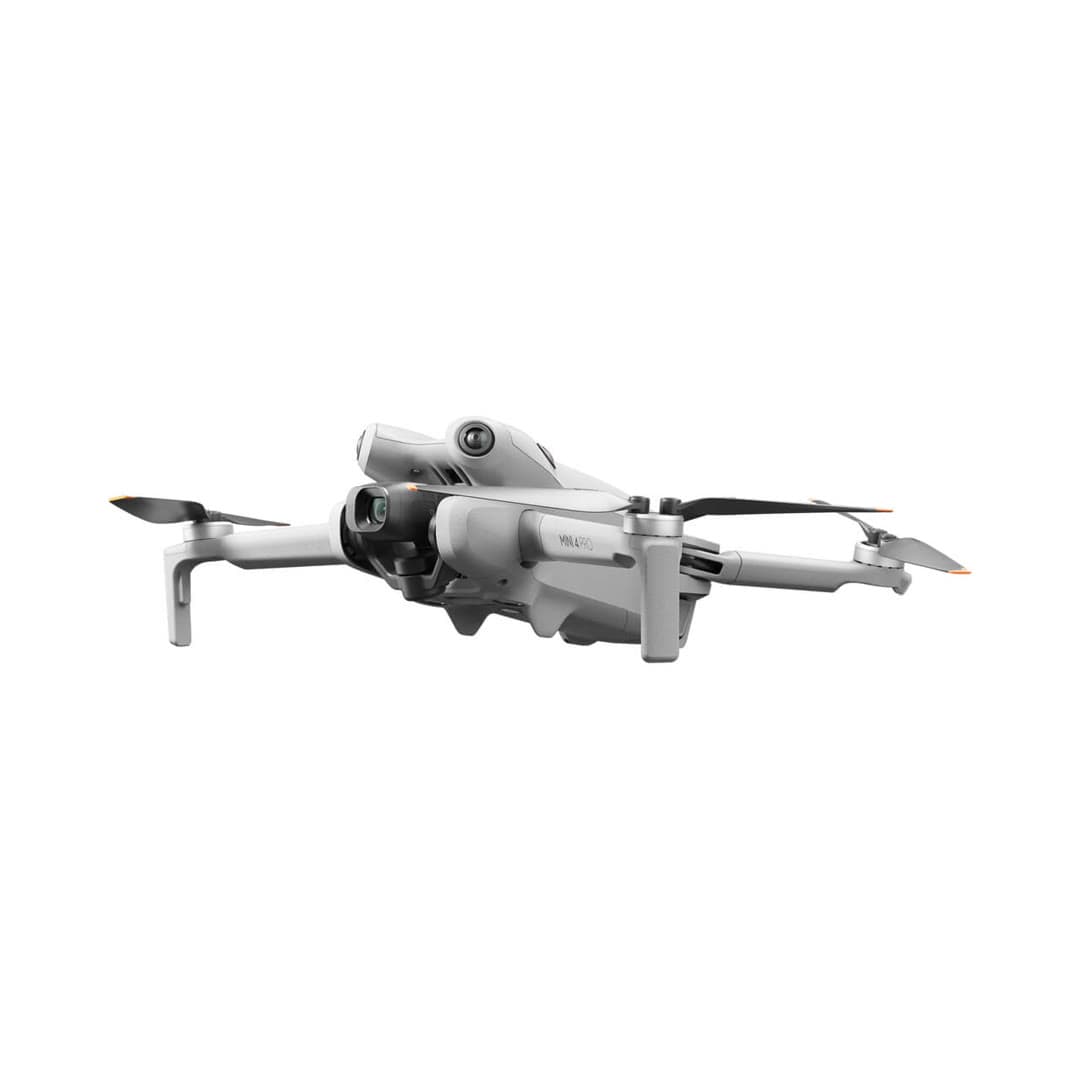
DJI
Mini 4 Pro
The drone most experienced flyers point beginners toward once budget allows: full omnidirectional obstacle sensing, long range, and excellent footage, all while staying under the 249 g recreational registration line.
Strengths
- Omnidirectional obstacle sensing, rare in a sub-250 g drone
- Strong 1/1.3-inch sensor with 4K/60 HDR and 10-bit D-Log M
- Long ~34-minute flight time and reliable O4 transmission
Tradeoffs
- Costs roughly double an entry drone once you add the controller
- Affected by the DJI import freeze: finite U.S. stock, drifting prices
- Overkill if you only want quick social clips
- Weight
- Under 249 g
- Camera
- 4K/60 HDR, 1/1.3in
- Flight time
- ~34 min (45 w/ Plus)
- Obstacle sensing
- Omnidirectional
- Transmission
- DJI O4, ~20 km
- Wind resistance
- Level 5
Best for: Buyers who want the best all-round Mini and can use the recreational sub-250 g registration exception with a standard configuration.
Amazon comes first when available. Official links stay visible for exact specs, stock, and manufacturer support. We may earn a commission at no extra cost to you. Disclosure
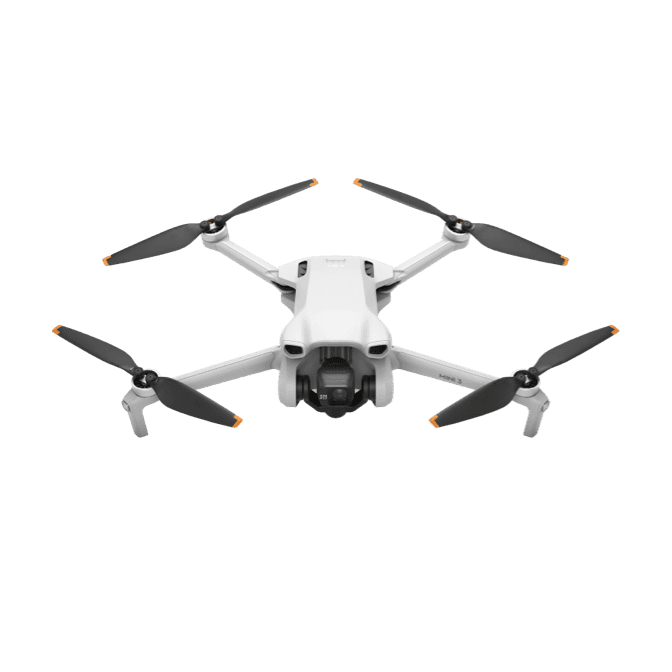
DJI
Mini 3
The simpler Mini 3 trades obstacle avoidance and tracking for a strong camera, vertical shooting, long battery options, and a straightforward DJI Fly workflow.
Strengths
- Strong 1/1.3-inch camera and true vertical shooting for the price
- Under 249 g with the standard battery
- Long published endurance and a mature DJI accessory ecosystem
Tradeoffs
- No forward, rear, or side obstacle sensing
- No FocusTrack subject tracking
- Plus battery changes the legal weight path in the United States
- Weight
- Under 249 g with standard battery
- Camera
- 1/1.3in; 4K HDR and true vertical
- Sensing
- Downward positioning only
- Flight time
- 38 min standard; 51 min Plus published max
- Control
- DJI RC or RC-N1
- App
- DJI Fly
Best for: Pilots who want Mini-series image quality and vertical capture without paying for advanced sensing or tracking.
Amazon comes first when available. Official links stay visible for exact specs, stock, and manufacturer support. We may earn a commission at no extra cost to you. Disclosure
Aircraft to operation
Before first launch
Buying the aircraft is one decision. Use this sequence to get from the box to a deliberate, legal first flight.
Aircraft under consideration
DJI Mini 3 Pro
DJI Mini 3 Pro: Under 249 g with standard battery
- 01Check registration
Aircraft status
Set the registration path
DJI Mini 3 Pro is listed at Under 249 g with standard battery. Recreational-only use may qualify for the sub-250 g exception. Part 107 flights still require registration, so confirm takeoff weight with the flight battery and accessories fitted.
- 02Start the airspace check
Launch location
Check the exact airspace
The aircraft does not decide whether a location is clear. Check the launch point, planned altitude, date, and time for controlled airspace, restrictions, and local launch rules.
- 03Check commercial requirements
Only when it is work
ConditionalDecide whether Part 107 applies
A small drone does not create a business-use exception. If the flight serves a client, employer, listing, monetized project, or another non-recreational purpose, check the Part 107 path first.
- 04Open the first-flight checklist
Props still off
Run the first-flight preflight
Confirm aircraft condition, firmware, battery health, controller link, home point, return-to-home settings, weather, people, obstacles, and the lost-link plan before takeoff.
How we score
The score is an editorial composite of four axes: flight and camera capability, owner sentiment drawn from published reviews, build and reliability, and value for the money. It reflects research and cross-checking rather than lab measurement, and we do not invent star counts. Prices are typical U.S. street bands and move around, especially for DJI while the import freeze lasts.
Affiliate relationships do not change our scores or rankings. Read the full affiliate disclosure.