Drone Authority · Owner guide · Legacy integrated FPV system
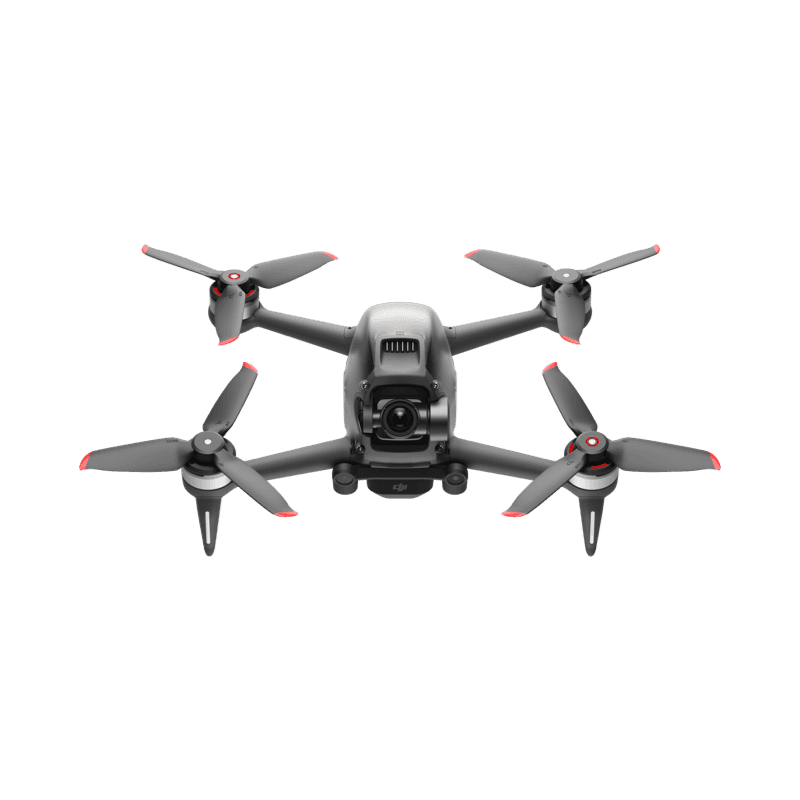
DJI DJI FPV
Built from official manuals, FAA records, current support pages, and model-specific compatibility checks. It is an ownership guide, not a hands-on review.
Ownership brief
Fast Integrated FPVExisting owners and disciplined pilots who want DJI's integrated fast-FPV experience and accept its repair, battery, and ecosystem limits.
Price band only. Official manufacturer page. We earn no commission.
- Typical price
- $450 - $900 used by goggles and battery count
- Category
- Legacy integrated FPV system
Owner desk
Legacy integrated FPV and repair-risk watchLiving with the DJI FPV.
DJI FPV is a fast integrated camera aircraft, not a conventional repairable freestyle quad. Safe ownership means current Remote ID firmware, exact goggles and controller pairing, simulator-first manual training, correctly marked props, healthy 6S intelligent batteries, and realistic crash economics.
Configuration
Fast integrated FPV system
Weight
Approximately 795 g
Legal configuration
Registration, Remote ID, and what changes them.
Arm braces, guards, lights, cameras, and repaired shells alter drag, balance, sensing, and crash loads. Registration is already required, but configuration still matters.
- Recreational
- Registration is required because the aircraft is over 250 g.
- Part 107
- Register the exact DJI FPV aircraft serial in the Part 107 inventory before non-recreational use.
- Remote ID
- The FAA lists an accepted declaration for model FPV. DJI requires aircraft firmware V01.04.0000 or later. Location-source requirements vary by goggles, so confirm the complete setup and broadcast before flight.
- Control stack
- DJI Fly with DJI FPV Goggles V2, or the documented later Explorer control stack
First 30 minutes
Set it up before the launch site.
- 01
Identify and update the complete system
Record the aircraft, goggles, controller, batteries, props, firmware, and app version. Update and bind the documented stack before leaving home.
- 02
Inspect marked props and motors
Match A and B marked propellers to the corresponding motors, confirm every blade and hub is undamaged, and verify battery latching and antenna condition.
- 03
Prove stabilized safety behavior
In an open legal area with a visual observer, test Normal mode, braking, signal loss, home point, return-to-home, and battery warnings close to the launch point.
- 04
Earn Manual mode in a simulator
Use FPV Remote Controller 2, build throttle and orientation control in a simulator, then progress through a large clear field. Motion controllers do not provide Manual mode.
Compatible kit
What to buy first.
Healthy original batteries, exact A/B props, rigid transport, and simulator time come before arm braces or camera accessories. Price replacement airframe parts before buying a used bundle.
What not to change
DJI FPV does not share flight batteries or props with Avata. Do not unlock transmission power, use unsupported firmware, mix prop markings, or treat sensor slowdown as automatic obstacle braking.
We have not verified any third-party exact-fit parts yet.
Nothing has passed our fit check for this model yet, so we are not going to guess. Use the official parts path below and check the model name on every flight-critical part. The wider store still carries field gear that never touches the aircraft.
Browse field gearMaintenance
What to check, and how often.
- Before every pack
- Check propellers, guards, motor shafts, battery retention, camera angle, video link, and failsafe behavior. A previous impact can loosen more than the visible part.
- After any crash
- Disarm, disconnect the battery, inspect the frame and motors, clear debris, and test at low power before returning to full flight.
- Every session
- Log damaged packs, retire puffed or punctured LiPos, and return reusable packs to storage voltage with the correct charger.
- After firmware or controller changes
- Recheck control direction, arming, mode switches, failsafe, video, and return behavior in a controlled area.
Troubleshooting
Common symptoms and what to check.
The aircraft will not enter Manual mode
Confirm FPV Remote Controller 2, current firmware, the custom-mode assignment, the physical throttle configuration, and every in-app Manual mode acknowledgment. Motion controllers do not enable Manual mode.
Do not troubleshoot Manual mode in the air. Return to stabilized mode and a simulator.
The aircraft pulls, vibrates, or sounds harsh after a landing
Disarm, remove the battery, match A/B props to motors, inspect blades, hubs, arms, landing gear, motor shafts, and shell alignment, then perform a restrained low-power test.
Stop if an arm is cracked, a motor binds, a prop is damaged, or vibration remains.
Repair cost approaches the value of the system
Price the actual arm, shell, gimbal, battery set, goggles, controller, labor, and support path. Compare Avata 2 for protected filming and a repairable O4 build for freestyle rather than seeking one false successor.
Retire the aircraft when a safety-critical repair lacks a supported part or qualified service path.
Official support
Manuals, firmware, parts.
Learn next
Where to go next.
- Registration checkerSee how weight, recreation, and Part 107 change the answer.
- First-flight checklistTurn setup into a controlled first launch.
- Can I fly here?Check airspace, authorization, TFRs, weather, and launch permission.
- FPV simulator guideBuild control memory in a simulator before switching to manual mode.
- First FPV flightSet up a safe progression from stabilized flight to manual control.
Published figures
- Weight
- Approximately 795 g
- Camera
- 1/2.3in, 12 MP; 4K/60
- Sensing
- Forward and downward slowdown, not full avoidance
- Flight time
- 20 min published max
- Control
- FPV Remote Controller 2, Motion Controller, or documented Explorer stack
- App
- DJI Fly through compatible goggles
Against the 250 g registration line
795 g
Above the line. Register this aircraft with the FAA before you fly it, recreationally or under Part 107, and meet Remote ID. Registration rules
Ownership strengths
- Fast stabilized and manual flight with an integrated HD video system
- Emergency brake, GPS return behavior, and accepted Standard Remote ID
- Official replaceable arms, landing gear, shell, and camera-gimbal parts were designed into the platform
Best fit. Existing owners and disciplined pilots who want DJI's integrated fast-FPV experience and accept its repair, battery, and ecosystem limits.
Owner cautions
- Heavy and expensive to crash compared with a conventional repairable FPV quad
- Forward sensors slow the aircraft but do not automatically brake in normal operation
- Manual mode removes most assistance and demands simulator skill plus deliberate field progression
Look elsewhere if. Heavy and expensive to crash compared with a conventional repairable FPV quad
What the DJI FPV is
DJI FPV is a fast integrated aircraft, goggles, and controller system rather than a repairable freestyle quad. The safe ownership path is simulator-first manual training, accepted Remote ID firmware, exact marked propellers, healthy batteries, and a sober crash-cost calculation.
This page is organized around setup, legal configuration, exact-fit parts, maintenance, troubleshooting, and current official support. It is not presented as a hands-on Drone Authority review.
Travel, Remote ID, and support
- Battery on a plane
- Intelligent Flight Battery: 44.4 Wh, no airline approval needed. Spares ride in the cabin only. Battery airline check
- Remote ID
- Standard Remote ID built in. FAA declaration RID000000756. Requires aircraft firmware V01.04.0000 or later. Remote ID lookup
- Maker support
- Latest firmware found: v01.04.0000 (July 25, 2023). Support tracker
Shopping for the DJI DJI FPV?
Typical price $450 - $900 used by goggles and battery count. Check availability before you commit.
Compare with
DJI
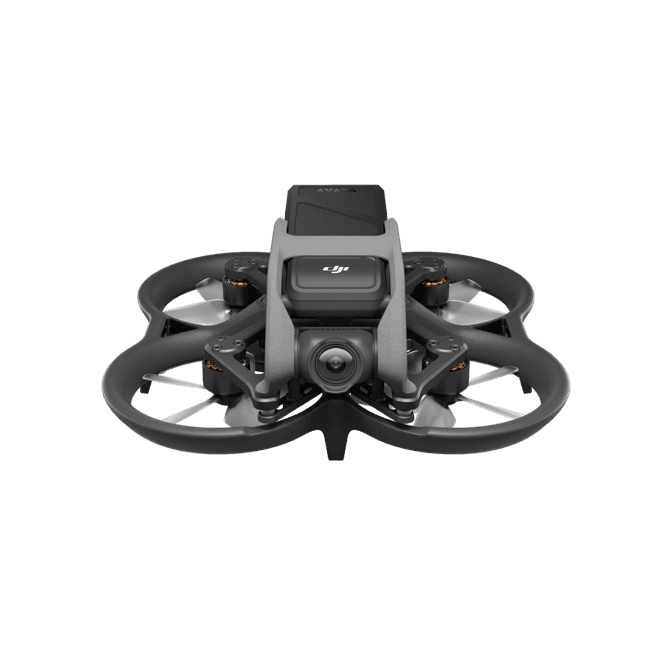
Avata
The original Avata remains a capable guarded cinematic FPV system. Owners need an exact goggles-controller compatibility pair, current Remote ID firmware, undamaged ducts and frame, and original-Avata batteries and props rather than Avata 2 parts.
Strengths
- Integrated propeller guards and stabilized modes lower the entry barrier to immersive flight
- 4K/60 capture, 20 GB internal storage, and accepted Standard Remote ID
- Works with several official goggles and controller combinations when firmware is matched
Tradeoffs
- No forward obstacle avoidance and limited published endurance
- Manual-mode skill still requires simulator work and a visual observer where goggles are used
- Avata 2 batteries, props, guards, and body-fit accessories are not interchangeable
- Weight
- Approximately 410 g
- Camera
- 1/1.7in, 12 MP output; 4K/60
- Protection
- Integrated propeller guards
- Flight time
- 18 min published hover time
- Control
- Documented Avata goggles and controller pair
- App
- DJI Fly through compatible goggles; phone GNSS may be required
Best for: Owners who want a supported guarded FPV platform and can verify the exact goggles, controller, firmware, and crash history.
Amazon comes first when available. Official links stay visible for exact specs, stock, and manufacturer support.
DJI
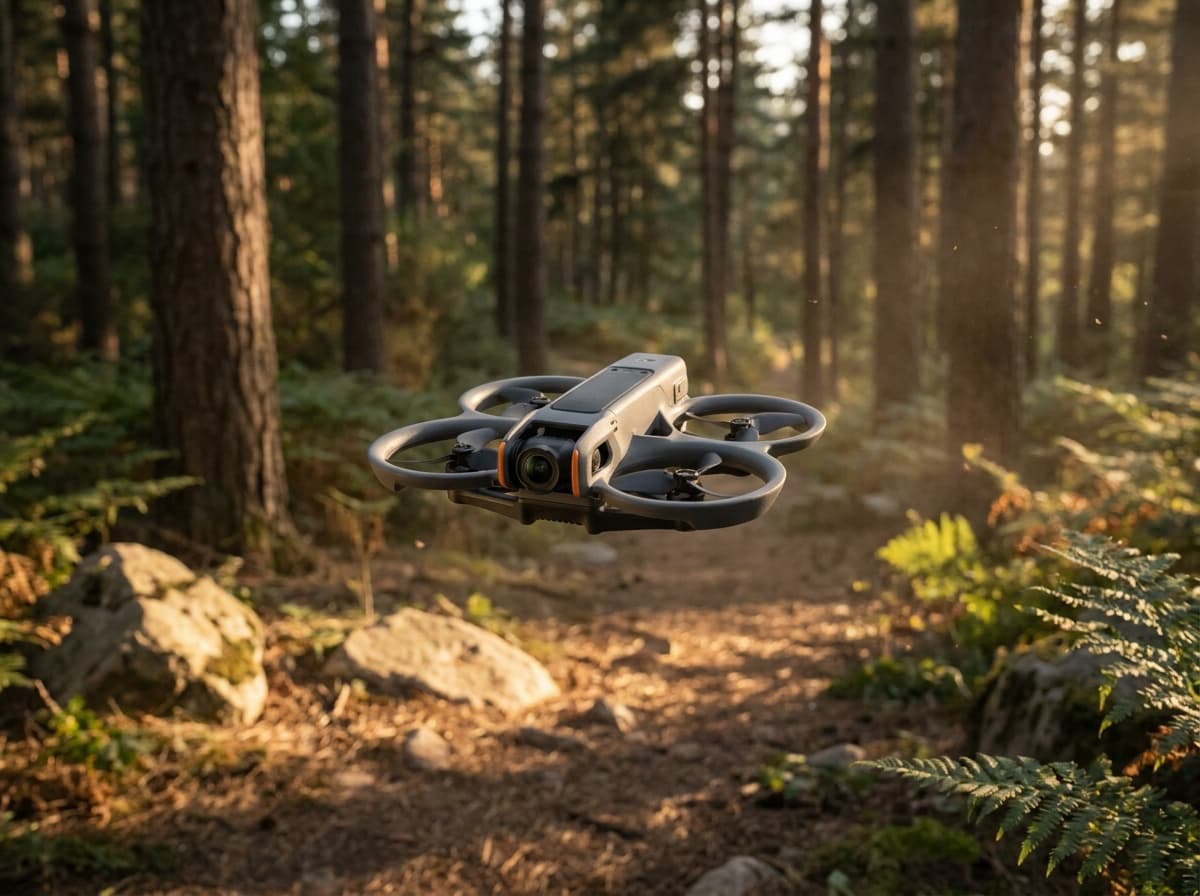
Avata 2
DJI's ready-to-fly FPV package: a ducted 4K cinewhoop with Goggles 3 and the Motion 3 controller in the box, one-button flips and rolls, and prop guards that forgive beginner mistakes.
Strengths
- Complete FPV kit in one box: no building, binding, or soldering
- Goggles 3 pairing with one-button acro makes immersive flying instantly accessible
- Ducted design is far safer indoors and near people than open-prop quads
Tradeoffs
- Locked DJI ecosystem: no custom parts path when you outgrow it
- Heavier than 250 g, so registration always applies
- Camera
- 1/1.3-in, 4K HDR, 155° FOV
- Kit
- Goggles 3 + RC Motion 3 included (Fly More combo)
- Safety
- Built-in prop guard, RTH, binocular sensing
- Transmission
- O4, up to 8 mi
Best for: Pilots who want goggle flying today, without building a quad first.
Amazon comes first when available. Official links stay visible for exact specs, stock, and manufacturer support. We may earn a commission at no extra cost to you. Disclosure
Aircraft to operation
Before first launch
Buying the aircraft is one decision. Use this sequence to get from the box to a deliberate, legal first flight.
Aircraft under consideration
DJI DJI FPV
DJI DJI FPV: Approximately 795 g
- 01Check registration
Aircraft status
Set the registration path
DJI DJI FPV is listed at Approximately 795 g. Plan on registration before launch. Part 107 registration is per aircraft.
- 02Start the airspace check
Launch location
Check the exact airspace
The aircraft does not decide whether a location is clear. Check the launch point, planned altitude, date, and time for controlled airspace, restrictions, and local launch rules.
- 03Check commercial requirements
Only when it is work
ConditionalDecide whether Part 107 applies
A small drone does not create a business-use exception. If the flight serves a client, employer, listing, monetized project, or another non-recreational purpose, check the Part 107 path first.
- 04Open the first-flight checklist
Props still off
Run the first-flight preflight
Confirm aircraft condition, firmware, battery health, controller link, home point, return-to-home settings, weather, people, obstacles, and the lost-link plan before takeoff.
How this guide is built
This guide draws on official manuals and support pages, FAA Remote ID records, published specifications, and compatibility data. It separates confirmed exact-fit parts from universal gear, and it does not imply we have flown the aircraft.
Affiliate relationships do not change our scores or rankings. Read the full affiliate disclosure.