On this page
Camera-drone service or FPV bench repair?
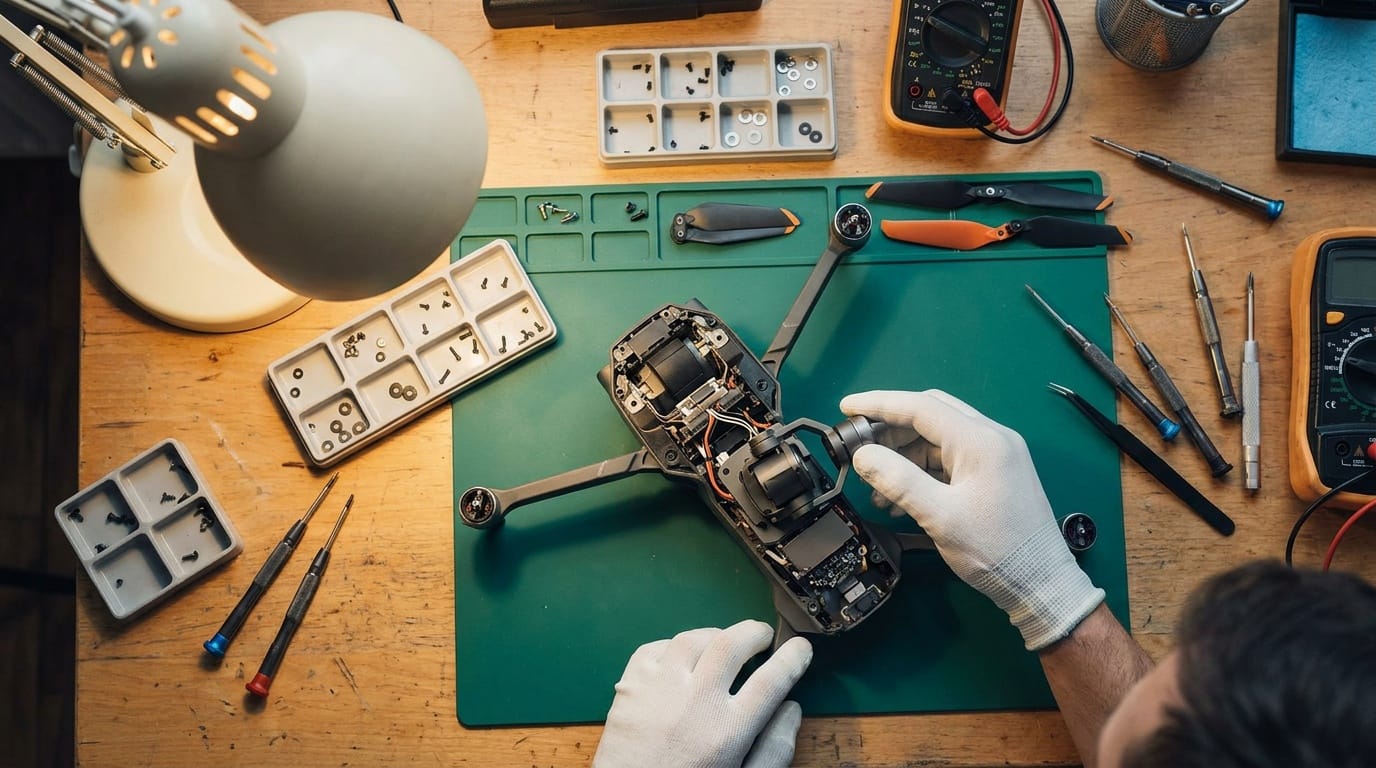
This guide covers manufacturer, mail-in, independent-shop, and replacement decisions for integrated camera drones. A repairable Betaflight quad has a different workflow: isolate battery and structural damage first, then prove power, control, video, motors, and configuration in order. Use the FPV crash repair and tuning desk for that system.
Cost ranges by damage type
- •Props and prop mounts: trivial: carry spares, learn the swap. If a 'repair shop' charges real money for props alone, leave.
- •Shell, arms, landing gear: $80-$250 on consumer models; parts are cheap, labor is the cost.
- •Gimbal camera assembly: $150-$500: the classic crash casualty and the most common quote you'll see. On budget drones this alone can total the aircraft.
- •Core electronics / main board: $200-$500+; approach with repair-vs-replace math in hand.
- •Water exposure: unpredictable; frequently totaled. See the FAQ before spending.
The repair-or-replace decision, 2026 edition
The traditional threshold, replace once repair passes roughly half the cost of new, assumed the replacement existed at a sane price. For DJI aircraft in 2026, check the actual street price of remaining stock first: with imports frozen and shelves thinning, “new” may cost well above what you paid, or not exist in your model at all. A $350 gimbal repair on a $900 drone you can't re-buy is a good deal. The other inputs: airframe age and battery health (repairing a tired aircraft with aging packs compounds bad money), whether your income depends on it (turnaround time is a cost), and whether an accidental-damage plan already makes the choice for you: check before paying any shop.
Where to go
- •Manufacturer / plan service: predictable, genuine parts, warranty-safe: bounded by model support and, for DJI in the U.S., by how parts supply holds up under the import freeze.
- •Independent and mail-in shops: the workhorse channel: faster turnaround, out-of-warranty and gray-market friendly, and often the only realistic option for discontinued models. Vet them: published pricing, diagnosis policy, parts sourcing, and warranty on the repair itself.
- •DIY: props, shells, arms, and motors on repair-friendly camera platforms can be learnable weekend work with OEM parts. Stop at gimbals, ribbon cables, and soldered systems unless you already have the right bench skills. Repairable FPV quads belong in the dedicated FPV workflow linked above.
Before you ship a drone anywhere
- •Export and back up flight logs: they document what failed (and support warranty/insurance claims).
- •Pull the microSD card; wipe it if footage is sensitive.
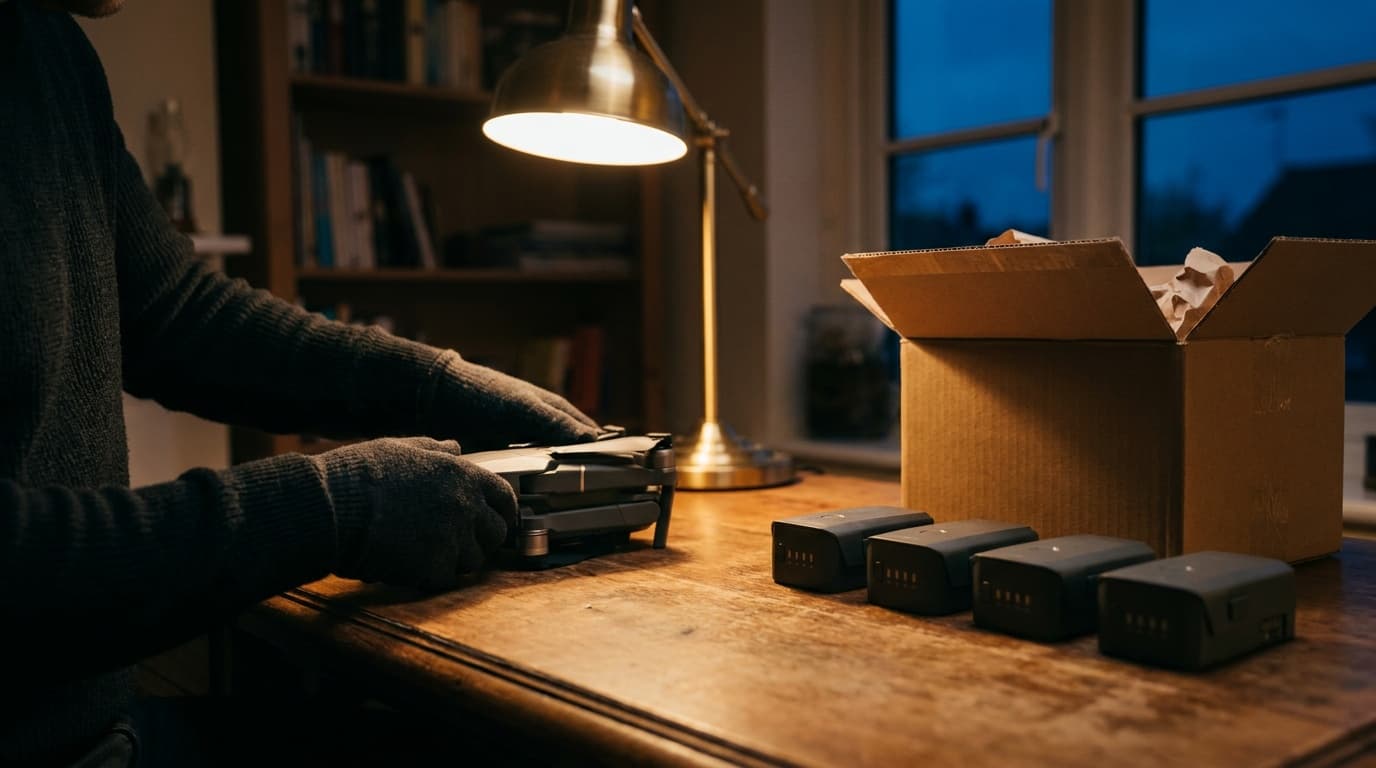
- •Note battery state and ship per lithium rules: most services want batteries at partial charge, and some want them kept.
- •Photograph the damage and serial numbers before boxing.
- •If insured or on a damage plan, open that claim FIRST: an unauthorized repair can forfeit coverage.
Prevention is the cheap repair
Most repair invoices trace to skippable causes: flying with damaged props, ignoring compass/IMU warnings, low-battery returns over water. Our pre-flight checklist is free and cheaper than a gimbal.
Frequently asked questions
- How much does drone repair cost?
- Rough 2026 ranges for popular consumer models: propellers and prop-related fixes, trivial to $50 DIY; arm or shell replacement, $80-$250; gimbal camera assemblies (the most common crash casualty), $150-$500 depending on model; main board or core electronics, $200-$500+; water damage, unpredictable and often totaled. Enterprise aircraft run multiples of these numbers. Get a quote before authorizing anything: reputable shops diagnose for free or a small fee credited to the repair.
- Should I repair my drone or buy a new one?
- The old rule was 'replace when repair exceeds ~50-60% of a new unit.' In 2026 the rule has a prior question: can you actually replace it? With new DJI models blocked from U.S. import and existing stock priced above old MSRP, repairing a good airframe is frequently the rational move even at ratios that used to mean 'replace.' Factor the replacement's real street price, not launch MSRP, into the math.
- Where should I get my drone repaired?
- Three channels. Manufacturer service (or plan-based replacement if you carry one): predictable quality, model support limits apply. Independent repair shops, including large mail-in operations and authorized service centers: often faster and cheaper, essential for out-of-warranty and gray-market units. DIY with OEM or aftermarket parts: cheapest, sensible for props, shells, and arms on repair-friendly models; gimbal and soldered work is where most DIYers should stop.
- Does crashing void my drone warranty?
- Pilot-error crash damage isn't warranty-covered anywhere: warranties cover defects. That's exactly the gap accidental-damage plans exist to fill. Third-party repair of crash damage also doesn't 'void the warranty' wholesale in the U.S. (Magnuson-Moss), but a botched repair can give a manufacturer cause to deny related claims: one reason to use competent shops on aircraft still under warranty.
- Is it worth repairing water damage?
- Usually the worst-odds repair there is. Immediate power-off, no re-power attempts, and fast professional ultrasonic cleaning can save some aircraft, but corrosion failures show up weeks later, so even 'successful' fixes carry risk. For salt water, assume totaled. If a shop quotes heavy board-level work on a soaked consumer drone, put the money toward the next aircraft.
Next steps
Open the guide or tool that matches the next decision.