Drone Authority · Owner guide · Supported mid-size camera drone
DJI Mavic Air 2
Built from official manuals, FAA records, current support pages, and model-specific compatibility checks. It is an ownership guide, not a hands-on review.
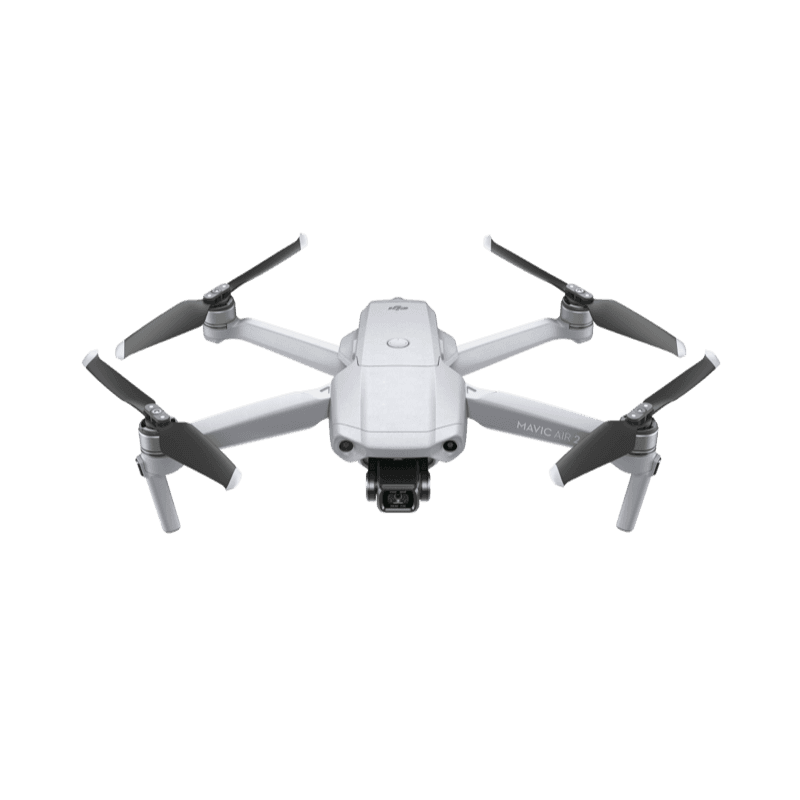
Ownership brief
Mature 4K/60 PlatformOwners who need to keep a proven Air 2 flying, or used buyers who can verify firmware, batteries, binding, and exact model identifier.
Price band only. Official manufacturer page. We earn no commission.
- Typical price
- $350 - $650 used or refurbished
- Category
- Supported mid-size camera drone
Owner desk
Supported legacy, parts watchLiving with the Mavic Air 2.
Mavic Air 2 can still do useful work. The owner checklist is battery health, the exact MA2UE model identifier, current Remote ID firmware, controller and phone support, and a clean boundary between shared Air 2S power parts and camera-specific parts.
Configuration
Mature 4K/60 camera platform
Weight
Approximately 570 g
Legal configuration
Registration, Remote ID, and what changes them.
Registration is already required, but guards, lights, mounts, and payloads still reduce endurance and propulsion margin and can interfere with sensing or cooling.
- Recreational
- Registration is required because the aircraft is over 250 g.
- Part 107
- Register the exact aircraft serial in the Part 107 inventory before any non-recreational flight.
- Remote ID
- DJI added Standard Remote ID with aircraft firmware V01.01.16.00 and DJI Fly V1.12.0 or later. The FAA has separate accepted declarations for MA2UE1N and MA2UE3W, so match the identifier shown by the aircraft rather than guessing.
- Control stack
- DJI Fly with RC-N1 or supported DJI Smart Controller
First 30 minutes
Set it up before the launch site.
- 01
Charge and inventory the whole system
Charge the aircraft battery and RC-N1 or the supported DJI Smart Controller. Remove every transport protector, confirm the correct propellers, and inspect for shipping damage.
- 02
Activate in DJI Fly
Connect to the internet, activate the aircraft, bind any service plan, and complete every prompted aircraft, controller, and battery update before leaving home.
- 03
Set the safety envelope
Confirm return-to-home altitude, obstacle behavior, signal-loss action, units, storage location, and camera defaults. These are aircraft settings, not assumptions.
- 04
Run a close first hover
Use a wide legal area, wait for a stable home point, hover at eye level, test controls and braking, then verify return-to-home without sending the aircraft far away.
Compatible kit
What to buy first.
Secure healthy official batteries and matched props first. DJI documents battery, hub, charger, propeller, and controller overlap with Air 2S, but excludes the Air 2S gimbal protector and ND filters.
What not to change
Do not order Air 2S filters or gimbal protection for Mavic Air 2. Avoid unofficial firmware, antennas, batteries, and mounts that obstruct sensors, ventilation, or gimbal travel.
We have not verified any third-party exact-fit parts yet.
Nothing has passed our fit check for this model yet, so we are not going to guess. Use the official parts path below and check the model name on every flight-critical part. The wider store still carries field gear that never touches the aircraft.
Browse field gearMaintenance
What to check, and how often.
- Before every flight
- Inspect every propeller, motor bell, arm hinge, sensor window, and gimbal guard area. Replace a nicked or warped propeller instead of trying to straighten it.
- After dust, sand, salt, or moisture
- Power down, remove the battery, brush away loose debris, and let the aircraft dry fully. Do not use compressed air to drive grit into motors or gimbal bearings.
- Every 10 flights
- Review battery swelling, cell warnings, propeller screws, storage capacity, return-to-home altitude, and the app flight log.
- Before storage
- Let intelligent batteries manage themselves at room temperature, keep them out of a hot vehicle, and recheck charge state before the next job.
Troubleshooting
Common symptoms and what to check.
The aircraft drifts, will not hold position, or reports a compass warning
Move away from vehicles, reinforced concrete, speakers, and large metal objects. Confirm satellite status and follow the manufacturer calibration prompt only when the app asks for it.
Do not launch while position or compass warnings remain.
The horizon is tilted or footage vibrates
Remove the gimbal guard, inspect the gimbal dampers and propellers, clean the lens, and run the official gimbal calibration on a level surface.
Stop if the gimbal binds, chatters, or was struck hard enough to deform its mount.
Firmware update stalls or components show mismatched versions
Charge the aircraft and controller above the manufacturer minimum, keep every component powered and close together, use a stable network, and update each intelligent battery when required.
Do not fly through a version mismatch or repeated update failure. Use official support.
Remote ID is not visible after the update
Confirm aircraft firmware V01.01.16.00 or later, DJI Fly V1.12.0 or later, location permissions, the exact MA2UE model identifier, and the Remote ID serial displayed in DJI Fly.
Do not use the aircraft in an operation requiring Standard Remote ID until the broadcast and DroneZone record are confirmed.
A battery swells, unlatches, or loses endurance
Land, inspect the shell and contacts, review cell state and charge count, compare it with a known healthy pack, and verify that the battery locks flush into both latches.
Retire a swollen, damaged, wet, overheating, or repeatedly imbalanced battery.
Official support
Manuals, firmware, parts.
Learn next
Where to go next.
- Registration checkerSee how weight, recreation, and Part 107 change the answer.
- First-flight checklistTurn setup into a controlled first launch.
- Can I fly here?Check airspace, authorization, TFRs, weather, and launch permission.
- Better aerial footageUse deliberate moves, exposure, and shot planning instead of relying on automation.
Published figures
- Weight
- 570 g
- Camera
- 1/2in, 48 MP; 4K/60
- Sensing
- Forward, backward, downward
- Flight time
- 34 min published max
- Control
- DJI RC-N1 or DJI Smart Controller
- App
- DJI Fly
Against the 250 g registration line
570 g
Above the line. Register this aircraft with the FAA before you fly it, recreationally or under Part 107, and meet Remote ID. Registration rules
Ownership strengths
- 4K/60, RAW photos, a 48 MP mode, and solid published endurance
- FAA-accepted Standard Remote ID path after the required firmware update
- Battery, propeller, hub, and controller overlap with Air 2S
Best fit. Owners who need to keep a proven Air 2 flying, or used buyers who can verify firmware, batteries, binding, and exact model identifier.
Owner cautions
- No upward or side sensing and a smaller sensor than Air 2S
- ND filters and gimbal protection do not interchange with Air 2S
- Aging batteries and used-aircraft history now matter more than launch-era specifications
Look elsewhere if. No upward or side sensing and a smaller sensor than Air 2S
What the DJI Mavic Air 2 is
Mavic Air 2 still offers useful 4K/60 capture and a mature control system. Ownership now hinges on battery condition, the firmware-dependent Remote ID upgrade, and separating shared Air 2S parts from camera-specific parts.
This page is organized around setup, legal configuration, exact-fit parts, maintenance, troubleshooting, and current official support. It is not presented as a hands-on Drone Authority review.
Travel, Remote ID, and support
- Battery on a plane
- Intelligent Flight Battery: 40.42 Wh, no airline approval needed. Spares ride in the cabin only. Battery airline check
- Remote ID
- Standard Remote ID built in. FAA declaration RID000000754, RID000000755. Requires aircraft firmware V01.01.16.00, DJI Fly V1.12.0 or later. Remote ID lookup
- Maker support
- Latest firmware found: v01.01.16.00 (April 11, 2024). Support tracker
Shopping for the DJI Mavic Air 2?
Typical price $350 - $650 used or refurbished. Check availability before you commit.
Compare with
DJI
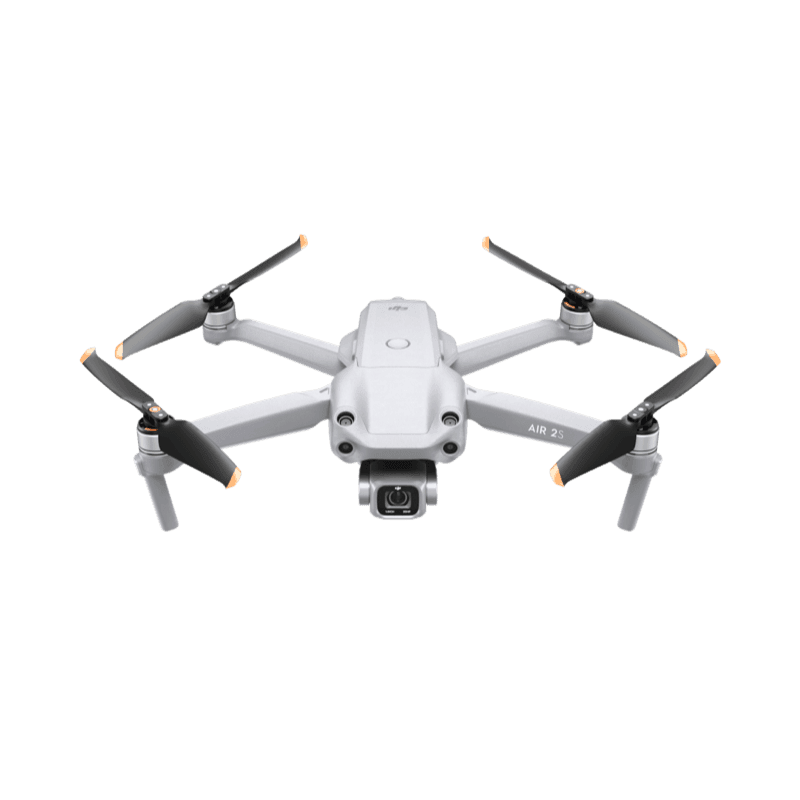
Air 2S
Air 2S remains a serious one-inch-sensor camera platform, but a good ownership decision now depends on battery age, generation-specific accessories, Remote ID firmware, and repair support.
Strengths
- One-inch 20 MP sensor with 5.4K, D-Log, and HLG capture
- AirSense and four-direction obstacle sensing
- Most Mavic Air 2 accessories fit, with documented exceptions
Tradeoffs
- No side obstacle sensing
- Older batteries and used-aircraft history require inspection
- Gimbal protector and ND filters are not interchangeable with Mavic Air 2
- Weight
- 595 g
- Camera
- 1in, 20 MP; 5.4K video
- Sensing
- Forward, backward, upward, downward
- Flight time
- 31 min published max
- Control
- RC-N1, DJI RC, RC Pro, or Smart Controller
- App
- DJI Fly
Best for: Value-conscious camera pilots who prioritize a one-inch sensor and can audit a mature used or refurbished kit carefully.
Amazon comes first when available. Official links stay visible for exact specs, stock, and manufacturer support.
DJI
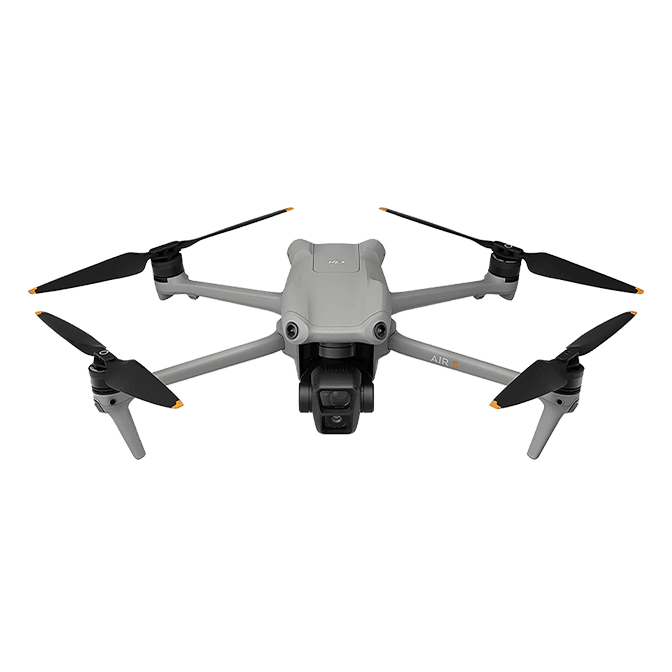
Air 3
Air 3 is the established dual-camera workhorse: the owner value is less about headline range and more about using both focal lengths, managing a battery rotation, and keeping the O4 controller stack matched.
Strengths
- Useful wide and 3x-equivalent medium-tele cameras
- Omnidirectional sensing and mature O4 control system
- Excellent published endurance for a portable production aircraft
Tradeoffs
- Both cameras use smaller 1/1.3-inch sensors than one-inch alternatives
- Aircraft and battery are substantially heavier than the Mini line
- Air 3 and Air 3S camera filters and body-fit accessories are not universally interchangeable
- Weight
- 720 g
- Camera
- 24mm wide + 70mm medium tele
- Sensing
- Omnidirectional
- Flight time
- 46 min published max
- Control
- DJI RC 2, RC-N2, or RC-N3 with current firmware
- App
- DJI Fly
Best for: Creators and small commercial crews that want two genuinely useful focal lengths in a mature, portable DJI system.
Amazon comes first when available. Official links stay visible for exact specs, stock, and manufacturer support. We may earn a commission at no extra cost to you. Disclosure
Aircraft to operation
Before first launch
Buying the aircraft is one decision. Use this sequence to get from the box to a deliberate, legal first flight.
Aircraft under consideration
DJI Mavic Air 2
DJI Mavic Air 2: 570 g
- 01Check registration
Aircraft status
Set the registration path
DJI Mavic Air 2 is listed at 570 g. Plan on registration before launch. Part 107 registration is per aircraft.
- 02Start the airspace check
Launch location
Check the exact airspace
The aircraft does not decide whether a location is clear. Check the launch point, planned altitude, date, and time for controlled airspace, restrictions, and local launch rules.
- 03Check commercial requirements
Only when it is work
ConditionalDecide whether Part 107 applies
A small drone does not create a business-use exception. If the flight serves a client, employer, listing, monetized project, or another non-recreational purpose, check the Part 107 path first.
- 04Open the first-flight checklist
Props still off
Run the first-flight preflight
Confirm aircraft condition, firmware, battery health, controller link, home point, return-to-home settings, weather, people, obstacles, and the lost-link plan before takeoff.
How this guide is built
This guide draws on official manuals and support pages, FAA Remote ID records, published specifications, and compatibility data. It separates confirmed exact-fit parts from universal gear, and it does not imply we have flown the aircraft.
Affiliate relationships do not change our scores or rankings. Read the full affiliate disclosure.