Drone Authority · Owner guide · Supported professional camera drone
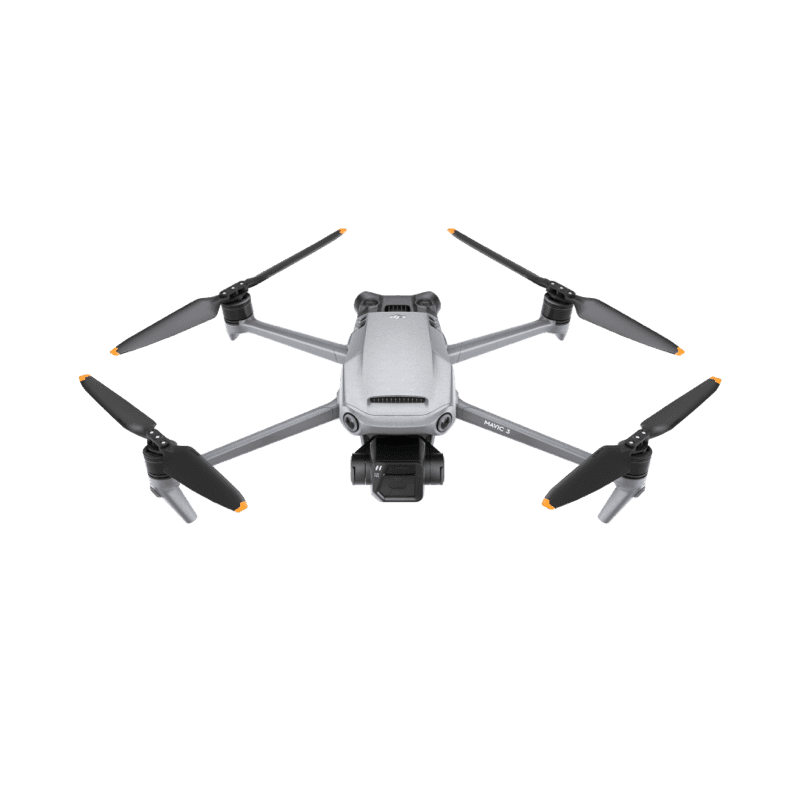
DJI Mavic 3 / Cine
Built from official manuals, FAA records, current support pages, and model-specific compatibility checks. It is an ownership guide, not a hands-on review.
Ownership brief
Production LegacyProduction owners and used buyers who need a 4/3 camera and can verify the exact Mavic 3 or Cine configuration before buying parts.
Price band only. Official manufacturer page. We earn no commission.
- Typical price
- $1,200 - $2,700 used by Cine and controller
- Category
- Supported professional camera drone
Owner desk
Supported production legacyLiving with the Mavic 3 / Cine.
Original Mavic 3 ownership begins by identifying the exact standard or Cine aircraft. Storage, codec, controller, camera guard, filters, battery history, and resale value all change with that answer.
Configuration
Original Mavic 3 and Cine production system
Weight
895 g Mavic 3; 899 g Mavic 3 Cine
Legal configuration
Registration, Remote ID, and what changes them.
Payloads and mounts can block omnidirectional sensing, alter gimbal balance, and reduce propulsion margin. Registration does not make a poor configuration safe.
- Recreational
- Registration is required because every Mavic 3 configuration is over 250 g.
- Part 107
- Register the exact aircraft serial in the Part 107 inventory before professional use.
- Remote ID
- The FAA lists separate accepted Standard Remote ID declarations for Mavic 3 and Mavic 3 Cine. Match the declaration and serial to the actual variant.
- Control stack
- DJI Fly with RC-N1, DJI RC, or RC Pro by configuration
First 30 minutes
Set it up before the launch site.
- 01
Charge and inventory the whole system
Charge the aircraft battery and the supplied compatible controller. Remove every transport protector, confirm the correct propellers, and inspect for shipping damage.
- 02
Activate in DJI Fly
Connect to the internet, activate the aircraft, bind any service plan, and complete every prompted aircraft, controller, and battery update before leaving home.
- 03
Set the safety envelope
Confirm return-to-home altitude, obstacle behavior, signal-loss action, units, storage location, and camera defaults. These are aircraft settings, not assumptions.
- 04
Prove the exact recording path
Test the main and tele cameras, internal storage, microSD card, codec, file transfer, color workflow, every battery, and return-to-home before using the aircraft on a job.
Compatible kit
What to buy first.
Secure healthy batteries, matched propellers, camera-specific filters, approved media, and a case that fits the actual controller and aircraft guard.
What not to change
Mavic 3, Mavic 3 Cine, Classic, Pro, Enterprise, and Thermal are a family, not one interchangeable parts bin. Verify camera-side accessories and firmware against the exact model.
We have not verified any third-party exact-fit parts yet.
Nothing has passed our fit check for this model yet, so we are not going to guess. Use the official parts path below and check the model name on every flight-critical part. The wider store still carries field gear that never touches the aircraft.
Browse field gearMaintenance
What to check, and how often.
- Before every flight
- Inspect every propeller, motor bell, arm hinge, sensor window, and gimbal guard area. Replace a nicked or warped propeller instead of trying to straighten it.
- After dust, sand, salt, or moisture
- Power down, remove the battery, brush away loose debris, and let the aircraft dry fully. Do not use compressed air to drive grit into motors or gimbal bearings.
- Every 10 flights
- Review battery swelling, cell warnings, propeller screws, storage capacity, return-to-home altitude, and the app flight log.
- Before storage
- Let intelligent batteries manage themselves at room temperature, keep them out of a hot vehicle, and recheck charge state before the next job.
Troubleshooting
Common symptoms and what to check.
The aircraft drifts, will not hold position, or reports a compass warning
Move away from vehicles, reinforced concrete, speakers, and large metal objects. Confirm satellite status and follow the manufacturer calibration prompt only when the app asks for it.
Do not launch while position or compass warnings remain.
The horizon is tilted or footage vibrates
Remove the gimbal guard, inspect the gimbal dampers and propellers, clean the lens, and run the official gimbal calibration on a level surface.
Stop if the gimbal binds, chatters, or was struck hard enough to deform its mount.
Firmware update stalls or components show mismatched versions
Charge the aircraft and controller above the manufacturer minimum, keep every component powered and close together, use a stable network, and update each intelligent battery when required.
Do not fly through a version mismatch or repeated update failure. Use official support.
Cine files fail, drop frames, or fill the workflow unexpectedly
Verify internal SSD state, codec and frame rate, media offload, cable speed, available storage, edit-system support, and a complete backup before formatting.
Do not use a recording path on a client flight until it has completed a full ingest and backup test.
Official support
Manuals, firmware, parts.
Learn next
Where to go next.
- Registration checkerSee how weight, recreation, and Part 107 change the answer.
- First-flight checklistTurn setup into a controlled first launch.
- Can I fly here?Check airspace, authorization, TFRs, weather, and launch permission.
- Better aerial footageUse deliberate moves, exposure, and shot planning instead of relying on automation.
Published figures
- Weight
- 895 g Mavic 3; 899 g Cine
- Camera
- 4/3 Hasselblad + 162mm-equivalent tele
- Storage
- 8 GB standard; 1 TB Cine
- Flight time
- 46 min published max
- Control
- RC-N1, DJI RC, or RC Pro by configuration
- App
- DJI Fly
Against the 250 g registration line
895 g
Above the line. Register this aircraft with the FAA before you fly it, recreationally or under Part 107, and meet Remote ID. Registration rules
Ownership strengths
- Large 4/3 Hasselblad main camera and long published endurance
- Cine variant adds internal 1 TB SSD and ProRes workflow
- Omnidirectional sensing and mature Mavic 3 family support
Best fit. Production owners and used buyers who need a 4/3 camera and can verify the exact Mavic 3 or Cine configuration before buying parts.
Owner cautions
- Original tele camera is weaker than the main camera and later Pro system
- Used Cine value depends on storage health and included controller
- Mavic 3 family accessories share selectively, not universally
Look elsewhere if. Original tele camera is weaker than the main camera and later Pro system
What the DJI Mavic 3 / Cine is
The original Mavic 3 and Cine remain powerful production aircraft. The owner problem is correctly identifying the variant, controller, codec, storage, battery history, and shared-family accessory fit.
This page is organized around setup, legal configuration, exact-fit parts, maintenance, troubleshooting, and current official support. It is not presented as a hands-on Drone Authority review.
Travel, Remote ID, and support
- Battery on a plane
- Intelligent Flight Battery: 77 Wh, no airline approval needed. Spares ride in the cabin only. Battery airline check
- Remote ID
- Standard Remote ID built in. FAA declaration RID000000009, RID000000010. Remote ID lookup
- Maker support
- Latest firmware found: v01.00.1400 (July 16, 2024). Support tracker
Shopping for the DJI Mavic 3 / Cine?
Typical price $1,200 - $2,700 used by Cine and controller. Check availability before you commit.
Compare with
DJI
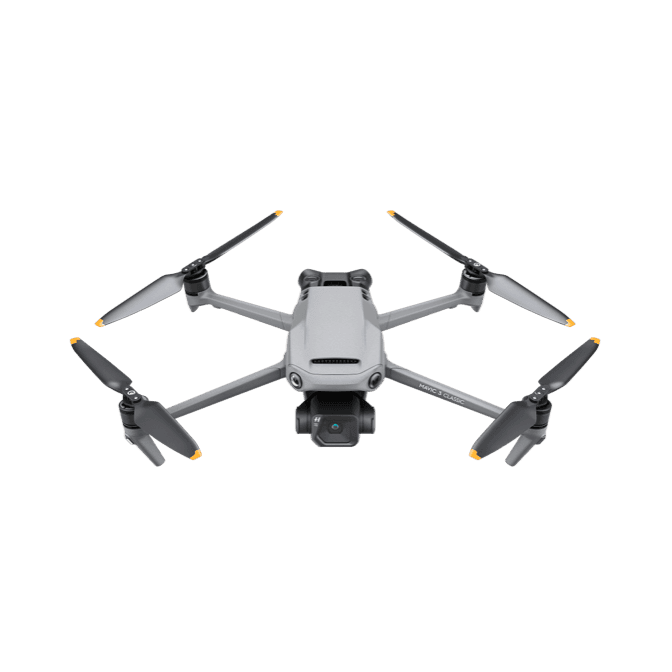
Mavic 3 Classic
Mavic 3 Classic keeps the Mavic 3 airframe and 4/3 Hasselblad main camera while removing the tele camera. That simplicity is its value and its main buying boundary.
Strengths
- Excellent 4/3 camera with adjustable aperture and 10-bit workflows
- Omnidirectional sensing and 46-minute published endurance
- Simpler camera system than the Mavic 3 Pro at a lower cost
Tradeoffs
- No optical tele camera
- Heavier and more expensive to operate than Air or Mini systems
- Camera-specific filters and gimbal protector do not follow every Mavic 3 variant
- Weight
- 895 g
- Camera
- 4/3 Hasselblad, 20 MP; 5.1K/50
- Aperture
- Adjustable f/2.8-f/11
- Flight time
- 46 min published max
- Control
- RC-N1, DJI RC, or RC Pro
- App
- DJI Fly
Best for: Pilots who want the Mavic 3 family's best main camera and safety platform without paying for tele cameras they will not use.
Amazon comes first when available. Official links stay visible for exact specs, stock, and manufacturer support.
DJI
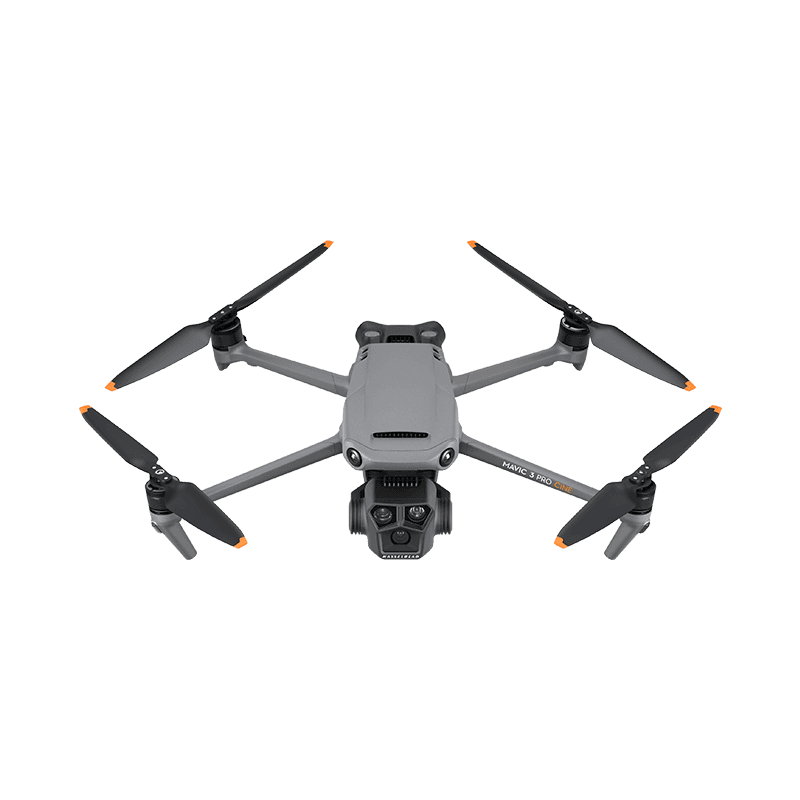
Mavic 3 Pro / Cine
Mavic 3 Pro is the mature three-camera production system. Ownership turns on camera-specific filters and settings, Pro versus Cine storage, controller choice, battery health, and U.S. supply realities.
Strengths
- Three optical focal lengths that materially change shot planning
- 4/3 Hasselblad main camera and useful 70mm medium tele
- Cine option adds Apple ProRes and 1 TB internal SSD
Tradeoffs
- Large investment once batteries, filters, media, controller, and case are included
- 43-minute claim is a controlled maximum, not working production time
- Aircraft-specific filter sets and gimbal protection must match the Pro camera cluster
- Weight
- 958 g Pro; 963 g Cine
- Camera
- 24mm 4/3 + 70mm + 166mm
- Storage
- 8 GB Pro; 1 TB Cine
- Flight time
- 43 min published max
- Control
- RC-N1, DJI RC, or RC Pro by kit
- App
- DJI Fly
Best for: Aerial video and photography crews that can make use of three optical focal lengths and need a proven production ecosystem.
Amazon comes first when available. Official links stay visible for exact specs, stock, and manufacturer support.
Aircraft to operation
Before first launch
Buying the aircraft is one decision. Use this sequence to get from the box to a deliberate, legal first flight.
Aircraft under consideration
DJI Mavic 3 / Cine
DJI Mavic 3 / Cine: 895 g Mavic 3; 899 g Cine
- 01Check registration
Aircraft status
Set the registration path
DJI Mavic 3 / Cine is listed at 895 g Mavic 3; 899 g Cine. Plan on registration before launch. Part 107 registration is per aircraft.
- 02Start the airspace check
Launch location
Check the exact airspace
The aircraft does not decide whether a location is clear. Check the launch point, planned altitude, date, and time for controlled airspace, restrictions, and local launch rules.
- 03Check commercial requirements
Likely work aircraft
ConditionalClear the commercial requirements
DJI Mavic 3 / Cine is commonly considered for paid or business work. Confirm the pilot certificate, aircraft registration, Remote ID, airspace, and mission-specific requirements before quoting the job.
- 04Open the first-flight checklist
Props still off
Run the first-flight preflight
Confirm aircraft condition, firmware, battery health, controller link, home point, return-to-home settings, weather, people, obstacles, and the lost-link plan before takeoff.
How this guide is built
This guide draws on official manuals and support pages, FAA Remote ID records, published specifications, and compatibility data. It separates confirmed exact-fit parts from universal gear, and it does not imply we have flown the aircraft.
Affiliate relationships do not change our scores or rankings. Read the full affiliate disclosure.