Drone Authority · Comparison
DJI Air 3S vs DJI Mavic 4 Pro
Honest synthesis from researching published specs and owner feedback. We do not run a test lab.
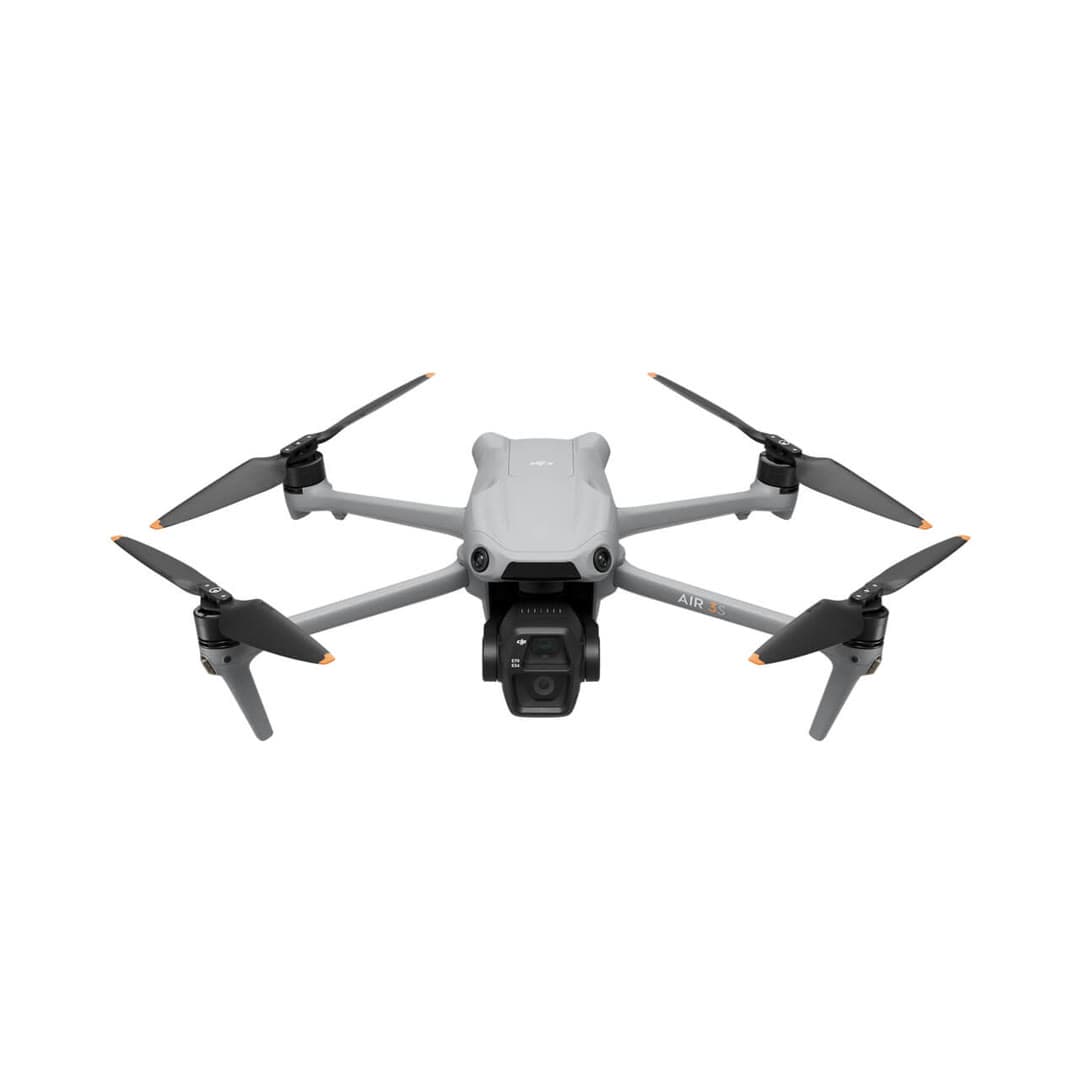
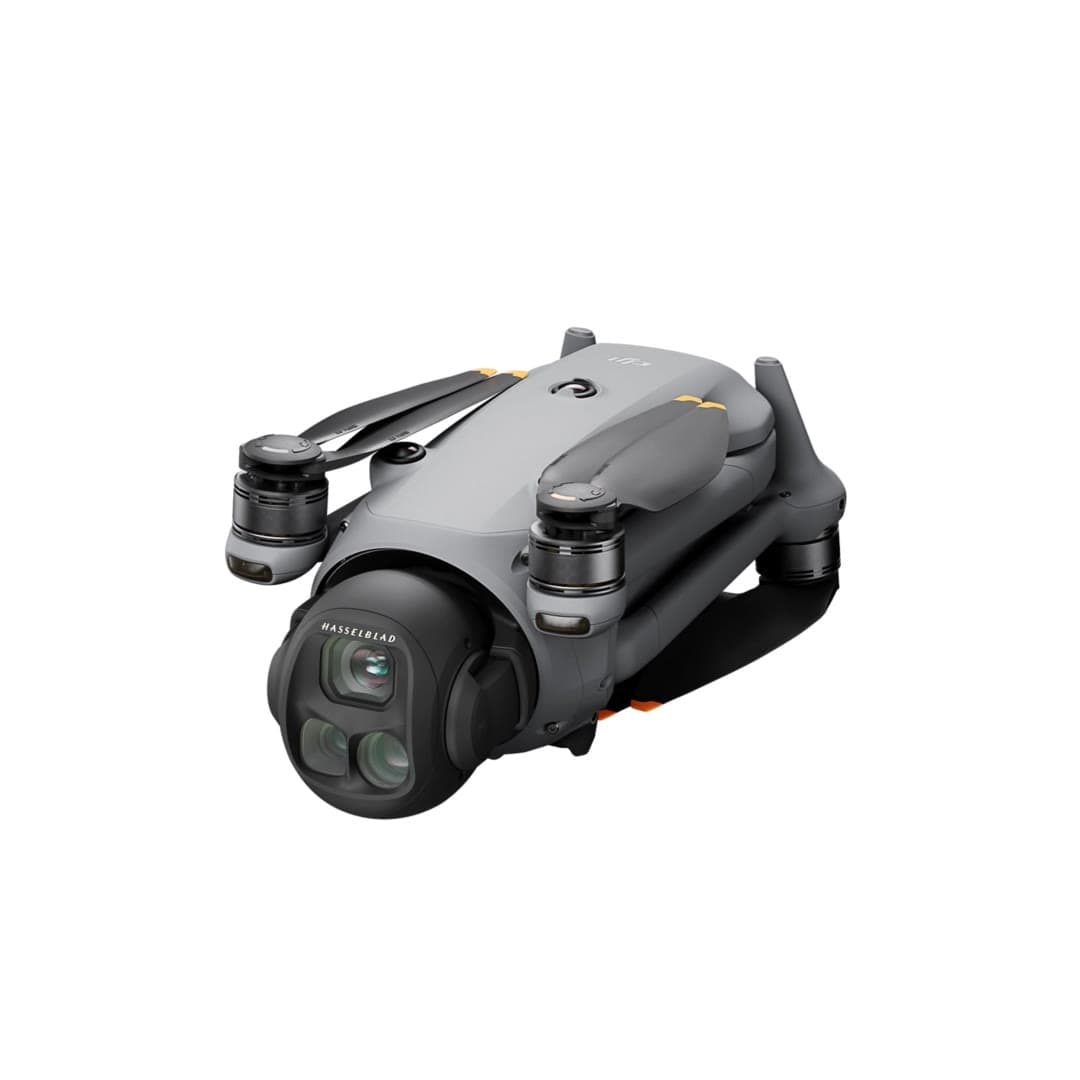
Both are superb, and for most people the question is simply how much camera you actually need. The Air 3S covers the great majority of real shots for roughly half the money; the Mavic 4 Pro is the no-compromise flagship with a 100MP Hasselblad main sensor and a 360-degree gimbal.
The short answer
Buy the DJI Air 3S unless you can name the Mavic 4 Pro capability that will change a deliverable. The Air 3S gives most operators a 1-inch wide camera, a useful 70 mm tele camera, strong sensing, and a 45-minute manufacturer maximum at substantially lower cost. The Mavic 4 Pro is justified by its Four Thirds 100-megapixel main camera, 168 mm third lens, 6K workflow, rotating Infinity Gimbal, or extra endurance, with an important U.S. third-party support caveat.
Buying disclosure: price links in this comparison are affiliate links. If you buy through one, Drone Authority may earn a commission at no extra cost to you. Full disclosure
If you want the best value
DJI Air 3S
The Air 3S delivers most of the everyday capability for roughly half the Mavic's price.
If you shoot professionally
DJI Mavic 4 Pro
The Mavic 4 Pro's triple camera, 100MP Hasselblad, and 360 gimbal enable shots the Air 3S can't get.
If you're a serious hobbyist
DJI Air 3S
Flagship-class results without flagship cost make the Air 3S the smart everyday choice.
If you want the absolute best image quality
DJI Mavic 4 Pro
Nothing in the consumer lineup beats the Mavic 4 Pro's sensor and lens range.
| Spec | | |
|---|---|---|
| Camera system | 1in wide + 70mm tele | 28 / 70 / 168mm triple |
| Main sensor | 1-inch | 100MP Hasselblad |
| Gimbal | Standard 3-axis | 360° rotating |
| Flight time | ~45 min | ~51 min |
| Obstacle sensing | Omni + forward LiDAR | Omni + LiDAR |
| Weight / registration | ~724 g, requires registration | Over 250 g, requires registration |
| Value for most buyers | Most capability per dollar | Premium flagship investment |
| Typical price band | $1,100 – $1,500 | $2,200 – $3,200 |
| Our score | 9.1 / 10 | 9.4 / 10 |
Highlighted cells mark our editorial pick for that row, based on researching published specs and owner feedback, not lab testing. A row with no highlight is a genuine toss-up. See each drone's full review for the detail behind these calls.
Either way, sort out the legal side first
Do I need a license to fly this?01
Two cameras cover most work; three cameras expand the shot list
The Air 3S pairs a 24 mm-equivalent 1-inch 50-megapixel wide camera with a 70 mm-equivalent 1/1.3-inch 48-megapixel tele camera. That combination covers establishing shots, parallax, compression, inspections at stand-off distance, and most general commercial capture without forcing a digital crop.
The Mavic 4 Pro adds a Four Thirds 100-megapixel 28 mm-equivalent main camera, keeps a 70 mm view, and adds a 168 mm-equivalent tele camera. It also supports 6K/60 on the main camera. Those are manufacturer capabilities; this dossier does not claim a controlled field or lab comparison. The premium is worthwhile when the larger main sensor, long tele view, or 6K files change what a client can buy.
02
The Infinity Gimbal is a production feature, not a spec trophy
DJI gives the Mavic 4 Pro a gimbal with extensive roll travel for horizon rotations and native portrait framing. That can create shots the conventional Air 3S gimbal cannot reproduce without a crop or a different move. It only earns money when the operator designs the shot and post-production workflow around it.
Both aircraft use omnidirectional vision supplemented by forward LiDAR, and both depend on environmental conditions. The Mavic has higher published sensing-speed limits in several directions, but neither system reliably solves wires, thin branches, glass, glare, or every low-light hazard.
03
Operational economics favor the Air 3S
DJI publishes up to 45 minutes for the 724-gram Air 3S and up to 51 minutes for the approximately 1,063-gram Mavic 4 Pro. Both figures come from controlled tests that continue to forced landing, not normal mission reserves. The Mavic can reduce battery changes on complex shoots, while the Air costs less to acquire, transport, insure, and replace.
The Air 3S received a normal U.S. product launch. The Mavic 4 Pro did not receive a normal official U.S. retail launch, so third-party buyers should verify region, controller, charger, returns, DJI Care eligibility, firmware, and who handles service. Both aircraft exceed 250 grams and require FAA registration.
Evidence file
Sources behind this comparison
- DJI Air 3S specifications
Manufacturer weight, dual-camera, sensing, battery, and controlled-condition performance claims.
- DJI Mavic 4 Pro specifications
Manufacturer weight, triple-camera, gimbal, sensing, storage, and endurance specifications.
- DJI Air 3S U.S. launch announcement
Official U.S. launch and camera-positioning record for the Air 3S.
- FAA drone registration guidance
Official U.S. registration requirements that apply to both aircraft.
Buyer questions
What usually decides it
- Is the Mavic 4 Pro image quality twice as good as the Air 3S?
- No useful image-quality ratio works that way. The Mavic adds a larger Four Thirds main sensor, a 168 mm third camera, 6K capture, and more flexible gimbal movement. The Air 3S already covers most everyday professional shots with 24 mm and 70 mm cameras.
- Is the Mavic 4 Pro officially sold in the United States?
- It did not receive a normal official U.S. retail launch. Third-party inventory exists, so verify the seller, product region, return policy, controller and charger package, DJI Care eligibility, and service path before paying flagship money.
- Do the Air 3S and Mavic 4 Pro require FAA registration?
- Yes. Both are far above 250 grams, so they must be registered for recreational or Part 107 operation. Business use also requires the operation to comply with Part 107 or another applicable authority.
Keep comparing
The next useful matchups
DJI Mini 4 Pro vs DJI Air 3S
Both are excellent DJI drones, but they answer different questions. The Mini 4 Pro stays under the 249 g recreational registration line; the Air 3S adds a second telephoto camera and longer flights and requires registration. Part 107 use requires registration for either aircraft. Here is how they stack up and who each one is for.
Open comparison →DJI Air 3 vs DJI Air 3S
Air 3 and Air 3S share the same basic dual-camera idea, O4 ecosystem, registration requirement, and much of the battery and accessory system. Air 3S improves the wide camera, low-light obstacle sensing, storage, and file-transfer workflow. Air 3 remains the value pick when a clean complete kit is substantially cheaper and most flying happens in good light.
Open comparison →Aircraft to operation
Before first launch
Buying the aircraft is one decision. Use this sequence to get from the box to a deliberate, legal first flight.
Aircraft under consideration
DJI Air 3S and DJI Mavic 4 Pro
DJI Air 3S: ~724 g (register) · DJI Mavic 4 Pro: Over 250 g (register)
- 01Check registration
Aircraft status
Set the registration path
DJI Air 3S and DJI Mavic 4 Pro are both listed at registration weight. Register the aircraft you choose before launch.
- 02Start the airspace check
Launch location
Check the exact airspace
The aircraft does not decide whether a location is clear. Check the launch point, planned altitude, date, and time for controlled airspace, restrictions, and local launch rules.
- 03Check commercial requirements
Likely work aircraft
ConditionalClear the commercial requirements
DJI Air 3S and DJI Mavic 4 Pro are commonly considered for paid or business work. Confirm the pilot certificate, aircraft registration, Remote ID, airspace, and mission-specific requirements before quoting the job.
- 04Open the first-flight checklist
Props still off
Run the first-flight preflight
Confirm aircraft condition, firmware, battery health, controller link, home point, return-to-home settings, weather, people, obstacles, and the lost-link plan before takeoff.
Affiliate relationships do not determine our comparison winners. Read how we make money. Price bands were reviewed with the evidence above and can move quickly, especially for DJI products without a normal U.S. launch.