Drone Authority · Comparison
DJI Air 3 vs DJI Air 3S
Honest synthesis from researching published specs and owner feedback. We do not run a test lab.
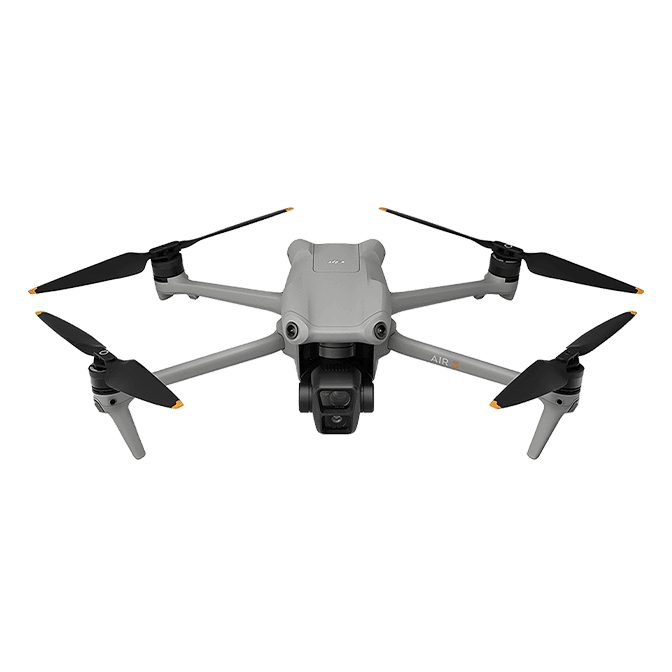
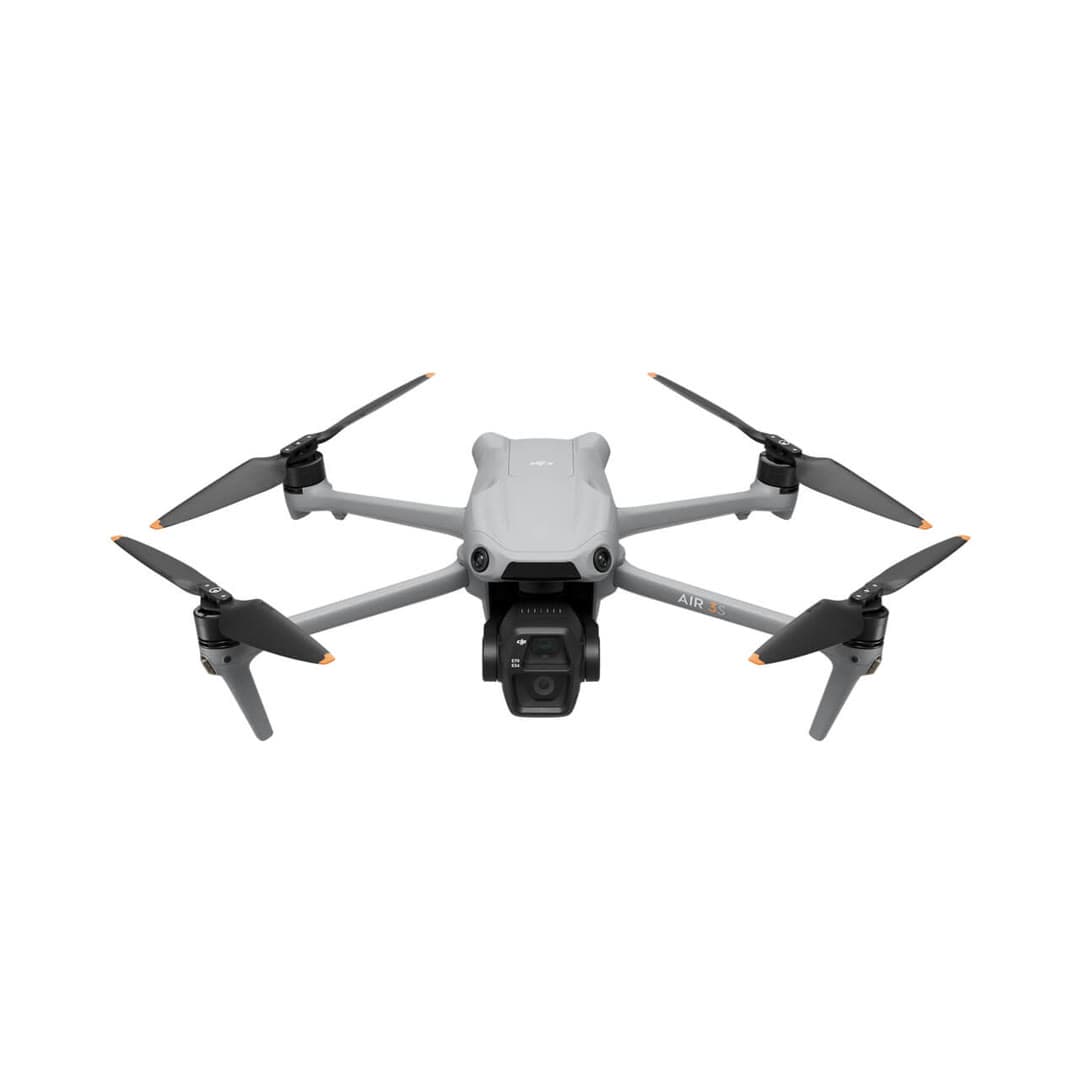
Air 3 and Air 3S share the same basic dual-camera idea, O4 ecosystem, registration requirement, and much of the battery and accessory system. Air 3S improves the wide camera, low-light obstacle sensing, storage, and file-transfer workflow. Air 3 remains the value pick when a clean complete kit is substantially cheaper and most flying happens in good light.
The short answer
Buy Air 3S as a first Air-series system when the complete kit prices are reasonably close. Its one-inch wide camera, forward LiDAR, 42 GB storage, 4K/120 mode, and off-state transfer create the more complete current workflow. Buy Air 3 when a verified used or refurbished kit is substantially cheaper and most work is daylight capture. Existing Air 3 owners should keep it unless one of those specific Air 3S upgrades solves a recurring limitation.
Buying disclosure: price links in this comparison are affiliate links. If you buy through one, Drone Authority may earn a commission at no extra cost to you. Full disclosure
If you already own an Air 3
DJI Air 3
Keep it unless low-light wide-camera work, forward LiDAR, 42 GB storage, or off-state transfer fixes a recurring problem.
If you are buying your first Air-series drone
DJI Air 3S
Air 3S is the more complete long-term system when the total kit prices are reasonably close.
If you found a clean used bargain
DJI Air 3
Air 3 keeps the useful 70 mm camera, O4, omnidirectional sensing, and slightly longer published endurance.
If you shoot at dawn, dusk, or night
DJI Air 3S
The one-inch wide camera and forward LiDAR make Air 3S the more capable low-light platform, without making darkness risk-free.
| Spec | | |
|---|---|---|
| Takeoff weight | 720 g | 724 g |
| Wide camera | 1/1.3in, 48 MP, 24 mm f/1.7 | 1in, 50 MP, 24 mm f/1.8 |
| Medium tele camera | 1/1.3in, 48 MP, 70 mm f/2.8 | 1/1.3in, 48 MP, 70 mm f/2.8 |
| Slow motion | Up to 4K/100 | Up to 4K/120 |
| Obstacle sensing | Omnidirectional vision + downward infrared | Omnidirectional vision + forward LiDAR + downward infrared |
| Published flight time | Up to 46 min | Up to 45 min |
| Internal storage | 8 GB | 42 GB |
| Battery crossover | Air 3 and Air 3S batteries supported | Air 3 battery works; off-state transfer needs the Air 3S battery |
| Buying path | Used, refurbished, or remaining stock | Newer stock; verify seller and support |
| Our score | 8.7 / 10 | 9.1 / 10 |
Highlighted cells mark our editorial pick for that row, based on researching published specs and owner feedback, not lab testing. A row with no highlight is a genuine toss-up. See each drone's full review for the detail behind these calls.
Either way, sort out the legal side first
Do I need a license to fly this?01
The upgrade is concentrated in the wide camera
Air 3 uses 1/1.3-inch 48-megapixel sensors behind both its 24 mm-equivalent wide lens and 70 mm-equivalent tele lens. Air 3S replaces the wide sensor with a one-inch 50-megapixel sensor while retaining a 1/1.3-inch 48-megapixel 70 mm camera. The newer aircraft therefore has a clearer advantage in wide-camera shadows, dynamic range, and low light than it does at the tele focal length.
Both systems support DNG stills, 10-bit D-Log M and HLG, HDR capture, fixed apertures, and the creative compression of a true 70 mm view. Air 3 reaches 4K/100 slow motion; Air 3S reaches 4K/120. Choose from the actual delivery format and lighting conditions rather than assuming the letter S improves every shot equally.
02
LiDAR and storage make Air 3S easier at the margins
Both aircraft use omnidirectional vision sensing and O4 transmission. Air 3S adds forward LiDAR and newer low-light Return to Home behavior. That improves awareness where a vision-only system loses confidence, but it cannot guarantee detection of wires, thin branches, reflective surfaces, water, or every small obstacle.
Air 3S also increases internal storage from 8 GB to 42 GB and supports off-state QuickTransfer with its own battery. Those changes are not glamorous, but they reduce two common field failures: an absent or full card and the need to keep the aircraft fully awake during a fast handoff.
03
Shared hardware makes the owner decision different from the new-buyer decision
DJI lists Air 3 and Air 3S batteries as cross-compatible, along with the Air 3 charging hub and low-noise propellers. An Air 3 battery in Air 3S does not enable off-state QuickTransfer, but the compatibility lowers the cost of upgrading for an existing owner. The RC 2 and RC-N3 also span both current configurations, while older Air 3 bundles may include RC-N2.
Air 3 publishes a 46-minute maximum versus 45 minutes for Air 3S, effectively a tie once reserve, wind, temperature, transit, and battery condition enter the mission. A new buyer should usually choose Air 3S. An Air 3 owner should upgrade only when camera, sensing, storage, or transfer improvements are worth replacing an otherwise capable aircraft.
Evidence file
Sources behind this comparison
- DJI Air 3 specifications and support
Official Air 3 camera, sensing, storage, battery, transmission, controller, and endurance details.
- DJI Air 3S specifications
Official Air 3S camera, LiDAR, storage, transmission, battery, and endurance details.
- DJI Air 3S support and compatibility
Official battery, charging-hub, propeller, controller, and off-state transfer guidance.
- DC Rainmaker DJI Air 3 in-depth review
Independent Air 3 camera, tracking, sensing, controller, and flight assessment.
- TechRadar DJI Air 3 review
Independent Air 3 camera, fixed-aperture, wind, and field-workflow assessment.
- Engadget DJI Air 3S review
Independent Air 3S low-light, LiDAR, storage, tracking, and small-obstacle assessment.
Buyer questions
What usually decides it
- Is Air 3S image quality much better than Air 3?
- The clearest improvement is the wide camera, where Air 3S uses a one-inch sensor instead of Air 3's 1/1.3-inch sensor. The 70 mm cameras are much more closely related, so daylight telephoto results are not the main reason to upgrade.
- Should an Air 3 owner upgrade to Air 3S?
- Only when the one-inch wide camera, forward LiDAR, 42 GB storage, 4K/120, or off-state transfer solves a real limitation. Otherwise Air 3 remains a capable dual-camera system with slightly longer published endurance.
- Can Air 3 and Air 3S share batteries?
- Yes. DJI lists both battery models as compatible across the two aircraft. An Air 3 battery in Air 3S does not provide off-state QuickTransfer, so the battery model still changes that workflow feature.
- Which one should a first-time Air buyer choose?
- Choose Air 3S unless a complete, inspected Air 3 kit is substantially cheaper. The newer model is the more complete long-term purchase; Air 3 wins as a value kit, not because it is broadly more capable.
Keep comparing
The next useful matchups
DJI Mini 4 Pro vs DJI Air 3S
Both are excellent DJI drones, but they answer different questions. The Mini 4 Pro stays under the 249 g recreational registration line; the Air 3S adds a second telephoto camera and longer flights and requires registration. Part 107 use requires registration for either aircraft. Here is how they stack up and who each one is for.
Open comparison →DJI Air 3S vs DJI Mavic 4 Pro
Both are superb, and for most people the question is simply how much camera you actually need. The Air 3S covers the great majority of real shots for roughly half the money; the Mavic 4 Pro is the no-compromise flagship with a 100MP Hasselblad main sensor and a 360-degree gimbal.
Open comparison →Aircraft to operation
Before first launch
Buying the aircraft is one decision. Use this sequence to get from the box to a deliberate, legal first flight.
Aircraft under consideration
DJI Air 3 and DJI Air 3S
DJI Air 3: 720 g · DJI Air 3S: ~724 g (register)
- 01Check registration
Aircraft status
Set the registration path
DJI Air 3 and DJI Air 3S are both listed at registration weight. Register the aircraft you choose before launch.
- 02Start the airspace check
Launch location
Check the exact airspace
The aircraft does not decide whether a location is clear. Check the launch point, planned altitude, date, and time for controlled airspace, restrictions, and local launch rules.
- 03Check commercial requirements
Likely work aircraft
ConditionalClear the commercial requirements
DJI Air 3 and DJI Air 3S are commonly considered for paid or business work. Confirm the pilot certificate, aircraft registration, Remote ID, airspace, and mission-specific requirements before quoting the job.
- 04Open the first-flight checklist
Props still off
Run the first-flight preflight
Confirm aircraft condition, firmware, battery health, controller link, home point, return-to-home settings, weather, people, obstacles, and the lost-link plan before takeoff.
Affiliate relationships do not determine our comparison winners. Read how we make money. Price bands were reviewed with the evidence above and can move quickly, especially for DJI products without a normal U.S. launch.