Drone Authority · Review · Professional camera drone
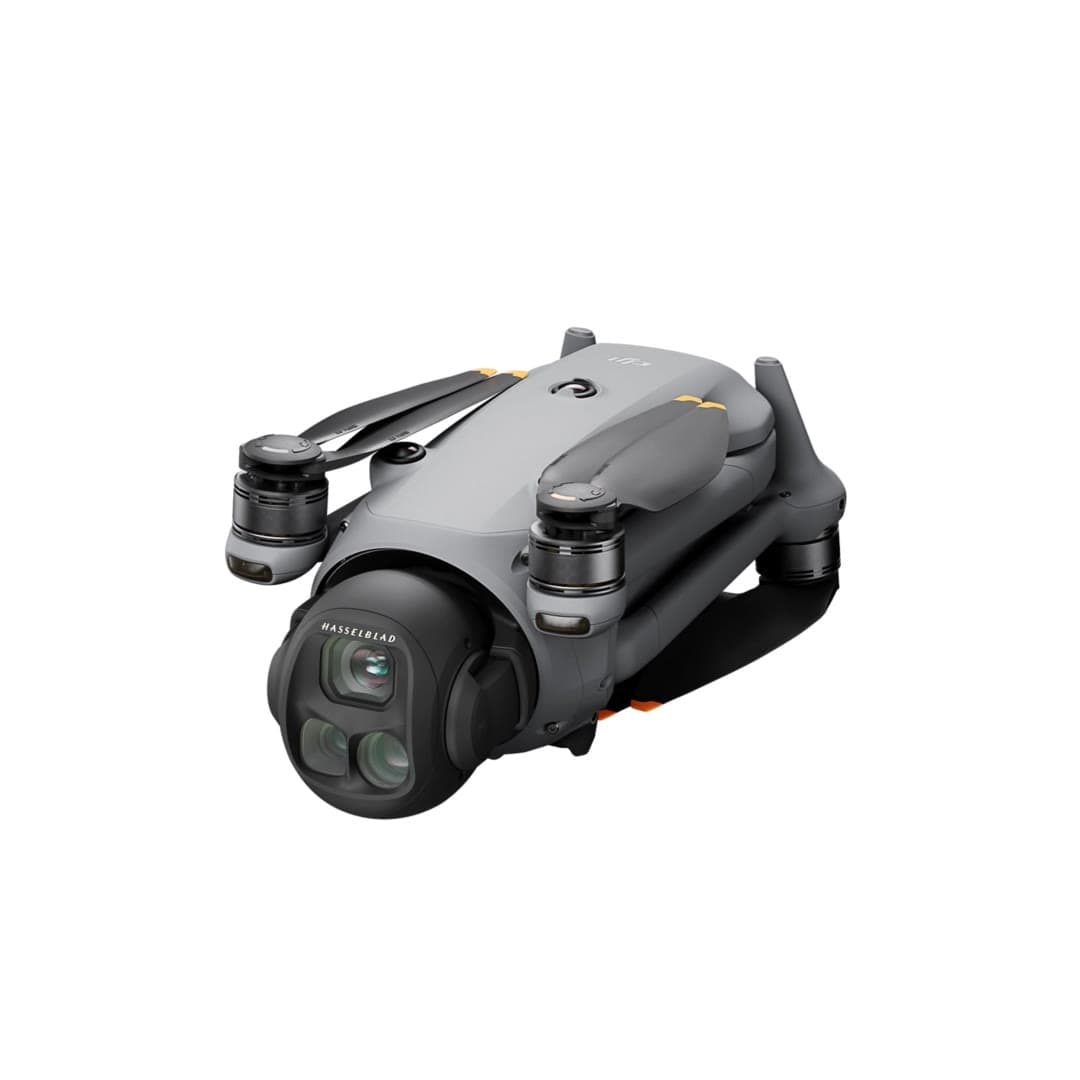
DJI Mavic 4 Pro
Built from published specifications and cross-checked against the sources listed at the foot of this page. We have not flown this aircraft ourselves.
The finding
Best Pro CameraProfessional and prosumer creators who need the best image quality available.
Not officially sold in the U.S. (DJI import situation)Amazon price, subject to change. Affiliate link: we may earn a commission at no extra cost to you. Disclosure
- Our score
- 9.4/10
- Amazon price
- $2199.00
- Category
- Professional camera drone
checked Sep 13
Published figures
- Cameras
- 28 / 70 / 168 mm triple
- Main sensor
- 100MP Hasselblad
- Gimbal
- 360° rotating
- Flight time
- ~51 min
- Obstacle sensing
- Omni + LiDAR
- Weight
- Over 250 g (register)
Against the 250 g registration line
Over 250 g (register). Register this aircraft with the FAA before you fly it, recreationally or under Part 107, and meet Remote ID. Registration rules
Drone Authority score
Editorial composite from researching Mavic 4 Pro. Not a lab measurement, not an aggregate of retailer stars.
9.4/10
- Flight and cameraCapability for its lane
- Excellent10.0
- Owner sentimentCross-checked owner reports
- Excellent9.5
- Build and reliabilityHardware and dependability
- Excellent9.5
- ValuePrice against category peers
- Strong7.5
Triple camera, 100MP Hasselblad, 360° gimbal, ~51-min flights.
Best-in-class capability, but a serious investment and import-constrained.
In its favour
- Triple-camera system (28/70/168 mm) with a 100MP Hasselblad main sensor
- 360-degree rotating gimbal enables shots other drones can't get
- Class-leading ~51-minute flight time and LiDAR-aided sensing
Buy it for this. Professional and prosumer creators who need the best image quality available.
Against it
- Premium price, a serious investment for most buyers
- Over 250 g; requires FAA registration
- Most exposed to the DJI import freeze: limited, pricey U.S. stock
Skip it if this matters. Premium price, a serious investment for most buyers
Owner desk
U.S. gray-market cautionLiving with the Mavic 4 Pro.
Mavic 4 Pro should be owned like production equipment. Purchase region, warranty, batteries, media, filters, controller, data handling, insurance, and repair turnaround all belong in the decision.
Configuration
Professional three-camera system
Weight
Over 250 g
Legal configuration
Registration, Remote ID, and what changes them.
Professional accessories can block sensors, alter gimbal balance, or create payload and propulsion issues. Treat every mounted configuration as an aircraft change.
- Recreational
- Registration is required because the aircraft is over 250 g.
- Part 107
- Register it in the Part 107 inventory before any professional operation.
- Remote ID
- Confirm the exact region, declaration, serial, and firmware in DroneZone. A third-party U.S. seller may supply a non-U.S. warranty unit.
- Control stack
- DJI Fly with DJI RC 2 or RC Pro 2 configuration
First 30 minutes
Set it up before the launch site.
- 01
Charge and inventory the whole system
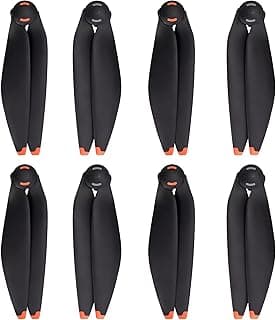
Charge the aircraft battery and DJI RC 2 or RC Pro 2. Remove every transport protector, confirm the correct propellers, and inspect for shipping damage.
- 02
Activate in DJI Fly
Connect to the internet, activate the aircraft, bind any service plan, and complete every prompted aircraft, controller, and battery update before leaving home.
- 03
Set the safety envelope
Confirm return-to-home altitude, obstacle behavior, signal-loss action, units, storage location, and camera defaults. These are aircraft settings, not assumptions.
- 04
Prove the production chain
Test all three cameras, every codec and card, internal storage, file transfer, color transforms, return-to-home, and a full battery cycle before client use.
Compatible kit
What to buy first.
Buy enough batteries to complete the intended production block, then solve charging and transport. Add a camera-specific filter set only after deciding how all lenses will be exposed and matched.
What not to change
Mavic 3 accessories are not a safe substitute. The aircraft, battery, camera assembly, controller, and fitted cases all need explicit Mavic 4 Pro support.
- Production power
- Plan batteries around the complete shot list, reserve requirements, and turnaround time, not a published maximum flight time.
- Three cameras
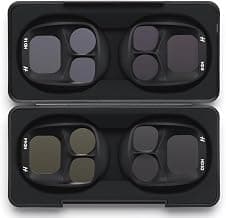
- Filter kits must correctly cover the Mavic 4 Pro camera stack; inspect every filter for seating and gimbal clearance.
- Case
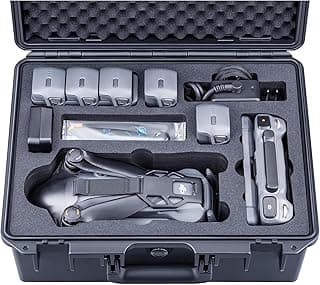
- Verify aircraft, controller, charger, hub, and battery layout. A hard case is useful only when the foam matches the working kit.
Amazon links are affiliate links. We may earn a commission at no extra cost to you. Fit notes and ordering are editorial decisions.
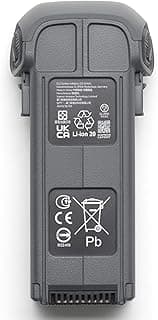
01 · Buy first
Mavic 4 Pro Intelligent Flight Battery
The first practical add-on for a pro camera drone.
Check at Amazon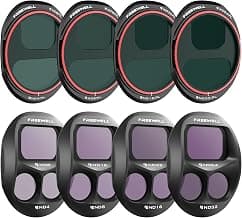
02 · Buy first
Mavic 4 Pro All Day Split ND/PL Filter 8-Pack
A proper filter shelf for the pro-camera buyer.
Check at Amazon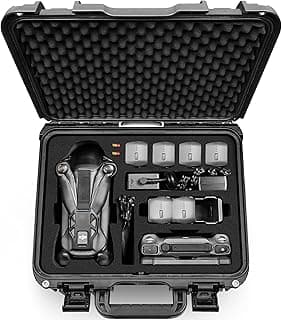
06 · Add later
Mavic 4 Pro Titan Hard Case
A larger case option for Creator and Fly More setups.
Check at AmazonModel fit questions
- What accessories does a DJI Mavic 4 Pro operator need first?
- Start with production power, charging, storage, and a protective case. Add a matched multi-camera filter kit when the deliverable requires controlled video shutter speed.
- Do Mavic 3 batteries or filters fit the Mavic 4 Pro?
- Do not assume they do. Use products that explicitly identify Mavic 4 Pro compatibility.
- Should I mount extra accessories on the Mavic 4 Pro?
- Only when the mission justifies them and they do not obstruct sensors, cooling, antennas, the gimbal, or safe handling. Extra mass also reduces operating margin.
Maintenance
What to check, and how often.
- Before every flight
- Inspect every propeller, motor bell, arm hinge, sensor window, and gimbal guard area. Replace a nicked or warped propeller instead of trying to straighten it.
- After dust, sand, salt, or moisture
- Power down, remove the battery, brush away loose debris, and let the aircraft dry fully. Do not use compressed air to drive grit into motors or gimbal bearings.
- Every 10 flights
- Review battery swelling, cell warnings, propeller screws, storage capacity, return-to-home altitude, and the app flight log.
- Before storage
- Let intelligent batteries manage themselves at room temperature, keep them out of a hot vehicle, and recheck charge state before the next job.
Troubleshooting
Common symptoms and what to check.
The aircraft drifts, will not hold position, or reports a compass warning
Move away from vehicles, reinforced concrete, speakers, and large metal objects. Confirm satellite status and follow the manufacturer calibration prompt only when the app asks for it.
Do not launch while position or compass warnings remain.
The horizon is tilted or footage vibrates
Remove the gimbal guard, inspect the gimbal dampers and propellers, clean the lens, and run the official gimbal calibration on a level surface.
Stop if the gimbal binds, chatters, or was struck hard enough to deform its mount.
Firmware update stalls or components show mismatched versions
Charge the aircraft and controller above the manufacturer minimum, keep every component powered and close together, use a stable network, and update each intelligent battery when required.
Do not fly through a version mismatch or repeated update failure. Use official support.
Official support
Manuals, firmware, parts.
Learn next
Where to go next.
- Registration checkerSee how weight, recreation, and Part 107 change the answer.
- First-flight checklistTurn setup into a controlled first launch.
- Can I fly here?Check airspace, authorization, TFRs, weather, and launch permission.
- Better aerial footageUse deliberate moves, exposure, and shot planning instead of relying on automation.
- Commercial requirements checkerBuild the legal and operational stack around the actual job.
The short answer
The DJI Mavic 4 Pro is a three-camera production aircraft, not merely a more expensive travel drone. Its Four Thirds 100-megapixel main camera, 70 mm and 168 mm tele cameras, 6K recording, Infinity Gimbal, and long endurance make sense when those capabilities change the deliverable. The Air 3S is the rational value choice for most buyers.
What changes the decision
01
The reason to pay is focal-length coverage
The main camera combines a 4/3-type sensor with 100-megapixel still capture and up to 6K/60 HDR recording. The 70 mm medium tele and 168 mm tele cameras add perspective compression and subject isolation that cannot be recreated by simply flying a wide camera closer, especially near structures, terrain, wildlife buffers, or active sites.
That three-camera range is the actual professional advantage. If the work never needs the tele cameras, large stills, high-end color workflow, or aggressive reframing, much of the purchase price is unused capability.
02
The Infinity Gimbal changes shot design
DJI's rotating Infinity Gimbal supports 360-degree roll movement and native vertical framing. It can create Dutch rolls, horizon rotations, and portrait delivery without turning a wide horizontal frame into a heavy crop. This is a production feature, not a safety feature, and it is most valuable when the shot list is designed around it before launch.
The Mavic 4 Pro is therefore closer to a compact aerial camera department than a default first drone. A buyer should have a repeatable editing, storage, color, and client-delivery workflow before paying for the extra capture options.
03
The 51-minute number needs a reserve
DJI advertises up to 51 minutes in controlled conditions. Independent testing commonly reports less in normal use, and every mission must preserve return, contingency, and landing reserve. A larger battery does not erase wind, temperature, transit distance, obstacle avoidance, or the cost of bringing an aircraft home from a second location.
The benefit is still real: more endurance can reduce battery changes and preserve time for a complex shot. Plan with observed fleet data after purchase, not the manufacturer maximum.
04
U.S. availability is part of the buying decision
The Mavic 4 Pro did not receive a normal official U.S. retail launch. Third-party inventory may be available, but warranty route, firmware support, return policy, included controller, charger standards, and seller legitimacy deserve the same scrutiny as the camera specifications.
For a working pilot, predictable support and replacement availability can be worth more than a small image-quality gain. The Air 3S remains the safer economic choice when the Mavic-only shots are not billable.
Compare it with the real alternatives
Sources behind this review
Manufacturer specifications set the hardware claims. Independent reviews are used to test that positioning and surface the practical tradeoffs. We did not receive or fly a review unit.
- DJI Mavic 4 Pro product specifications
Manufacturer camera, gimbal, and endurance claims. DJI does not provide a normal U.S. product listing.
- Amateur Photographer review
Independent camera-centered field review.
- TechRadar review
Independent flight, camera, battery, and value assessment.
- DJI Air 3S specifications
The primary alternative used for price and capability context.
Before you choose
Is the DJI Mavic 4 Pro sold officially in the United States?
It did not receive a normal official U.S. retail launch. Third-party stock may exist, but buyers should verify seller legitimacy, warranty handling, returns, controller version, and support before ordering.
Who should buy the Mavic 4 Pro instead of the Air 3S?
Choose the Mavic 4 Pro when the 4/3-type 100-megapixel main camera, 70 mm and 168 mm tele cameras, 6K workflow, Infinity Gimbal, or extra endurance materially improve paid deliverables. The Air 3S is the better value for most serious hobbyists and general commercial work.
Does the Mavic 4 Pro require FAA registration?
Yes. It is well above 250 grams, so it must be registered for recreational and Part 107 operation. Business use also requires the remote pilot to hold Part 107 authority.
Ready to buy the DJI Mavic 4 Pro?
Amazon price $2199.00, checked Sep 13 and subject to change. Check availability before you commit. Buy through this link and we may earn a commission at no extra cost to you. Disclosure.
Compare with
DJI
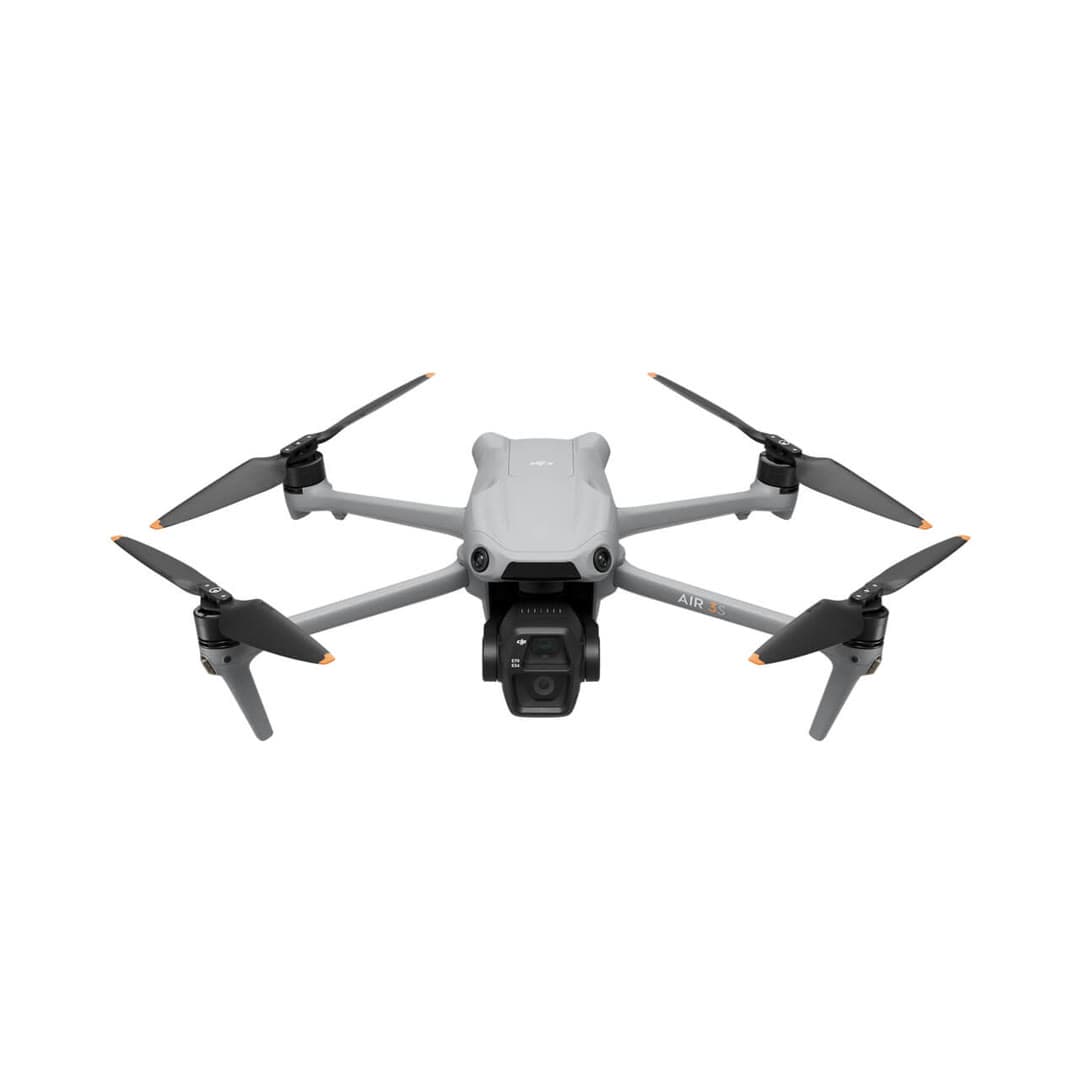
Air 3S
The everyday sweet spot of the DJI lineup: a 1-inch main camera plus a 70 mm telephoto, omnidirectional sensing with forward LiDAR, and a ~45-minute flight time: most of the Mavic's capability for roughly half the price.
Strengths
- Dual camera (1-inch wide + 70 mm tele) covers most real shots
- Long ~45-minute flight time and LiDAR-assisted obstacle sensing
- Far cheaper than the Mavic 4 Pro for everyday work
Tradeoffs
- Over 249 g, requires FAA registration
- Affected by the DJI import freeze; U.S. stock is finite
- Lacks the Mavic 4 Pro's 100MP Hasselblad and third tele lens
- Cameras
- 1in (24mm) + 70mm tele
- Flight time
- ~45 min
- Obstacle sensing
- Omni + forward LiDAR
- Transmission
- DJI O4
- Weight
- ~724 g (register)
- Wind resistance
- Level 5
Best for: Serious hobbyists and creators who want flagship-class results without flagship price.
Amazon comes first when available. Official links stay visible for exact specs, stock, and manufacturer support. We may earn a commission at no extra cost to you. Disclosure
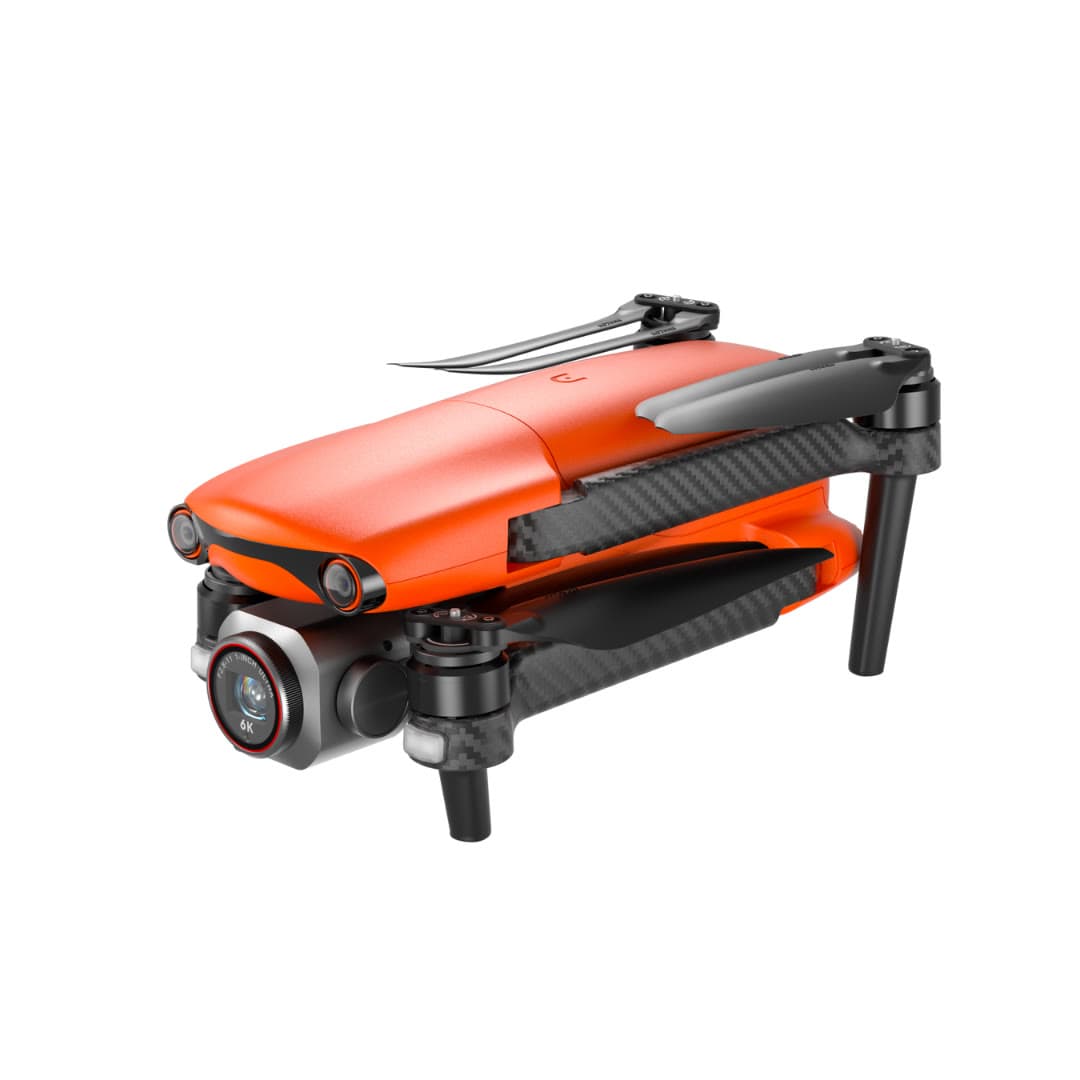
Autel Robotics
EVO Lite+
A discontinued one-inch-sensor camera drone with adjustable aperture and long flight time. Autel ended sales on July 18, 2025 and says service continues through July 18, 2030, so this is now a used or remaining-stock decision.
Strengths
- 1-inch sensor with adjustable aperture handles low light well
- Long ~40-minute flight time
- A genuine non-DJI alternative at this capability level
Tradeoffs
- The EVO Lite Series is discontinued; battery, parts, and app continuity are ownership risks
- App and ecosystem maturity trail DJI
- Most Autel consumer models are not NDAA-compliant
- Sensor
- 1-inch CMOS
- Aperture
- Adjustable f/2.8–f/11
- Camera
- Up to 6K
- Flight time
- ~40 min
- Brand
- Autel (non-DJI)
- Lifecycle
- Discontinued July 18, 2025
Best for: Photographers considering a heavily discounted used or remaining-stock one-inch camera drone who accept a discontinued ecosystem.
Amazon comes first when available. Official links stay visible for exact specs, stock, and manufacturer support. We may earn a commission at no extra cost to you. Disclosure
Aircraft to operation
Before first launch
Buying the aircraft is one decision. Use this sequence to get from the box to a deliberate, legal first flight.
Aircraft under consideration
DJI Mavic 4 Pro
DJI Mavic 4 Pro: Over 250 g (register)
- 01Check registration
Aircraft status
Set the registration path
DJI Mavic 4 Pro is listed at Over 250 g (register). Plan on registration before launch. Part 107 registration is per aircraft.
- 02Start the airspace check
Launch location
Check the exact airspace
The aircraft does not decide whether a location is clear. Check the launch point, planned altitude, date, and time for controlled airspace, restrictions, and local launch rules.
- 03Check commercial requirements
Likely work aircraft
ConditionalClear the commercial requirements
DJI Mavic 4 Pro is commonly considered for paid or business work. Confirm the pilot certificate, aircraft registration, Remote ID, airspace, and mission-specific requirements before quoting the job.
- 04Open the first-flight checklist
Props still off
Run the first-flight preflight
Confirm aircraft condition, firmware, battery health, controller link, home point, return-to-home settings, weather, people, obstacles, and the lost-link plan before takeoff.
How we score
The score is an editorial composite of four axes: flight and camera capability, owner sentiment drawn from published reviews, build and reliability, and value for the money. It reflects research and cross-checking rather than lab measurement, and we do not invent star counts. Prices are typical U.S. street bands and move around, especially for DJI while the import freeze lasts.
Affiliate relationships do not change our scores or rankings. Read the full affiliate disclosure.