Drone Authority · Review · Sub-250 g value camera drone
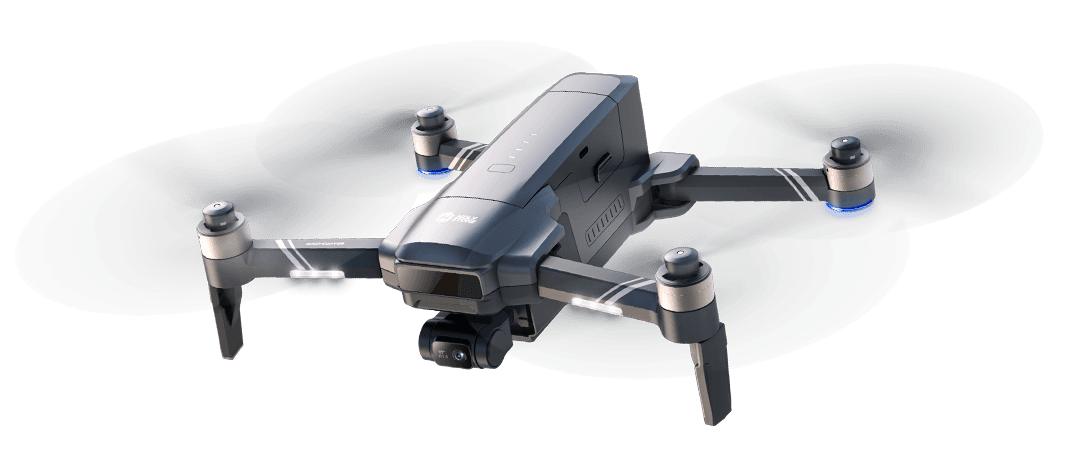
Holy Stone HS900 Pro
Built from published specifications and cross-checked against the sources listed at the foot of this page. We have not flown this aircraft ourselves.
The finding
Strong Non-DJI ValueValue-focused pilots who want a light conventional gimbal camera drone and will verify the app, support, and Remote ID path before relying on it for work.
Price band only. Affiliate link: we may earn a commission at no extra cost to you. Disclosure
- Our score
- 7.9/10
- Typical price
- $300 - $500 by bundle
- Category
- Sub-250 g value camera drone
Published figures
- Weight
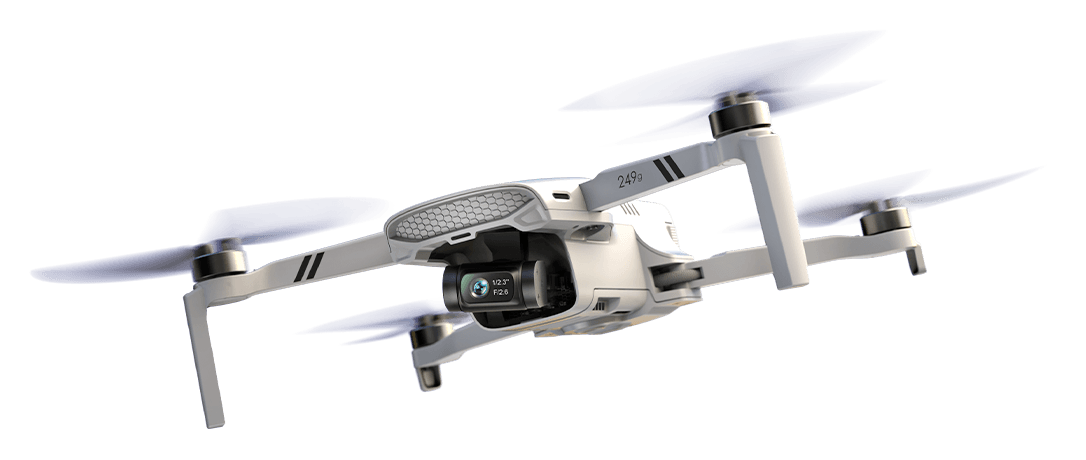
- 249 g published takeoff weight
- Camera
- 1/2.3in CMOS, 48 MP; 4K/30
- Photo
- JPEG and RAW
- Gimbal
- Three-axis mechanical
- Flight time
- 30 min per battery published max
- App
- HS Sirius
Against the 250 g registration line
249 g
Below the line. Flown recreationally and unmodified, this aircraft does not need FAA registration. Any Part 107 flight still does, and added gear can push it over. Registration rules
Drone Authority score
Editorial composite from researching HS900 Pro. Not a lab measurement, not an aggregate of retailer stars.
7.9/10
- Flight and cameraCapability for its lane
- Strong8.0
- Owner sentimentCross-checked owner reports
- Strong7.7
- Build and reliabilityHardware and dependability
- Strong7.7
- ValuePrice against category peers
- Strong8.3
The official specification combines a three-axis gimbal, 4K/30, RAW photos, and GPS at 249 g.
Common two-battery packages and an official replacement-parts catalog strengthen the ownership case.
In its favour
- Three-axis mechanical gimbal, 4K/30, and RAW capture in a 249 g published configuration
- Two-battery packages can provide up to 60 minutes of combined manufacturer-rated time
- Holy Stone sells exact HS900 Pro batteries, propellers, and controller parts
Buy it for this. Value-focused pilots who want a light conventional gimbal camera drone and will verify the app, support, and Remote ID path before relying on it for work.
Against it
- No obstacle-avoidance system
- Published 10 km link and 30-minute endurance are controlled-condition ceilings, not practical VLOS guarantees
- U.S. buyers should verify an FAA-accepted Remote ID declaration for the exact model before registered use
Skip it if this matters. No obstacle-avoidance system
Owner desk
Current platform, declaration checkLiving with the HS900 Pro.
HS900 Pro ownership is strongest when the model's exact parts catalog, HS Sirius app, open-route flying, and Remote ID uncertainty are handled deliberately instead of assuming every HS-series component or marketplace claim applies.
Configuration
Sub-250 g value camera drone
Weight
Approximately 249 g in the published stock configuration
Legal configuration
Registration, Remote ID, and what changes them.
The 249 g published configuration leaves almost no margin for a strobe, Remote ID module, guard, mount, or other accessory.
- Recreational
- The stock aircraft can qualify for the under-250 g recreational registration exception. Weigh it again after adding any accessory.
- Part 107
- Register HS900 Pro before every Part 107 operation, even when it remains below 250 g.
- Remote ID
- The U.S. manufacturer material reviewed does not establish an FAA-accepted Standard Remote ID declaration for this exact model. When Remote ID applies, verify the exact identifier in the FAA declaration system or use an accepted module, FRIA, or another applicable exception.
- Control stack
- HS Sirius with the supplied HS900 Pro controller
First 30 minutes
Set it up before the launch site.
- 01
Identify the exact HS900 Pro package
Photograph the aircraft, battery, and controller labels; record the serial; and use the HS900 Pro manual and support page rather than an adjacent HS900-family listing.
- 02
Install HS Sirius from the official path
Confirm phone compatibility, charge the controller and both batteries, format supported storage, and complete the official binding and firmware steps.
- 03
Set home point and return altitude
Calibrate only when the app or manual calls for it, wait for a stable GPS home point, and choose an altitude that clears local obstacles without creating an unnecessary climb.
- 04
Prove the safety loop nearby
In an open legal area, hover close, verify gimbal and video, test braking and return behavior, then log practical warning and landing reserve before adding distance.
Compatible kit
What to buy first.
Buy one exact battery, an exact marked propeller set, and known storage before cosmetic add-ons. Use the manufacturer model-specific pages for every flight-critical part.
What not to change
HS900 Pro has no obstacle-avoidance system. Do not block downward sensors, GPS, antennas, cooling, gimbal motion, or propeller arcs, and do not cross-shop a part because it says only HS900 series.
Amazon links are affiliate links. We may earn a commission at no extra cost to you. Fit notes and ordering are editorial decisions.

01 · Buy first
HS900 Pro Flight Battery
The exact manufacturer-listed spare battery for HS900 Pro.
Check at Holy Stone
02 · Buy first
HS900 Pro Propeller Set
Exact marked spare props for the HS900 Pro flight kit.
Check at Holy Stone
Maintenance
What to check, and how often.
- Before every flight
- Inspect every propeller, motor bell, arm hinge, sensor window, and gimbal guard area. Replace a nicked or warped propeller instead of trying to straighten it.
- After dust, sand, salt, or moisture
- Power down, remove the battery, brush away loose debris, and let the aircraft dry fully. Do not use compressed air to drive grit into motors or gimbal bearings.
- Every 10 flights
- Review battery swelling, cell warnings, propeller screws, storage capacity, return-to-home altitude, and the app flight log.
- Before storage
- Let intelligent batteries manage themselves at room temperature, keep them out of a hot vehicle, and recheck charge state before the next job.
Troubleshooting
Common symptoms and what to check.
The aircraft drifts, will not hold position, or reports a compass warning
Move away from vehicles, reinforced concrete, speakers, and large metal objects. Confirm satellite status and follow the manufacturer calibration prompt only when the app asks for it.
Do not launch while position or compass warnings remain.
The horizon is tilted or footage vibrates
Remove the gimbal guard, inspect the gimbal dampers and propellers, clean the lens, and run the official gimbal calibration on a level surface.
Stop if the gimbal binds, chatters, or was struck hard enough to deform its mount.
Firmware update stalls or components show mismatched versions
Charge the aircraft and controller above the manufacturer minimum, keep every component powered and close together, use a stable network, and update each intelligent battery when required.
Do not fly through a version mismatch or repeated update failure. Use official support.
HS Sirius will not bind or live view is unstable
Confirm the official HS Sirius app, supported phone OS, correct controller-aircraft sequence, full battery charge, cable or Wi-Fi permissions, and current model-specific firmware guidance.
Do not launch without a stable control connection and usable live view.
Return-to-home direction or distance looks wrong
Land, move away from metal and reinforced concrete, reacquire a stable GPS home point, confirm map orientation and RTH altitude, then retest close to launch.
Do not continue away from the launch point with a questionable home point or compass warning.
Official support
Manuals, firmware, parts.
Learn next
Where to go next.
- Registration checkerSee how weight, recreation, and Part 107 change the answer.
- First-flight checklistTurn setup into a controlled first launch.
- Can I fly here?Check airspace, authorization, TFRs, weather, and launch permission.
- Better aerial footageUse deliberate moves, exposure, and shot planning instead of relying on automation.
The short answer
Holy Stone HS900 Pro is a credible sub-250 g value camera drone on published hardware: a three-axis gimbal, 4K/30 video, RAW photos, GPS flight, and common two-battery packages. Its best argument is not the advertised 10 km maximum. It is the combination of light weight, useful capture features, and an official exact-parts path. The buying boundary is no obstacle avoidance and an unresolved U.S. Remote ID declaration check for registered operations.
What changes the decision
01
The useful camera-drone package
Holy Stone lists a 249 g takeoff weight, 1/2.3-inch CMOS sensor, 48-megapixel stills, 4K/30 and 1080/60 recording, JPEG plus RAW capture, and a three-axis mechanical gimbal. HS Sirius adds vertical shooting, panoramas, quick shots, and AI tracking. That puts the HS900 Pro in the real camera-drone category rather than the electronically stabilized toy tier.
The aircraft uses GPS plus downward time-of-flight and visual positioning, but it does not have an obstacle-avoidance system. Automated tracking and quick shots still need an open route, direct supervision, and enough room to stop or take over manually.
02
Treat range, endurance, and Remote ID as separate questions
Holy Stone publishes up to 30 minutes per battery and a 10 km transmission maximum in ideal conditions. Those are comparison ceilings, not a promise of usable mission time or a reason to leave visual line of sight. Wind, recording, reserve, terrain, radio interference, and return distance all reduce the practical envelope.
The stock 249 g configuration can qualify for the recreational registration exception, while Part 107 use still requires registration. The U.S. material reviewed does not establish an FAA-accepted Standard Remote ID declaration for this exact model. When registration triggers Remote ID, search the FAA declaration database for the exact identifier and verify broadcast behavior; otherwise use an accepted module, FRIA, or another applicable exception.
Travel, Remote ID, and support
- Battery on a plane
- HS900PRO Intelligent Flight Battery: 17.33 Wh, no airline approval needed. Spares ride in the cabin only. Battery airline check
- Remote ID
- Not on the FAA list. No FAA-accepted declaration for the Holy Stone HS900 Pro. Recreational flights need no Remote ID if it weighs under 250 g as flown; otherwise use a broadcast module or a FRIA. Remote ID lookup
Sources behind this review
Manufacturer specifications set the hardware claims. Independent reviews are used to test that positioning and surface the practical tradeoffs. We did not receive or fly a review unit.
- Holy Stone HS900 Pro product specifications
Manufacturer weight, camera, gimbal, flight, app, positioning, and transmission claims.
- Holy Stone HS900 Pro beginner guide
Manufacturer setup, app, controller, calibration, and operating guidance.
- Holy Stone HS900 Pro parts
Manufacturer model-specific replacement battery, propeller, and controller path.
- FAA Remote ID compliance
FAA explanation of accepted Standard Remote ID declarations and other compliance paths.
Before you choose
Does Holy Stone HS900 Pro need FAA registration?
The published 249 g stock configuration can qualify for the purely recreational under-250 g exception. Part 107 use requires registration regardless of weight, and accessories can change the recreational answer.
Does HS900 Pro have obstacle avoidance?
No. Downward positioning helps it hold position near the ground, but it does not provide a forward, rear, or omnidirectional obstacle-avoidance system.
Can HS900 Pro really fly 10 km away?
Holy Stone publishes 10 km as an ideal-condition transmission maximum. U.S. drone operations still need visual line of sight unless operating under a specific authorization, and practical link quality varies with interference, terrain, antennas, battery reserve, and weather.
Does HS900 Pro have Remote ID?
Do not infer FAA acceptance from a marketplace bullet or family name. For a registered flight, verify the exact model in the FAA declaration database and confirm broadcast behavior. If it is not covered, use another compliant path.
Ready to buy the Holy Stone HS900 Pro?
Typical price $300 - $500 by bundle. Check availability before you commit. Buy through this link and we may earn a commission at no extra cost to you. Disclosure.
Compare with
Potensic
Atom
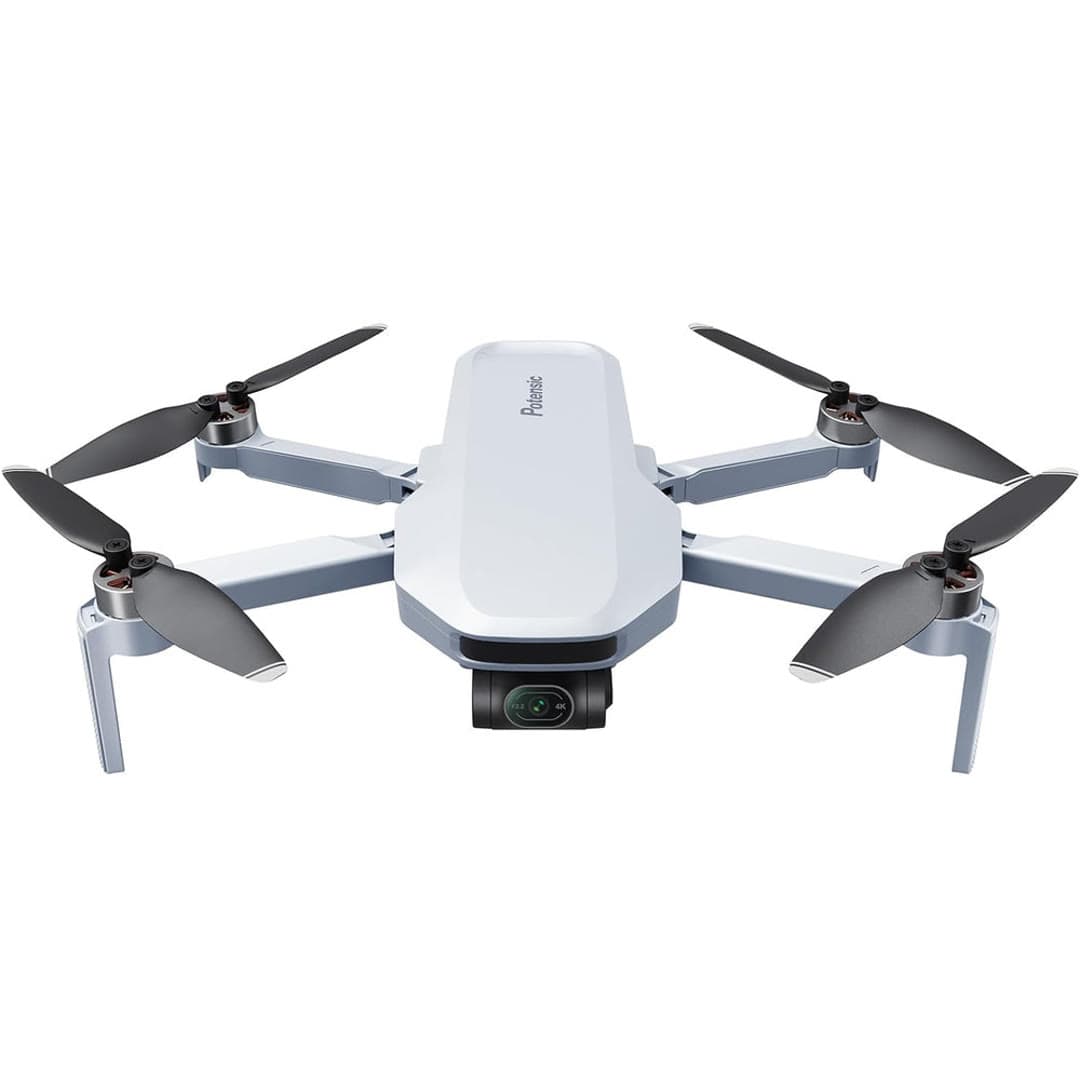
The strongest non-DJI option under $350: a true 3-axis mechanical gimbal at a budget price, frequently bundled with extra batteries, and it's unaffected by the DJI import situation.
Strengths
- Real mechanical 3-axis gimbal, not just digital stabilization
- Battery bundles often undercut comparable DJI kits
- Not affected by the DJI FCC Covered List import freeze
Tradeoffs
- App and transmission reliability trail DJI in our research of owner reports
- Smaller accessory and repair ecosystem than DJI
- Image quality good for the price but below the DJI Mini line
- Weight
- Under 249 g
- Camera
- 4K, 3-axis gimbal
- Flight time
- ~32 min
- Stabilization
- Mechanical gimbal
- Transmission
- ~6 km (claimed)
- GPS
- Yes
Best for: Budget buyers who want gimbal-stabilized 4K and want to sidestep the DJI supply uncertainty.
Amazon comes first when available. Official links stay visible for exact specs, stock, and manufacturer support. We may earn a commission at no extra cost to you. Disclosure
DJI
Mini 4K
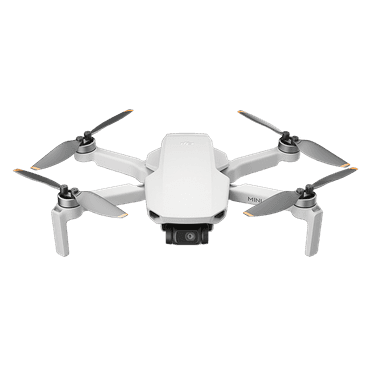
Mini 4K is DJI's low-cost conventional camera drone: a 246 g Mini 2-family aircraft with a three-axis gimbal, 4K/30 video, RAW photos, and O2 transmission, but no horizontal obstacle avoidance.
Strengths
- Three-axis gimbal, 4K/30 video, and RAW photos at the bottom of DJI's camera-drone range
- 246 g stock configuration can qualify for the recreational registration exception
- Mature DJI Fly, O2, RC-N1C, and Mini 2-family support path
Tradeoffs
- No forward, rear, or side obstacle avoidance
- Small sensor, 4K/30 ceiling, and Normal color limit post-production headroom
- Registered operations need a current Remote ID and serial verification rather than a weight assumption
- Weight
- 246 g published takeoff weight
- Camera
- 1/2.3in CMOS, 12 MP; 4K/30
- Photo
- JPEG and DNG RAW
- Gimbal
- Three-axis mechanical
- Flight time
- 31 min published max
- Control
- DJI O2 with RC-N1C and DJI Fly
Best for: First-time pilots who want a real DJI GPS camera drone and care more about stable 4K capture than tracking or obstacle sensing.
Amazon comes first when available. Official links stay visible for exact specs, stock, and manufacturer support. We may earn a commission at no extra cost to you. Disclosure
Holy Stone
HS600D
HS600D is a registered mid-size camera platform with a three-axis gimbal, EIS, 4K/30 card recording, and long published battery time. It trades portability and sensing for endurance, bundle value, and an optional screen controller.
Strengths
- Three-axis gimbal plus EIS and 4K/30 recording to a removable card
- Up to 40 published minutes per pack and 80 across a two-battery bundle
- Official HS600D battery, propeller, controller, manual, and support paths
Tradeoffs
- 603 g means FAA registration is required for recreational and Part 107 use
- No obstacle avoidance despite the larger airframe
- Manufacturer built-in Remote ID language still needs an accepted FAA declaration and live broadcast check
- Weight
- 603 g published takeoff weight
- Camera
- Sony sensor; 48 MP stills, 4K/30 to card
- Gimbal
- Three-axis mechanical plus EIS
- Flight time
- 40 min per battery published max
- Storage
- Up to 128 GB Class 10 TF card
- App / controller
- HS Fly; RC243A screen controller option
Best for: Budget pilots who prefer longer sessions and a larger, stable GPS platform over sub-250 g portability or obstacle sensing.
Amazon comes first when available. Official links stay visible for exact specs, stock, and manufacturer support.
Aircraft to operation
Before first launch
Buying the aircraft is one decision. Use this sequence to get from the box to a deliberate, legal first flight.
Aircraft under consideration
Holy Stone HS900 Pro
Holy Stone HS900 Pro: 249 g published takeoff weight
- 01Check registration
Aircraft status
Set the registration path
Holy Stone HS900 Pro is listed at 249 g published takeoff weight. Recreational-only use may qualify for the sub-250 g exception. Part 107 flights still require registration, so confirm takeoff weight with the flight battery and accessories fitted.
- 02Start the airspace check
Launch location
Check the exact airspace
The aircraft does not decide whether a location is clear. Check the launch point, planned altitude, date, and time for controlled airspace, restrictions, and local launch rules.
- 03Check commercial requirements
Only when it is work
ConditionalDecide whether Part 107 applies
A small drone does not create a business-use exception. If the flight serves a client, employer, listing, monetized project, or another non-recreational purpose, check the Part 107 path first.
- 04Open the first-flight checklist
Props still off
Run the first-flight preflight
Confirm aircraft condition, firmware, battery health, controller link, home point, return-to-home settings, weather, people, obstacles, and the lost-link plan before takeoff.
How we score
The score is an editorial composite of four axes: flight and camera capability, owner sentiment drawn from published reviews, build and reliability, and value for the money. It reflects research and cross-checking rather than lab measurement, and we do not invent star counts. Prices are typical U.S. street bands and move around, especially for DJI while the import freeze lasts.
Affiliate relationships do not change our scores or rankings. Read the full affiliate disclosure.