Drone Authority · Comparison
DJI Avata 2 vs DJI Avata
Honest synthesis from researching published specs and owner feedback. We do not run a test lab.
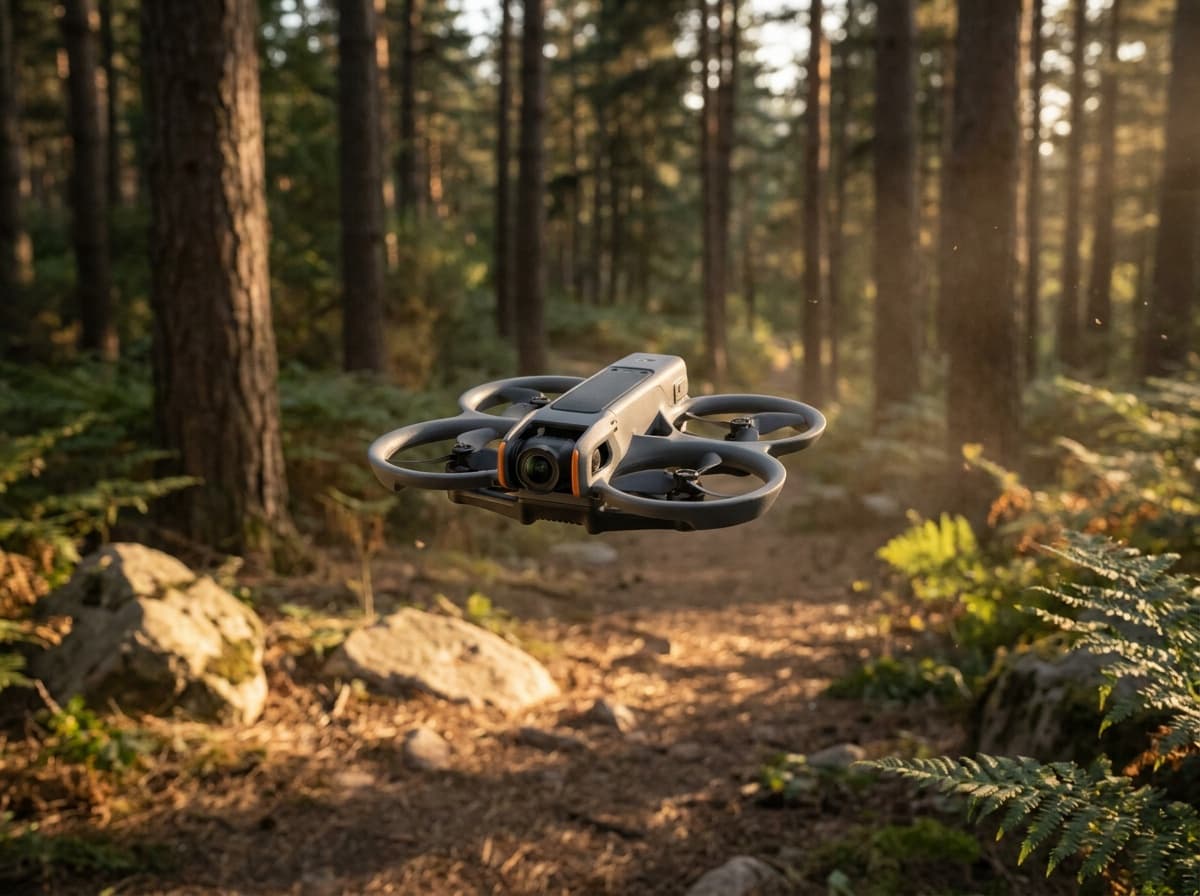
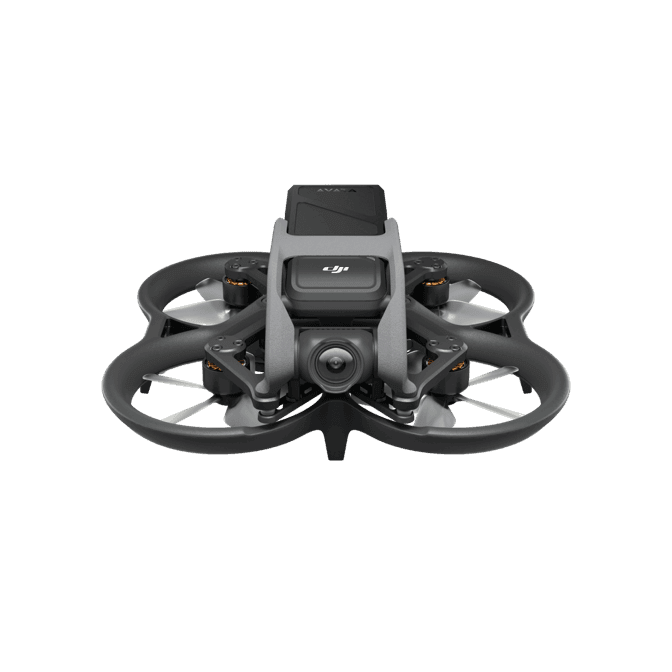
Avata 2 improves nearly every core system: it is lighter, flies longer, records from a larger sensor, adds 10-bit D-Log M, moves to O4 transmission, and stores more footage internally. The original Avata remains a viable used-value route, but its goggles, controller, batteries, props, and body accessories belong to a different compatibility stack.
The short answer
Buy the DJI Avata 2 as a new system. It is lighter, uses a larger 1/1.3-inch camera, records up to 4K/100, adds 46 GB of internal storage, improves endurance, and uses DJI's newer O4 ecosystem. Buy the original Avata only when a used bundle is substantially cheaper and you have verified the exact goggles, controller, batteries, firmware, Remote ID behavior, and crash history.
Buying disclosure: price links in this comparison are affiliate links. If you buy through one, Drone Authority may earn a commission at no extra cost to you. Full disclosure
If this is your first guarded FPV system
DJI Avata 2
Avata 2 is the cleaner current starting point, with longer endurance, better imaging, and the current O4 ecosystem.
If you edit color seriously
DJI Avata 2
The larger sensor and 10-bit D-Log M give Avata 2 more post-production flexibility.
If used price is the deciding factor
DJI Avata
A complete original-Avata bundle can cost less, but only after verifying battery health and the exact goggles-controller pair.
If you already own Goggles 2 and Controller 2
DJI Avata
Keeping the original Avata may be economical; Avata 2 can use that generation only in DJI's documented matching stack.
If you expect obstacle avoidance
DJI Avata 2
Neither model provides it. Avata 2 wins on positioning aids, but the pilot still owns collision avoidance.
| Spec | | |
|---|---|---|
| Takeoff weight / registration | Approx. 377 g; registration required | Approx. 410 g; registration required |
| Camera | 1/1.3in; 4K/60 and 4K/100; 10-bit D-Log M | 1/1.7in; 4K/60 |
| Published flight time | 23 min max | 18 min max hover time |
| Video transmission | O4; up to 13 km FCC under published test conditions | O3+; up to 10 km FCC under published test conditions |
| Visual positioning | Downward and backward positioning; no obstacle avoidance | Downward positioning; no obstacle avoidance |
| Internal storage | 46 GB plus microSD | 20 GB plus microSD |
| Goggles and controls | Goggles 3/N3 with Controller 3 stack, or Goggles 2/Integra with Controller 2 stack | Goggles 2 or FPV Goggles V2 with original compatible controls |
| Parts compatibility | Avata 2-specific battery, props, guards, and body-fit accessories | Original-Avata-specific battery, props, guards, and body-fit accessories |
| Typical catalog price band | $849 - $1,099 combo | $350 - $750 used, depending on goggles and controller |
Highlighted cells mark our editorial pick for that row, based on researching published specs and owner feedback, not lab testing. A row with no highlight is a genuine toss-up. See each drone's full review for the detail behind these calls.
Either way, sort out the legal side first
Do I need a license to fly this?01
The second generation improves the aircraft, not just the bundle
Avata 2 reduces takeoff weight from approximately 410 grams to approximately 377 grams while moving from a 1/1.7-inch camera to a 1/1.3-inch camera. DJI publishes up to 4K/100 recording, 10-bit D-Log M, 46 GB of internal storage, and a longer controlled-condition flight maximum than the original Avata's 4K/60, 20 GB, and 18-minute published hover time.
Both are guarded cinematic FPV aircraft with single-axis mechanical tilt gimbals plus electronic stabilization. Neither is a repairable freestyle build, and neither has forward obstacle avoidance. The integrated ducts make minor contact more survivable, not harmless.
02
Compatibility must be treated as a matrix
Avata 2 launched with Goggles 3, RC Motion 3, and FPV Remote Controller 3, then added support for selected older goggles and controllers in specific pairings. DJI's own FAQ ties each goggles generation to particular controllers. A DJI logo alone does not prove that three devices form a supported set.
The original Avata also supports several official combinations, but batteries, propellers, guards, and body-fit parts do not interchange with Avata 2. A used bundle should be evaluated as one complete system: aircraft, goggles, controller, batteries, charger, firmware, Remote ID, and every crash-prone structural part.
03
Both aircraft require registration and visual line of sight
Both Avata generations exceed 250 grams and must be registered for U.S. recreational or Part 107 operation. Manufacturer transmission distances are controlled-condition communication limits, not legal range targets.
Goggles do not remove the visual-line-of-sight requirement. Under Part 107, the remote pilot, person manipulating the controls, and visual observer as applicable must be able to see the aircraft throughout the flight. Build the observer and communication plan before launch rather than treating it as an accessory to the headset.
Evidence file
Sources behind this comparison
- DJI Avata 2 specifications
Manufacturer weight, camera, stabilization, sensing, storage, battery, and O4 claims.
- DJI Avata specifications
Manufacturer specifications for the original aircraft, camera, storage, stabilization, and battery.
- DJI Avata 2 compatibility FAQ
Official goggles-controller pairing matrix and storage guidance.
- 14 CFR 107.31 visual line of sight rule
Official U.S. rule governing visual contact during Part 107 operation.
Buyer questions
What usually decides it
- Is Avata 2 worth upgrading from the original Avata?
- It is a substantial system upgrade if you want the larger camera, 4K/100, newer O4 link, more storage, better endurance, and current controller ecosystem. A working original Avata can remain useful when its image and range already fit the mission.
- Can I reuse all original Avata accessories on Avata 2?
- No. Compatibility varies by goggles-controller pair, and model-specific batteries, props, guards, and fitted parts are not interchangeable. Check DJI's current compatibility documentation for every component before buying around an existing headset.
- Do Avata and Avata 2 need FAA registration?
- Yes. Both exceed 250 grams, so registration is required for recreational and Part 107 operation. Goggle flight must also preserve visual line of sight through the applicable crew arrangement.
Aircraft to operation
Before first launch
Buying the aircraft is one decision. Use this sequence to get from the box to a deliberate, legal first flight.
Aircraft under consideration
DJI Avata 2 and DJI Avata
DJI Avata: Approximately 410 g
- 01Check registration
Aircraft status
Set the registration path
The two aircraft do not share one registration answer. Confirm the takeoff weight of the model you choose, including its battery and accessories, then check the rule for your operating purpose.
- 02Start the airspace check
Launch location
Check the exact airspace
The aircraft does not decide whether a location is clear. Check the launch point, planned altitude, date, and time for controlled airspace, restrictions, and local launch rules.
- 03Check commercial requirements
Only when it is work
ConditionalDecide whether Part 107 applies
A small drone does not create a business-use exception. If the flight serves a client, employer, listing, monetized project, or another non-recreational purpose, check the Part 107 path first.
- 04Open the first-flight checklist
Props still off
Run the first-flight preflight
Confirm aircraft condition, firmware, battery health, controller link, home point, return-to-home settings, weather, people, obstacles, and the lost-link plan before takeoff.
Affiliate relationships do not determine our comparison winners. Read how we make money. Price bands were reviewed with the evidence above and can move quickly, especially for DJI products without a normal U.S. launch.