San Francisco police commissioners approve drone rules that ban general surveillance
The commission voted 5-1 on October 14 for General Order 10.12. It allows first responder drone flights, bans general surveillance and drone use as a force option, and limits how long footage is kept. The police union reviews it next.
By Joel Kelly
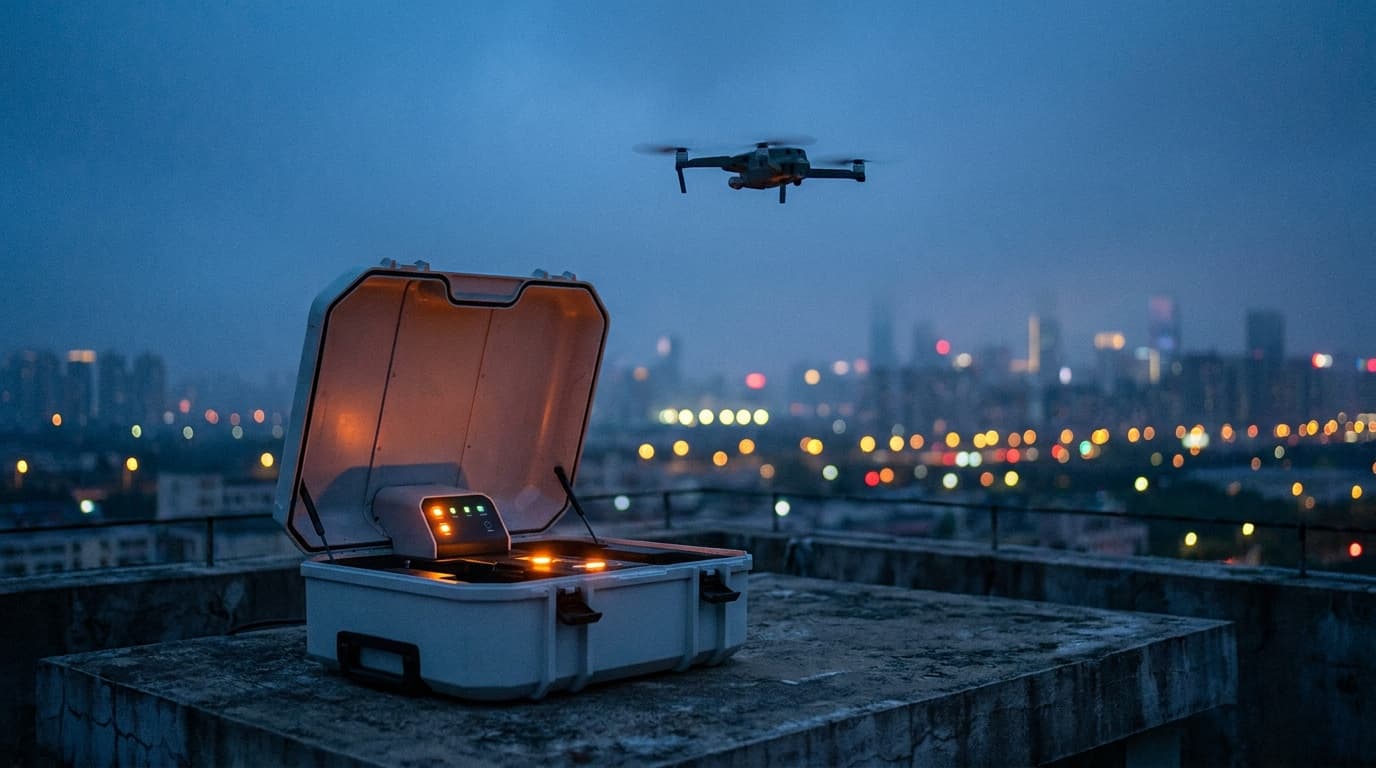
Decision brief
These rules cover the San Francisco Police Department's own drones, not hobby or commercial pilots. They are not final yet. The resolution sends the order to the police union, and the San Francisco Standard reports the Board of Supervisors takes it up after that. If you live in San Francisco and want a say, those are the next two steps to watch.
- Vote
- 5-1, Oct. 14, 2026
- Footage limit
- 30 days
- Next step
- Union review
Police Commission Resolution 26-51; one commissioner absent
Longer only with a captain's approval for an open criminal case
Meet and confer with bargaining units, per the resolution
The vote
Approved 5-1, but not final.
San Francisco's Police Commission voted 5-1 on October 14 to approve Department General Order 10.12, "Unmanned Aircraft Systems (UAS) Operations," according to the commission's resolution. Commissioner Kevin Benedicto voted no, and Commissioner Cindy Elias was absent. The resolution approves the order for the department "to use in meeting and conferring with the effected bargaining units as required by law," so the police union reviews it next. The San Francisco Standard reports that the Board of Supervisors then takes it up. The Standard calls it the department's first full set of drone rules.
What it allows
Emergency response, investigations, and first responder flights.
The order allows drones for a public safety response, an active criminal investigation, or training. Community outreach flights need approval from a captain or higher. Operators may close a call for service without an officer at the scene. The order defines drone as first responder flights as ones launched to arrive before or with ground units. All drone, first responder, and counter-drone work falls under a program manager the chief appoints.
What it bans
No general surveillance, no force, and limits on footage.
The order bars drone use as a force option. It also bars "general surveillance," which it defines as "sweeping, non-targeted observation with no stated purpose." Drones may not be used solely to monitor protests or other First Amendment activity. Without a warrant or a recognized exception, operators may not focus on the inside of a home. The same goes for a yard by a home that cannot be seen from the ground. Under city code, public footage cannot be kept more than 30 days. A captain or higher can keep it longer for an open criminal case. Recordings with evidence value are kept at least two years, and officers need a captain's approval to view footage.
The pushback
Critics say the limits are too loose.
The Standard reports that the department flies more than 600 drone flights a month since voters approved drone use in 2024. Public Defender Mano Raju wrote to the commission that "almost any patrol flight can be given a stated purpose," the Standard reports. The ACLU and the Electronic Frontier Foundation say the rules are too vague. Commission President C. Don Clay told the Standard the proposal had been posted for months and can be amended.
Source file
Verify the reporting
- San Francisco Police Commission: Resolution 26-51 and Department General Order 10.12 (adopted October 14, 2026)
- San Francisco Police Commission: DGO 10.12 amended proposal, clean copy (October 14, 2026)
- San Francisco Standard: SFPD's new drone rules ban mass surveillance. Critics say they're too vague (October 19, 2026)
Continue on Drone Authority
Put the report to work
Continue this beat
More public safety reporting
Safety · July 28, 2026
A police-drone livestream sat behind one unprotected link
Safety · October 8, 2026
NAS Jacksonville Air Show grounds drones within 5 nautical miles October 15 to 18, surface to 15,000 feet
Safety · October 7, 2026