700+ drones seized at the World Cup, where LAANC approval counted for nothing
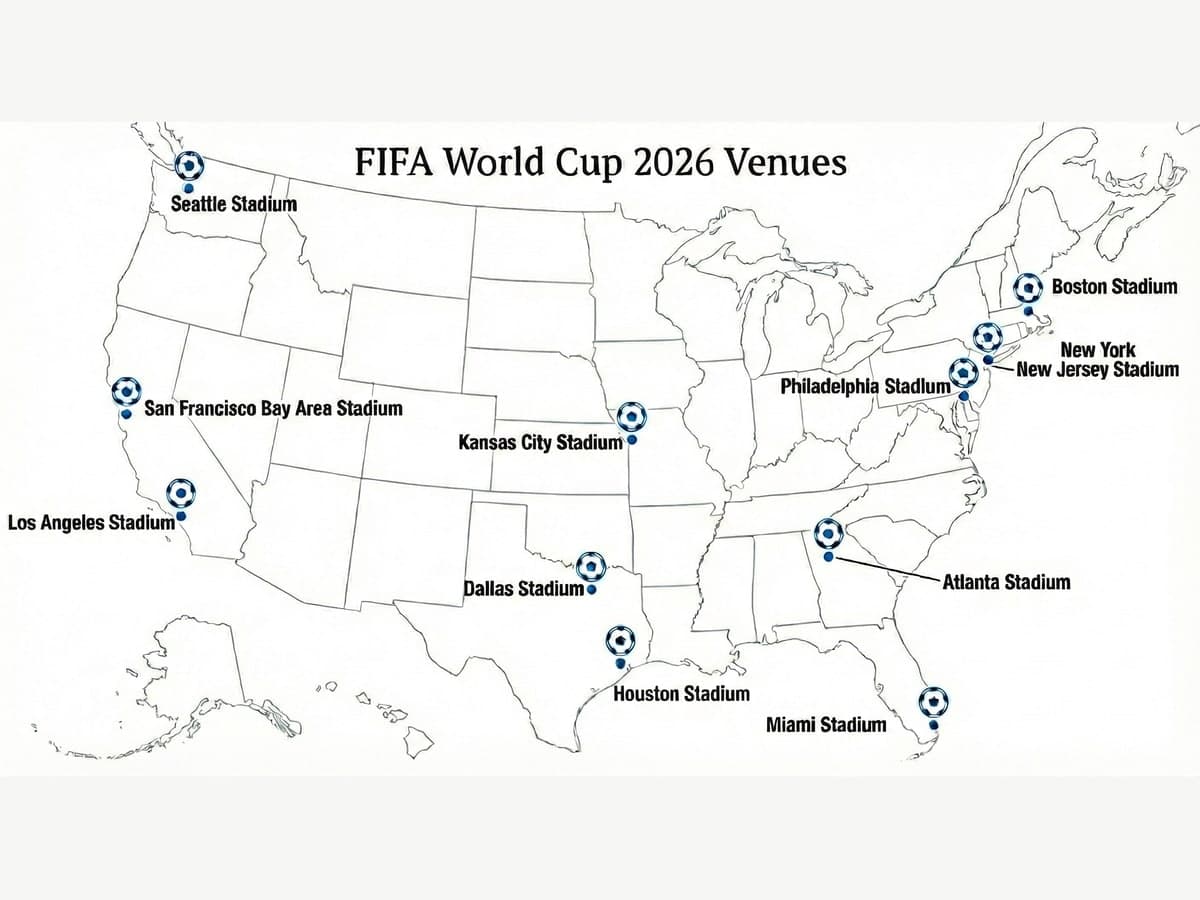
The FAA says nearly 250 temporary flight restrictions protected venues, fan zones, team hotels, and training sites across all 11 U.S. host cities.
By Joel Kelly

Decision brief
LAANC does not authorize flight through a security TFR. Recheck the live TFR map before every launch, even when an airspace app shows an authorization or a familiar location normally looks clear.
- Drones seized
- 700+
- Event TFRs
- Nearly 250
- Host cities
- 11
FAA-reported tournament total
Venues, fan zones, hotels, and training sites
Every U.S. World Cup market
The result
The World Cup made temporary airspace an actively enforced perimeter.
The FAA says federal, state, and local partners seized more than 700 unauthorized drones during the 2026 FIFA World Cup. The operation covered all 11 U.S. host cities and nearly 250 temporary flight restrictions around match venues, fan festivals, team hotels, and training sites. FAA Ground Intercept Teams supported detection and enforcement while the FBI and Department of Homeland Security handled drone seizures.
That scale turns a familiar preflight warning into an enforcement result. A LAANC authorization covers access to controlled airspace within its stated limits. It does not cancel a security TFR, stadium restriction, emergency restriction, or other temporary rule layered over the same location.
Read the number carefully
One published total is doing a lot of work here.
The FAA release does not identify the seized aircraft by model, state how many unique operators were involved, or provide a case-by-case list of arrests, fines, prosecutions, or returned property. The total therefore should not be read as 700 proven criminal cases or 700 separate pilots. It is an aggregate enforcement figure reported after the tournament.
The agency also says Congress provided $500 million for state and local counter-UAS capabilities, with an initial $250 million directed to World Cup host locations. That investment and the use of ground teams show that major-event restrictions are increasingly monitored as active security perimeters, not merely published circles a pilot is expected to notice.
Event-airspace check
Flying near a major event
Do not let a green airspace screen collapse several different legal checks into one answer.
- 01
Open the FAA TFR source
Use the live source close to launch time instead of relying on a saved map or yesterday's result.
- 02
Read the whole notice
Check the radius, altitude, daily schedule, effective dates, exceptions, and controlling authority.
- 03
Keep LAANC separate
An authorization for controlled airspace does not grant access through a security or event TFR.
- 04
Move or wait when unsure
Contact the listed authority for clarification or choose a mission that does not intersect the restriction.
The next flight
Treat the live restriction as a separate check from LAANC.
For a normal flight, open the FAA TFR source close to launch time and inspect the restriction itself. Confirm the effective dates, daily hours, altitude, radius, exceptions, and controlling authority. A saved screenshot from the previous day is not a current briefing.
If a TFR overlaps the mission, stop and resolve that restriction before launch. Moving outside controlled airspace, receiving LAANC approval, or remaining below 400 feet does not create an exception. When the restriction language is unclear, contact the listed authority or choose a different time and location.
Source file
Verify the reporting
Continue on Drone Authority
Put the report to work
Continue this beat
More public safety reporting
Safety · July 11, 2026
What pilots were told during the 2026 World Cup no-drone zones
Safety · September 9, 2026
St. Paul pulled its $200,000 drone grant the week Bellevue approved one and a Boston police drone landed on a car
Safety · August 28, 2026