A Charlotte man pleaded guilty for flying a drone at the CLT Airport Overlook, a public park between two runways
Marco Antonio Ochoa, 50, pleaded guilty on September 22 to one count of unsafe operation of an unmanned aircraft. Federal prosecutors say he launched in March from the overlook built for plane watching, inside a runway exclusion zone. The count carries up to a year in prison and a $100,000 fine.
By Joel Kelly
Decision brief
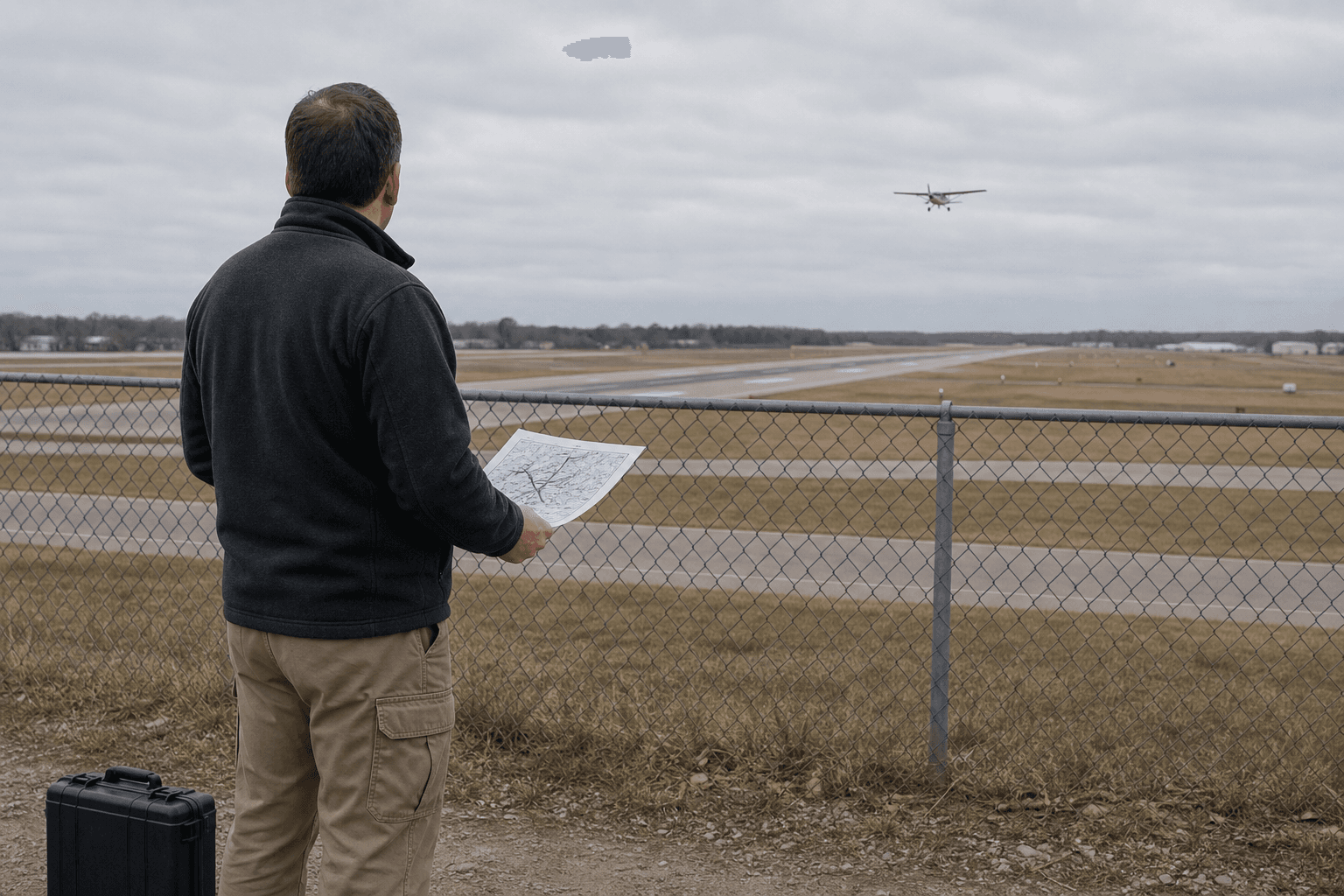
A park that welcomes plane spotters is not a place to launch. The Charlotte overlook sits between two active runways at a major airport. That is controlled airspace at ground level, and flying there needs FAA authorization first. It is the second federal drone plea in a week, after Kennedy Space Center. Both cases turned on where the pilot stood at takeoff. Check the sectional or FAA airspace data for the launch point itself, not just the route.
- Plea
- Sept. 22, 2026
- Launch point
- Airport Overlook
- Exposure
- Up to 1 year
Unsafe operation of an unmanned aircraft, W.D.N.C., before a U.S. magistrate judge
A public park between two active runways at CLT, March 2026
Plus a $100,000 fine and up to a year of supervised release
What happened
A plane-watching park, a runway exclusion zone, and a federal plea.
The U.S. Attorney's Office for the Western District of North Carolina said Marco Antonio Ochoa, 50, of Charlotte, pleaded guilty on Tuesday, September 22. He admitted one count of unsafe operation of an unmanned aircraft before U.S. Magistrate Judge Mark T. Odulio. According to the plea documents and court proceedings as described by prosecutors, in March 2026 Ochoa flew a drone without authorization inside a runway exclusion zone at Charlotte Douglas International Airport.
He launched from the Airport Overlook, a public park built so visitors can watch planes take off and land. Prosecutors describe it as sitting between two active runways. The count carries up to one year in prison, a $100,000 fine, and up to a year of supervised release. No sentencing date has been set. The FBI and the Federal Air Marshal Service investigated. The press release does not say what aircraft he flew or why.
The pattern
Two pleas in a week, both decided at takeoff.
The case pairs with the Kennedy Space Center plea on September 18. There a tourist launched from a beach parking lot that was inside restricted airspace before the drone left the ground. In both cases the location of the takeoff point decided the charge, not a long flight or a close call. A park, an overlook, or a parking lot can be open to the public and still sit inside airspace where a drone needs permission. At a major airport, the airspace around the runways starts at the ground.
What to do
Look up the launch point, not just the route.
The practical checks are the same ones the rules already require. Part 107 pilots need FAA authorization, usually through LAANC, to fly in controlled airspace. Recreational pilots need the same authorization under the exception for limited recreational flying. Near active runways the FAA facility map grids are often set at zero feet, and LAANC cannot approve a zero grid. Prosecutors say this flight had no authorization at all. Before choosing a launch site near an airport, look up the exact point on the sectional or the FAA's airspace data. Treat any spot built for watching aircraft as the wrong place for your own.
Source file
Verify the reporting
Continue on Drone Authority
Put the report to work
Continue this beat
More policy reporting
Rule watch · September 25, 2026
A tourist pleaded guilty to a federal charge for a 12-minute drone flight near Kennedy Space Center. His controller only warned him about an airport.
Rule watch · September 27, 2026
Alabama's 400-foot drone limit around ticketed concerts and games starts October 1. FAA-compliant pilots are exempt.
Rule watch · September 27, 2026