A tourist pleaded guilty to a federal charge for a 12-minute drone flight near Kennedy Space Center. His controller only warned him about an airport.
Xiaodong He pleaded guilty on September 18 in federal court in Orlando to violating national defense airspace. He had launched on July 25 from a Canaveral National Seashore parking lot inside restricted area R-2932. The count carries up to a year in prison and a $100,000 fine, and a December 2025 amendment now makes a second offense a five-year felony.
By Joel Kelly
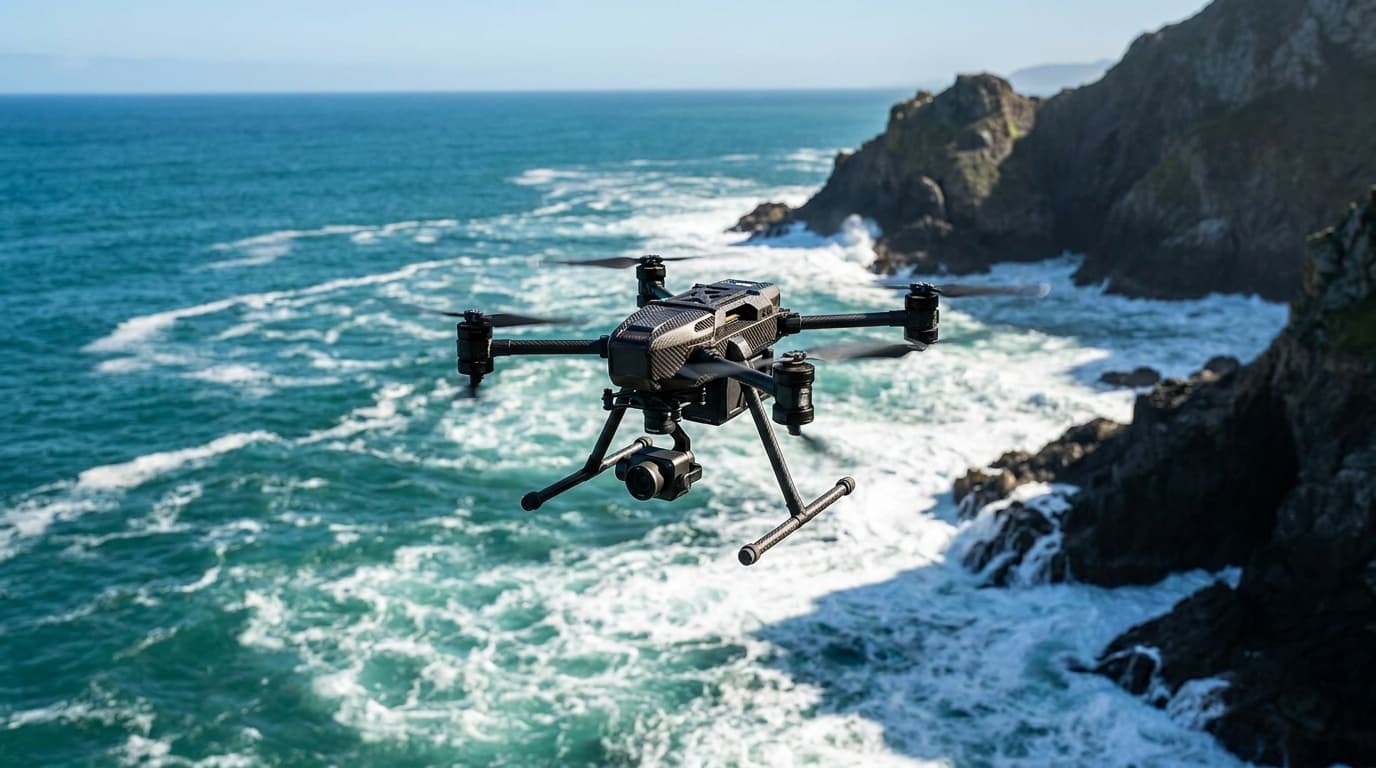
Decision brief
The parking lot was inside the restricted area before the drone left the ground, and the only thing the pilot saw was an airport caution. Since DJI switched off U.S. geofencing in January 2025, the app is an advisory, not a boundary. Before you launch, check whether the ground under your feet is charted restricted airspace, a national park, or both. The sectional chart, FAA airspace data, and the park's compendium answer that. Here all three said no, and the first count charged was the airspace, not the missing registration or certificate.
- Plea
- Sept. 18, 2026
- Flight
- 12 min 24 sec
- Exposure
- Up to 1 year
Guilty to 49 U.S.C. 46307, violation of national defense airspace, M.D. Fla., Orlando
July 25 from Playalinda Beach Access #8, inside R-2932; within 1.56 mi of LC-39B
Plus $100,000 fine; second offense now up to 5 years under Pub. L. 119-60
What happened
A beach-lot launch inside R-2932, a plea six weeks after arrest.
Xiaodong He, a Chinese tourist, pleaded guilty on Friday, September 18, to a federal misdemeanor for flying a drone in restricted airspace over NASA's Kennedy Space Center. DroneXL reported the plea from the arraignment in U.S. District Court for the Middle District of Florida in Orlando. The plea came six weeks after Homeland Security agents arrested him at a hotel near LaGuardia Airport. The count, violation of national defense airspace under 49 U.S.C. 46307, carries up to one year in prison, one year of supervised release, and a $100,000 fine. Florida Today's account of the hearing, cited by DroneXL, names only the airspace count. The public record does not yet say what became of a second count in the complaint, for flying without an airman's certificate.
The flight itself was short. Court filings summarized by DroneXL put it at 12 minutes and 24 seconds on the evening of July 25, producing four videos. The aircraft, a DJI Mavic 4 Pro, reached about 230 feet. It passed within 1.56 miles of Launch Complex 39B and 4.23 miles of the Rotation, Processing and Surge Facility. The takeoff point was the parking lot at Playalinda Beach Access #8 inside Canaveral National Seashore. According to the affidavit as reported, that lot sits inside restricted area R-2932, which shields Kennedy Space Center and Cape Canaveral Space Force Station. The violation began at takeoff. Investigators confirmed there was no approved flight in R-2932, no DroneZone authorization or waiver, no LAANC approval, no Part 107 certificate, and no registration for the drone. Kennedy security police found He with three family members. One told officers the group was on vacation, filming scenery, and had not known about any drone restrictions. The footage was shown to officers and deleted on the spot.
Why it matters
The controller warned about an airport. The ground was restricted airspace and a national park.
The detail that matters for every pilot is what the controller said. Per the affidavit as DroneXL reports it, the screen showed the same message at every launch that day: "Aircraft in Warning Zone (Airport). Fly with caution." That was the entire intervention. DJI replaced its U.S. geofencing with advisories in January 2025, and an airport caution is not a warning that the asphalt under the drone is charted restricted airspace with a federal statute attached. The airspace is also only the first layer. The National Park Service bars launching, landing, or operating an unmanned aircraft anywhere in Canaveral National Seashore under 36 CFR 1.5. The park's own laws page says the seashore borders one of the nation's biggest launch areas and that a drone there may be viewed as a threat to national security. It adds that unmanned aircraft can be detected remotely from Kennedy Space Center.
Two earlier cases bracket the sentencing, which is pending. DroneXL recounts both. Xiao Guang Pan, a Chinese-born Canadian, flew a Mavic 3 Pro near Cape Canaveral Space Force Station over three days in January 2025. He received 12 months of probation followed by deportation and a bar on re-entry. Yinpiao Zhou flew over Vandenberg Space Force Base during a launch in November 2024 after installing software to defeat his drone's limits. He was sentenced to four months already served, one year of supervised release, and $225 in fines. The defense in He's case intends to argue for time served; he has surrendered his passport and remains on pretrial supervision. The statute has also changed since those cases. Public Law 119-60, enacted December 18, 2025, amended 49 U.S.C. 46307 so that a second or subsequent offense carries imprisonment of up to five years rather than one. First offenses are untouched, which is why this plea still tops out at a year.
What to do
Read the chart and the compendium, not the app.
For pilots the practical takeaway is that a warning-zone message on the controller tells you nothing about restricted areas, national parks, or the statute that reaches both. Under 14 CFR 107.45, a small drone may not fly in a prohibited or restricted area without permission from the agency that uses or controls it. That rule applies whether the app says anything or not. Check the sectional or the FAA's airspace data for restricted areas before you pick a launch site. Treat any national park land as closed to takeoff and landing unless the superintendent has approved it in writing. If the site is anywhere near a launch range, assume it is watched. The Kennedy case was charged as a misdemeanor and resolved with a plea in six weeks. In the two earlier cases, the immigration consequences are what lasted.
Source file
Verify the reporting
- DroneXL: NASA Kennedy drone case, Chinese tourist pleads guilty, faces a year (September 19, 2026)
- Florida Today: Chinese tourist says he didn't know NASA Kennedy Space Center drone rules, pleads guilty in Orlando (September 18, 2026)
- Office of the Law Revision Counsel: 49 U.S.C. 46307, violation of national defense airspace, as amended by Pub. L. 119-60 (text in effect September 16, 2026)
- National Park Service: Canaveral National Seashore laws and policies, unmanned aircraft
Continue on Drone Authority
Put the report to work
Continue this beat
More policy reporting
Safety · July 27, 2026
One drone grounded every aircraft on Colorado's largest fire — and the operator posted the video
Rule watch · July 11, 2026
The FAA now has a faster enforcement lane for some drone violations
Safety · July 26, 2026