Drone Authority · Review · Beginner / sub-250g camera drone
Potensic ATOM SE
Built from published specifications and cross-checked against the sources listed at the foot of this page. We have not flown this aircraft ourselves.
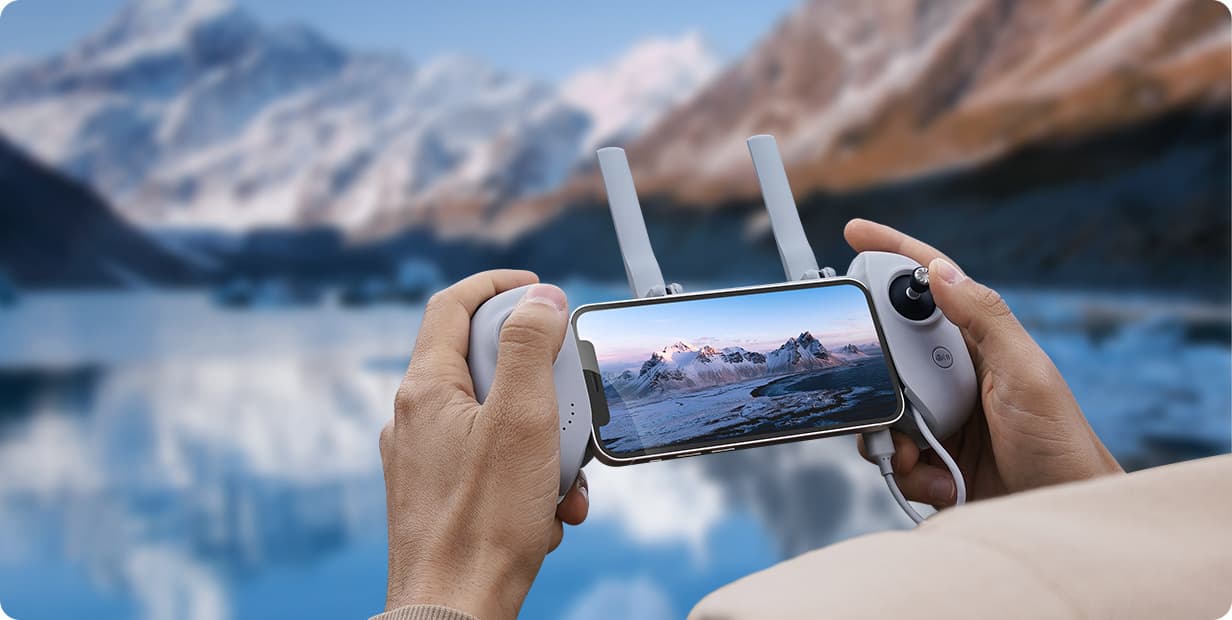
The finding
Budget GPS pickBudget-first beginners who want GPS, return-to-home, RAW stills, and 4K recording without paying for a mechanical gimbal.
Price band only. Affiliate link: we may earn a commission at no extra cost to you. Disclosure
- Our score
- 7.5/10
- Typical price
- $200 - $300
- Category
- Beginner / sub-250g camera drone
Published figures
- Weight
- Under 249 g in the published stock configuration
- Camera
- 1/3in CMOS, 12 MP, JPG + DNG
- Video
- 4K/30 with ShakeVanish EIS
- Flight time
- 31 min published maximum
- Transmission
- PixSync 2.0, 4 km published maximum
- Positioning
- GPS plus downward vision and ToF
Against the 250 g registration line
249 g
Below the line. Flown recreationally and unmodified, this aircraft does not need FAA registration. Any Part 107 flight still does, and added gear can push it over. Registration rules
Drone Authority score
Editorial composite from researching ATOM SE. Not a lab measurement, not an aggregate of retailer stars.
7.5/10
- Flight and cameraCapability for its lane
- Solid7.3
- Owner sentimentCross-checked owner reports
- Solid7.4
- Build and reliabilityHardware and dependability
- Solid7.2
- ValuePrice against category peers
- Strong8.3
4K/30, RAW photos, and GPS flight tools are credible at this price, but stabilization is electronic rather than a mechanical gimbal.
A long-running budget platform with a real manual, app, and support path.
Simple positioning sensors and no obstacle avoidance keep the hardware expectations modest.
A low-cost way to learn a conventional GPS camera-drone workflow below 249 g.
In its favour
- Sub-249 g stock weight with a conventional GPS controller workflow
- DNG still capture and 4K/30 video at a low entry price
- Published 31-minute endurance and a documented PotensicPro support path
Buy it for this. Budget-first beginners who want GPS, return-to-home, RAW stills, and 4K recording without paying for a mechanical gimbal.
Against it
- ShakeVanish electronic stabilization cannot match a three-axis mechanical gimbal
- No obstacle-avoidance system
- Smaller accessory, repair, and app ecosystem than DJI
Skip it if this matters. ShakeVanish electronic stabilization cannot match a three-axis mechanical gimbal
Owner desk
Established support pathLiving with the ATOM SE.
The ATOM SE is simplest when treated as a conventional GPS aircraft with electronic stabilization: pair it in PotensicPro, establish the home point, prove return behavior nearby, and expect less stable footage than a gimbal-equipped ATOM.
Configuration
Budget sub-250 g GPS camera drone
Weight
Under 249 g in Potensic's published stock configuration
Legal configuration
Registration, Remote ID, and what changes them.
A strobe, guard, landing gear, or other add-on can push a near-threshold aircraft over 250 g. Weigh the ready-to-fly configuration.
- Recreational
- A stock aircraft under 250 g can qualify for the recreational registration exception. Added equipment can change the weight answer.
- Part 107
- Register the aircraft for any Part 107 operation, even when the stock weight is below 250 g.
- Remote ID
- Remote ID applies when the aircraft is required to be registered or is registered. Confirm the exact accepted declaration, serial, and current operating path in FAA DroneZone.
- Control stack
- PotensicPro, not Potensic Eve
First 30 minutes
Set it up before the launch site.
- 01
Charge and inspect the complete kit
Charge the aircraft battery and controller, unfold the arms, check the propellers, and confirm the camera, downward sensor, battery latch, and storage card are clean and secure.
- 02
Install PotensicPro
ATOM SE uses PotensicPro. Pair the aircraft and controller, verify the model name, and complete official updates before leaving home.
- 03
Set return-to-home deliberately
Choose a return altitude above nearby obstacles, move away from metal and reinforced concrete, and wait for a stable home-point confirmation.
- 04
Prove control and stabilization nearby
Hover close, fly a small box, brake, record a short clip, and test return-to-home while the aircraft remains easy to recover.
Compatible kit
What to buy first.
Start with protected storage, a known compatible recording card, and a clean launch surface. Do not buy ATOM 2 or ATOM 3 batteries and assume the family name proves compatibility.
What not to change
Keep the aircraft below its payload and weight limits, leave the downward sensors and airflow clear, and use only exact ATOM SE batteries, propellers, controller, and firmware.
Amazon links are affiliate links. We may earn a commission at no extra cost to you. Fit notes and ordering are editorial decisions.
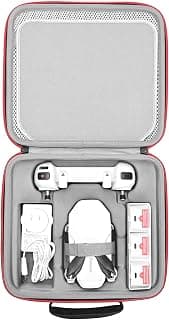
01 · Buy first
Atom / Atom SE Carrying Case
A practical case for the non-DJI starter path.
Check at Amazon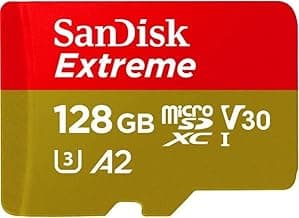
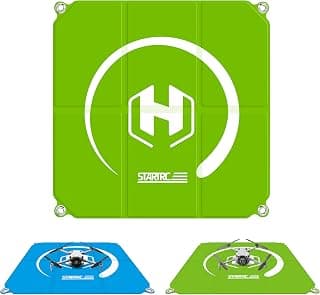
03 · Buy first
22-Inch Foldable Drone Landing Pad
The light, cheap launch pad for first-time pilots.
Check at AmazonMaintenance
What to check, and how often.
- Before every flight
- Inspect propellers, motor bells, arm joints, sensors, camera, battery latch, and storage. Replace damaged propellers instead of straightening them.
- After dust, sand, salt, or moisture
- Power down, remove the battery, brush off loose debris, and let the aircraft dry fully before charging or storage.
- Every 10 flights
- Review battery condition, storage capacity, return-to-home altitude, app warnings, firmware status, and recent flight logs.
- Before storage
- Store batteries at the manufacturer-recommended state and temperature, away from a hot vehicle, direct sun, and combustible clutter.
Troubleshooting
Common symptoms and what to check.
The aircraft drifts or reports a positioning warning
Move away from vehicles, speakers, reinforced concrete, and other magnetic interference. Confirm satellite and downward-sensor status and calibrate only when the official app requests it.
Do not launch while positioning, compass, or home-point warnings remain.
Footage looks shaky or soft
Clean the lens, confirm the intended resolution and ShakeVanish setting, inspect every propeller, and test in low wind. Electronic stabilization needs clean source motion.
Stop if vibration remains in a stable hover or a motor sounds rough.
The app will not pair or update
Confirm PotensicPro, not Eve, allow the required phone permissions, charge every component, reconnect the controller cable, and use the current official package.
Do not fly through a repeated update failure or model mismatch.
Official support
Manuals, firmware, parts.
Learn next
Where to go next.
- Registration checkerSee how weight, recreation, and Part 107 change the registration answer.
- First-flight checklistTurn activation and setup into a controlled first launch.
- Can I fly here?Check airspace, authorization, TFRs, weather, and launch permission.
- Better aerial footageBuild deliberate movement, exposure, and shot planning habits.
The short answer
The Potensic ATOM SE is a sensible first GPS drone when the budget is tight and still photos matter: it stays below 249 g in the stock configuration, records 4K/30, and saves DNG files. The compromise is visible in motion. ShakeVanish is electronic stabilization, not the three-axis mechanical gimbal in the regular ATOM, so buyers who care about consistently smooth video should spend more for the gimbal model.
What changes the decision
01
A real camera workflow at the budget end
Potensic publishes a 1/3-inch 12 MP camera, JPG and DNG stills, 4K/30 recording, PixSync 2.0 transmission, and a 31-minute maximum flight time. Those are useful capabilities for learning exposure, composition, home-point discipline, return-to-home, and a normal controller workflow without moving into a heavier registered aircraft.
The registration benefit needs precise wording. A stock aircraft below 250 g can qualify for the recreational registration exception, but Part 107 aircraft must be registered regardless of weight. A strobe, guard, or other attachment can also move a recreational configuration over the threshold.
02
Why the regular ATOM is the important comparison
The ATOM SE uses Potensic's ShakeVanish electronic image stabilization. It does not have the regular ATOM's three-axis mechanical gimbal. Electronic stabilization can crop and smooth recorded motion, but it cannot physically isolate the camera from pitch and roll. Wind, braking, and direction changes therefore matter more to the result.
Choose the SE when the lowest entry cost, RAW stills, stock sub-249 g weight, and basic GPS flight are the priorities. Choose the regular ATOM when video is the point of the purchase. The price gap buys a change in the camera platform, not a cosmetic accessory.
Sources behind this review
Manufacturer specifications set the hardware claims. Independent reviews are used to test that positioning and surface the practical tradeoffs. We did not receive or fly a review unit.
- Potensic ATOM SE product page
Official camera, stabilization, weight, positioning, transmission, endurance, and payload specifications.
- Potensic ATOM SE manual
Official setup, control, app, safety, storage, and operating procedures.
- Potensic downloads
Current official manual and software support path.
- Digital Camera World: Potensic Atom SE review
Independent hands-on review, used to cross-check the use case and limitations stated above.
Before you choose
Does the Potensic ATOM SE have a mechanical gimbal?
No. Potensic lists ShakeVanish electronic image stabilization. The regular ATOM is the family model with a three-axis mechanical gimbal.
Which app does the ATOM SE use?
Potensic identifies PotensicPro for ATOM, ATOM SE, and ATOM LT. Potensic Eve is the newer app path for ATOM 2 and later platforms.
Does a recreational ATOM SE need FAA registration?
A stock aircraft below 250 g can qualify for the recreational exception. Part 107 use always requires registration, and installed accessories can change the weight answer.
Ready to buy the Potensic ATOM SE?
Typical price $200 - $300. Check availability before you commit. Buy through this link and we may earn a commission at no extra cost to you. Disclosure.
Compare with
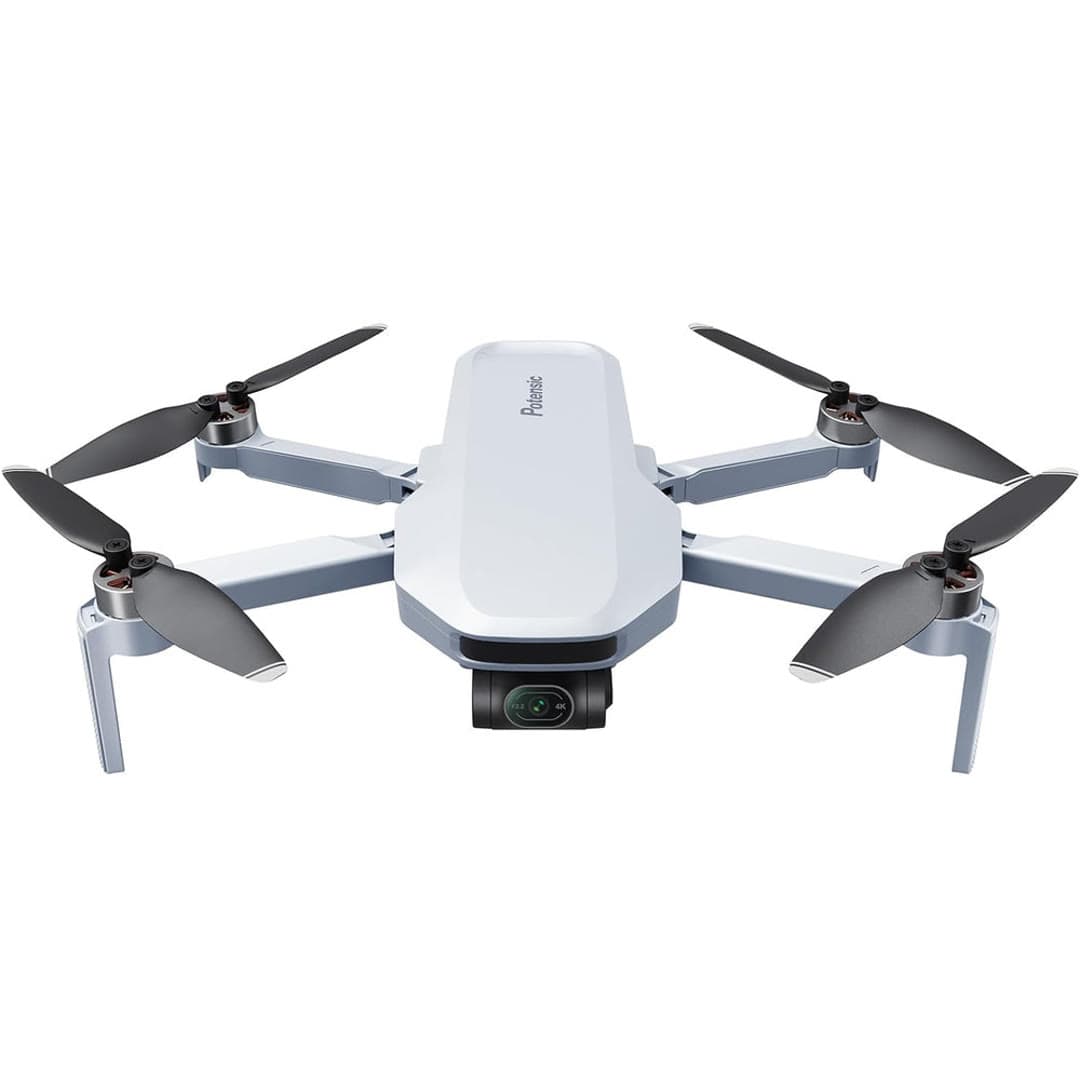
Potensic
Atom
The strongest non-DJI option under $350: a true 3-axis mechanical gimbal at a budget price, frequently bundled with extra batteries, and it's unaffected by the DJI import situation.
Strengths
- Real mechanical 3-axis gimbal, not just digital stabilization
- Battery bundles often undercut comparable DJI kits
- Not affected by the DJI FCC Covered List import freeze
Tradeoffs
- App and transmission reliability trail DJI in our research of owner reports
- Smaller accessory and repair ecosystem than DJI
- Image quality good for the price but below the DJI Mini line
- Weight
- Under 249 g
- Camera
- 4K, 3-axis gimbal
- Flight time
- ~32 min
- Stabilization
- Mechanical gimbal
- Transmission
- ~6 km (claimed)
- GPS
- Yes
Best for: Budget buyers who want gimbal-stabilized 4K and want to sidestep the DJI supply uncertainty.
Amazon comes first when available. Official links stay visible for exact specs, stock, and manufacturer support. We may earn a commission at no extra cost to you. Disclosure
DJI
Mini 4K
Mini 4K is DJI's low-cost conventional camera drone: a 246 g Mini 2-family aircraft with a three-axis gimbal, 4K/30 video, RAW photos, and O2 transmission, but no horizontal obstacle avoidance.
Strengths
- Three-axis gimbal, 4K/30 video, and RAW photos at the bottom of DJI's camera-drone range
- 246 g stock configuration can qualify for the recreational registration exception
- Mature DJI Fly, O2, RC-N1C, and Mini 2-family support path
Tradeoffs
- No forward, rear, or side obstacle avoidance
- Small sensor, 4K/30 ceiling, and Normal color limit post-production headroom
- Registered operations need a current Remote ID and serial verification rather than a weight assumption
- Weight
- 246 g published takeoff weight
- Camera
- 1/2.3in CMOS, 12 MP; 4K/30
- Photo
- JPEG and DNG RAW
- Gimbal
- Three-axis mechanical
- Flight time
- 31 min published max
- Control
- DJI O2 with RC-N1C and DJI Fly
Best for: First-time pilots who want a real DJI GPS camera drone and care more about stable 4K capture than tracking or obstacle sensing.
Amazon comes first when available. Official links stay visible for exact specs, stock, and manufacturer support. We may earn a commission at no extra cost to you. Disclosure
Aircraft to operation
Before first launch
Buying the aircraft is one decision. Use this sequence to get from the box to a deliberate, legal first flight.
Aircraft under consideration
Potensic ATOM SE
Potensic ATOM SE: Under 249 g in the published stock configuration
- 01Check registration
Aircraft status
Set the registration path
Potensic ATOM SE is listed at Under 249 g in the published stock configuration. Recreational-only use may qualify for the sub-250 g exception. Part 107 flights still require registration, so confirm takeoff weight with the flight battery and accessories fitted.
- 02Start the airspace check
Launch location
Check the exact airspace
The aircraft does not decide whether a location is clear. Check the launch point, planned altitude, date, and time for controlled airspace, restrictions, and local launch rules.
- 03Check commercial requirements
Only when it is work
ConditionalDecide whether Part 107 applies
A small drone does not create a business-use exception. If the flight serves a client, employer, listing, monetized project, or another non-recreational purpose, check the Part 107 path first.
- 04Open the first-flight checklist
Props still off
Run the first-flight preflight
Confirm aircraft condition, firmware, battery health, controller link, home point, return-to-home settings, weather, people, obstacles, and the lost-link plan before takeoff.
How we score
The score is an editorial composite of four axes: flight and camera capability, owner sentiment drawn from published reviews, build and reliability, and value for the money. It reflects research and cross-checking rather than lab measurement, and we do not invent star counts. Prices are typical U.S. street bands and move around, especially for DJI while the import freeze lasts.
Affiliate relationships do not change our scores or rankings. Read the full affiliate disclosure.