Exact delivered configuration
The platform can be marketed for spraying, spreading, lifting, and data capture. The contract must identify the installed tank, pumps, nozzles, hopper, sensors, controller, batteries, charger, software, and firmware.
Aircraft dossier / Manufacturer claims separated from operating analysis
Large agricultural spray, spread, lift, and mapping system
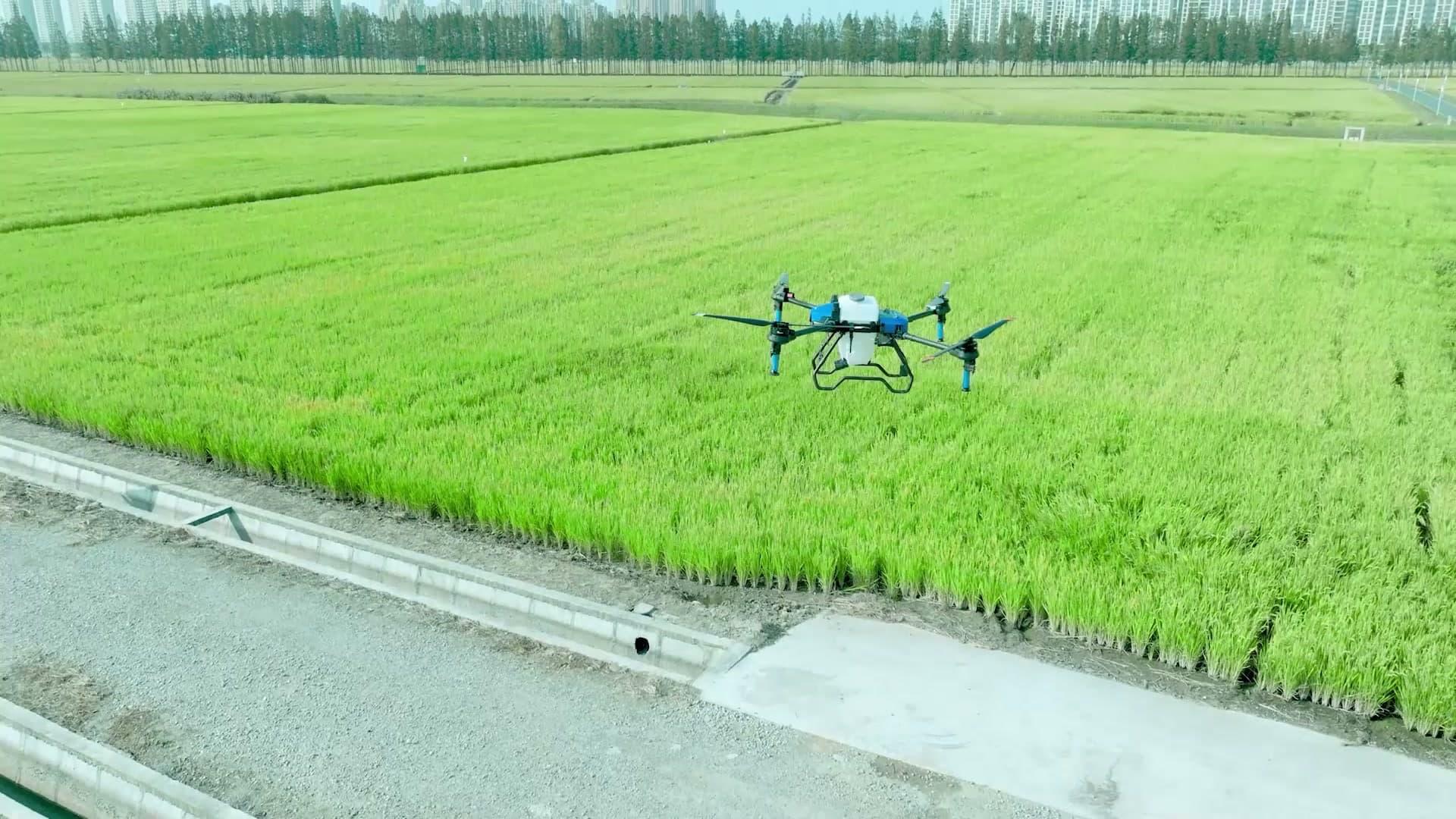
The J100 is presented as a multi-role agricultural platform for spraying, spreading, lifting, and data capture. That breadth makes configuration control, dealer support, legal authority, application calibration, charging, and parts discipline more important, not less.
Product image: Frame from official EAVISION J100 product video
Decision brief
Best fit: Established application programs evaluating a high-capacity alternative and willing to validate configuration, support, approvals, software, and field performance before scaling.
Published configuration
These are manufacturer-published specifications, not independent field measurements. The context matters as much as the number.
EAVISION lists an optional 60 L maximum configuration. Confirm regional availability and loaded operating authority.
English product-page claim for the dual electromagnetic impeller pump system.
Manufacturer marketing maximum. Material, hopper, configuration, terrain, altitude, and legal authority govern actual use.
Published continuously adjustable range with configuration-specific discs. The product label and application target still control the usable setting.
Manufacturer ultra-fast charging claim. Verify start and end state, battery temperature, power source, cooling, and cycle life.
Manufacturer claim for the integrated data-capture workflow, not a universal mapping throughput guarantee.
Operating system
Dealer or program purchase. Require a model- and region-specific bill of materials, serial and firmware path, payload configuration, controller, batteries, charger, cooling, software, training, warranty, parts, support territory, and approval assumptions.
The platform can be marketed for spraying, spreading, lifting, and data capture. The contract must identify the installed tank, pumps, nozzles, hopper, sensors, controller, batteries, charger, software, and firmware.
Flow and fast-charge claims only matter when the crew can safely mix, refill, cool, charge, inspect, clean, transport, and record each cycle under local field conditions.
Confirm who supplies parts, performs repairs, trains the crew, supports software, handles warranty, and responds during the crop window. Do not rely on a global product page as a service agreement.
Data capture, spraying, spreading, and lifting can have different approvals, payloads, maintenance, software, crew skills, insurance, and records. Treat each as a controlled configuration.
Operating fit
The platform may suit water-intensive or high-throughput work when the exact pump, nozzle, tank, route, material, label, weather, tender, and approval path support the claimed flow.
Published payload and flow do not establish distribution quality. Verify the actual material, granule size, moisture, gate, spinner, target rate, pattern, calibration, and record.
The manufacturer emphasizes sensing and terrain capability. Validate wires, vegetation, row geometry, lighting, sensor limits, speed, communication, manual escape, and emergency landing space in the actual crop.
If the same platform will map or scout, define the camera, accuracy, calibration, processing, outputs, and professional scope separately from the application mission.
United States
This is an educational overview. Confirm the current aircraft, operation, exemptions, certificates, state credentials, labels, airspace, and local conditions before operating.
Covered dispensing still requires the applicable agricultural aircraft operator certificate and exemption pathway. Platform capability does not grant operating authority.
A high-capacity loaded configuration will exceed the small-UAS threshold. Confirm the exact aircraft, maximum takeoff weight, exemption, N-number, Part 91 conditions, and operating documents.
State applicator credentials, categories, product labels, buffers, drift controls, records, chemical handling, insurance, and local limits remain separate gates.
A certificate or exemption covers defined aircraft and conditions. Confirm that every tank, payload, software, firmware, and operating mode used in the field matches the approved configuration.
Field cycle
Match serial, model year, region, firmware, payload, tank, nozzles, hopper, battery, charger, controller, software, and approval documents before the first commercial field.
Run a controlled field acceptance plan for rate, pattern, flow, droplet or granule target, route, obstacle response, signal, charging, thermal behavior, records, and emergency procedures.
Time transport, setup, mixing, refill, battery exchange, cooling, charging, cleaning, route, maintenance, and closeout. Compare measured acres per crew-hour with the business case.
Track faults, parts lead times, dealer response, battery health, software changes, calibration drift, application quality, and records through a real crop window before adding aircraft.
Before requesting a quote
Sources
EAVISION
Public English product positioning, tank, pump, flow, spread, charging, and data-capture claims.
EAVISION
Manufacturer technical detail for aircraft, spray, spread, sensing, batteries, and environment. Regional configuration must be confirmed.
Federal Aviation Administration
Part 137 triggers and the current UAS agricultural certification process.
Federal Aviation Administration
Agricultural aircraft operator certification phases and federal certificate context.