Drone Authority · Comparison
DJI Goggles 3 vs DJI Goggles N3
Honest synthesis from researching published specs and owner feedback. We do not run a test lab.
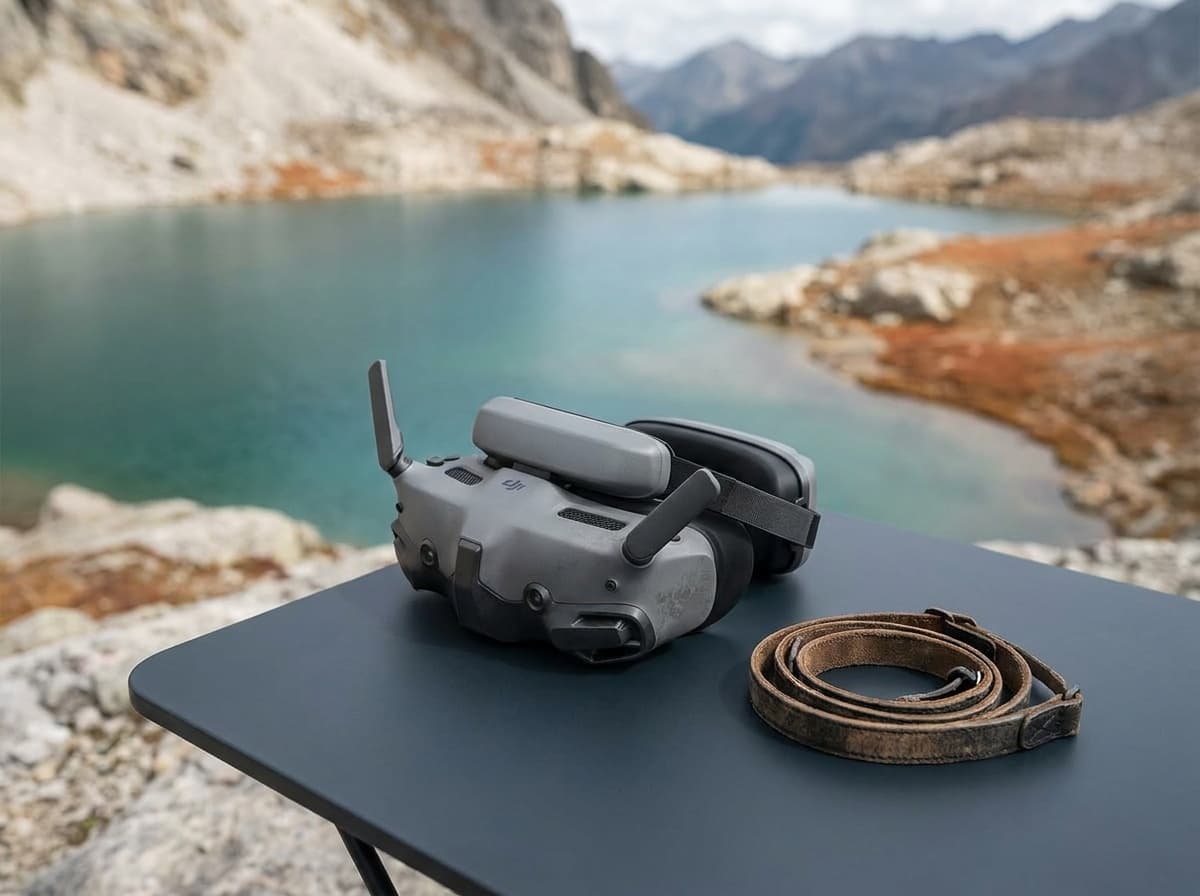
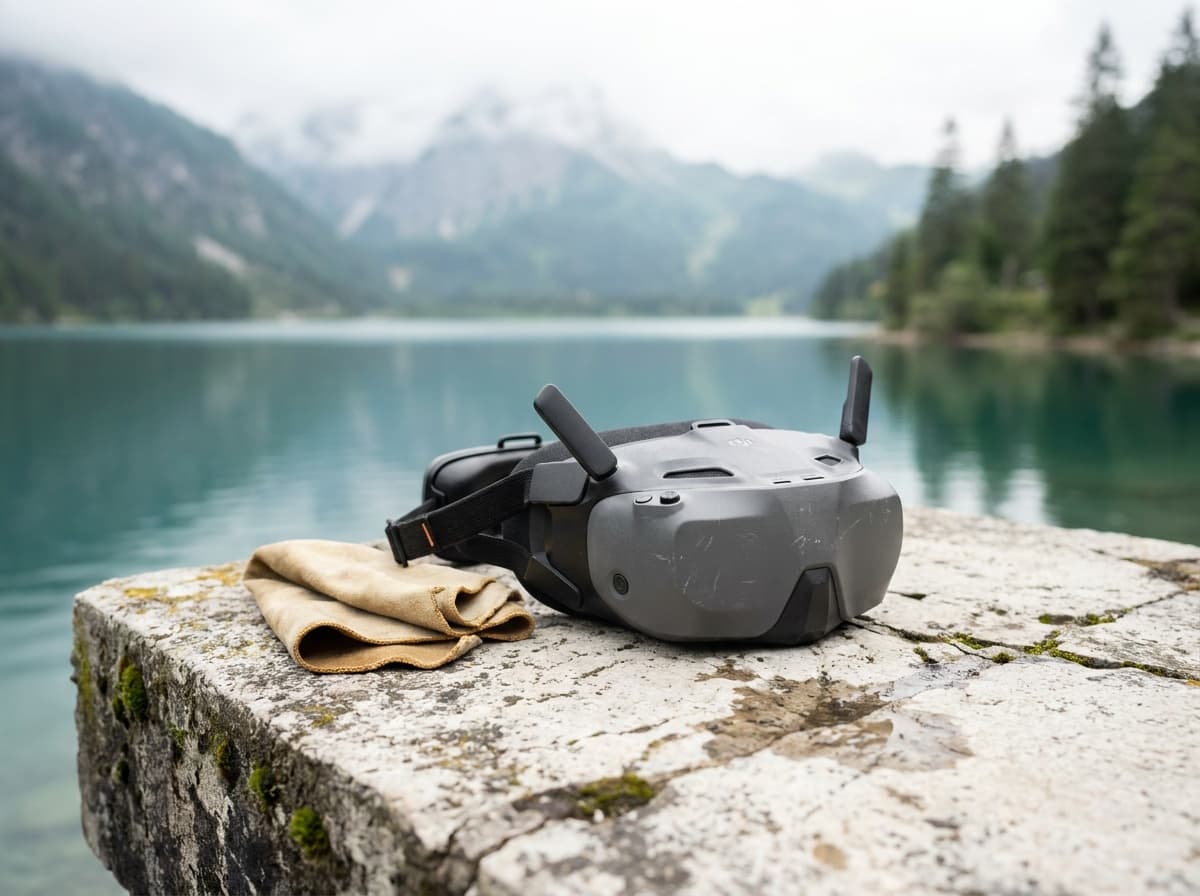
Goggles 3 buys the premium viewing and awareness experience: dual Micro-OLED panels, 100 Hz refresh, diopter and IPD adjustment, lower published Avata 2 latency, and Real View pass-through. Goggles N3 keeps the O4 link and fits over glasses at a much lower price. Compatibility is aircraft- and controller-specific, so the full stack matters more than the goggles name alone.
The short answer
Buy DJI Goggles 3 when display quality, 100 Hz refresh, built-in diopter adjustment, Real View, lower headset weight, and broader long-term DJI use justify the premium. Buy Goggles N3 as the value headset for a known compatible Avata 2 or Neo setup, especially when you need to wear prescription glasses inside the headset. Both use O4 with supported aircraft; the aircraft-controller-goggles compatibility matrix matters more than the shared transmission name.
Buying disclosure: price links in this comparison are affiliate links. If you buy through one, Drone Authority may earn a commission at no extra cost to you. Full disclosure
If display quality is the priority
DJI Goggles 3
Dual Micro-OLED panels, 100 Hz refresh, and lower published Avata 2 latency make Goggles 3 the premium view.
If you wear glasses and want the simplest fit
DJI Goggles N3
Goggles N3 is designed to fit over personal glasses without setting IPD or diopters.
If you want the lowest-cost current DJI FPV entry
DJI Goggles N3
N3 preserves O4 transmission at less than half the catalog price band of Goggles 3.
If situational awareness features matter
DJI Goggles 3
Real View pass-through is useful for checking the immediate environment, though it does not replace legal VLOS.
If you expect to use several DJI aircraft or air units
DJI Goggles 3
Goggles 3 has the broader current compatibility list, but firmware and matching controllers still need verification.
| Spec | | |
|---|---|---|
| Display | Dual 0.49in Micro-OLED; 1920x1080 each; up to 100 Hz | Single 3.5in LCD; 1920x1080; up to 60 Hz |
| Fit and vision correction | 56-72 mm IPD; -6.0 D to +2.0 D diopter adjustment | No IPD or diopter adjustment; designed to fit over personal glasses |
| Real View | Supported, including picture-in-picture pass-through | Not supported |
| Avata 2 published minimum latency | 24 ms at 1080p/100 under DJI test conditions | 31 ms at 1080p/100 under DJI test conditions |
| Published runtime | Approx. 3 hours max | Approx. 2.7 hours max |
| Weight | Approx. 470 g with battery | 536 g with battery and headband |
| Current documented compatibility | Avata 360, Neo 2, Avata 2, Neo, Air 3, Mini 4 Pro, O4 Air Unit series, and O3 Air Unit (per DJI's Goggles 3 FAQ) | Avata 360, Neo 2, Avata 2, Neo, and O4 Air Unit series |
| Matching controls | Use the controller DJI documents for the selected aircraft and firmware | Avata 2/Neo/O4 paths require RC Motion 3 or FPV Remote Controller 3 as documented |
| Typical catalog price band | $450 - $550 | $160 - $230 |
| VLOS requirement | Goggles do not replace the applicable visual-line-of-sight operating requirement | Same requirement |
Highlighted cells mark our editorial pick for that row, based on researching published specs and owner feedback, not lab testing. A row with no highlight is a genuine toss-up. See each drone's full review for the detail behind these calls.
Either way, sort out the legal side first
Do I need a license to fly this?01
The display systems are fundamentally different
Goggles 3 use two 0.49-inch 1080p displays with refresh up to 100 Hz, a 44-degree field of view, adjustable interpupillary distance, and built-in correction from -6.0 D to +2.0 D. DJI lists approximately 470 grams including the battery and about three hours of controlled-condition runtime.
Goggles N3 use one 3.5-inch 1080p LCD at up to 60 Hz with a wider 54-degree field of view, no IPD adjustment, and no diopter adjustment. The housing is designed to fit over personal glasses. DJI lists 536 grams with battery and headband and 2.7 hours of controlled-condition runtime. These are manufacturer specifications, not a claim that we measured comfort or motion clarity.
02
Real View and optics are the premium features
Goggles 3 can show the outside world through built-in cameras without removing the headset, including a picture-in-picture path on supported setups. That helps with setup and brief situational checks, but it does not replace direct visual observation of the aircraft or a crew plan.
Goggles N3 explicitly omit Real View and trade fine optical adjustment for a roomy glasses-compatible enclosure. Their larger apparent display and lower price are attractive for occasional use, while Goggles 3 are the stronger choice for frequent pilots who care about contrast, refresh, fit adjustment, and a less bulky headset.
03
Compatibility and visual line of sight are separate checks
Both headsets use O4 with supported aircraft, but latency, bitrate, controller support, and available features change by aircraft and firmware. DJI's Avata 2 FAQ pairs newer goggles with specific RC Motion and FPV Remote Controller generations. Verify the complete three-device combination before buying any one component.
No headset makes beyond-visual-line-of-sight flight legal by itself. Under Part 107, the remote pilot, person manipulating the controls, and visual observer as applicable must be able to see the aircraft throughout the flight. Real View is a headset feature, not a substitute for satisfying that rule.
Evidence file
Sources behind this comparison
- DJI Goggles 3 specifications
Manufacturer display, optics, weight, Real View, O4, latency, and battery specifications.
- DJI Goggles N3 specifications
Manufacturer display, glasses-fit, weight, O4, latency, Real View limitation, and battery specifications.
- DJI Avata 2 compatibility FAQ
Official aircraft, goggles, and controller pairing requirements.
- 14 CFR 107.31 visual line of sight rule
Official U.S. visual-line-of-sight requirement relevant to goggle operation.
Buyer questions
What usually decides it
- Are Goggles 3 clearer than Goggles N3?
- They are the premium display system, with dual displays, up to 100 Hz refresh, IPD adjustment, and built-in diopters. N3 uses a single 1080p LCD at up to 60 Hz. Actual perceived clarity still depends on fit and eyesight.
- Which DJI goggles are better for prescription glasses?
- Goggles N3 are designed to fit over personal glasses. Goggles 3 use built-in -6.0 D to +2.0 D adjustment and can use corrective lens frames when a prescription or astigmatism falls outside that range.
- Can I fly alone using Real View on Goggles 3?
- Real View does not remove the applicable visual-line-of-sight requirement. Plan goggle operations around the aircraft, rule set, and crew arrangement rather than treating a pass-through camera as legal visual contact.
Aircraft to operation
Before first launch
Buying the aircraft is one decision. Use this sequence to get from the box to a deliberate, legal first flight.
Aircraft under consideration
DJI Goggles 3 and DJI Goggles N3
- 01Check registration
Aircraft status
Set the registration path
The two aircraft do not share one registration answer. Confirm the takeoff weight of the model you choose, including its battery and accessories, then check the rule for your operating purpose.
- 02Start the airspace check
Launch location
Check the exact airspace
The aircraft does not decide whether a location is clear. Check the launch point, planned altitude, date, and time for controlled airspace, restrictions, and local launch rules.
- 03Check commercial requirements
Only when it is work
ConditionalDecide whether Part 107 applies
A small drone does not create a business-use exception. If the flight serves a client, employer, listing, monetized project, or another non-recreational purpose, check the Part 107 path first.
- 04Open the first-flight checklist
Props still off
Run the first-flight preflight
Confirm aircraft condition, firmware, battery health, controller link, home point, return-to-home settings, weather, people, obstacles, and the lost-link plan before takeoff.
Affiliate relationships do not determine our comparison winners. Read how we make money. Price bands were reviewed with the evidence above and can move quickly, especially for DJI products without a normal U.S. launch.