Drone Authority · Review · FPV goggles
DJI Goggles N3
Built from published specifications and cross-checked against the sources listed at the foot of this page. We have not flown this aircraft ourselves.
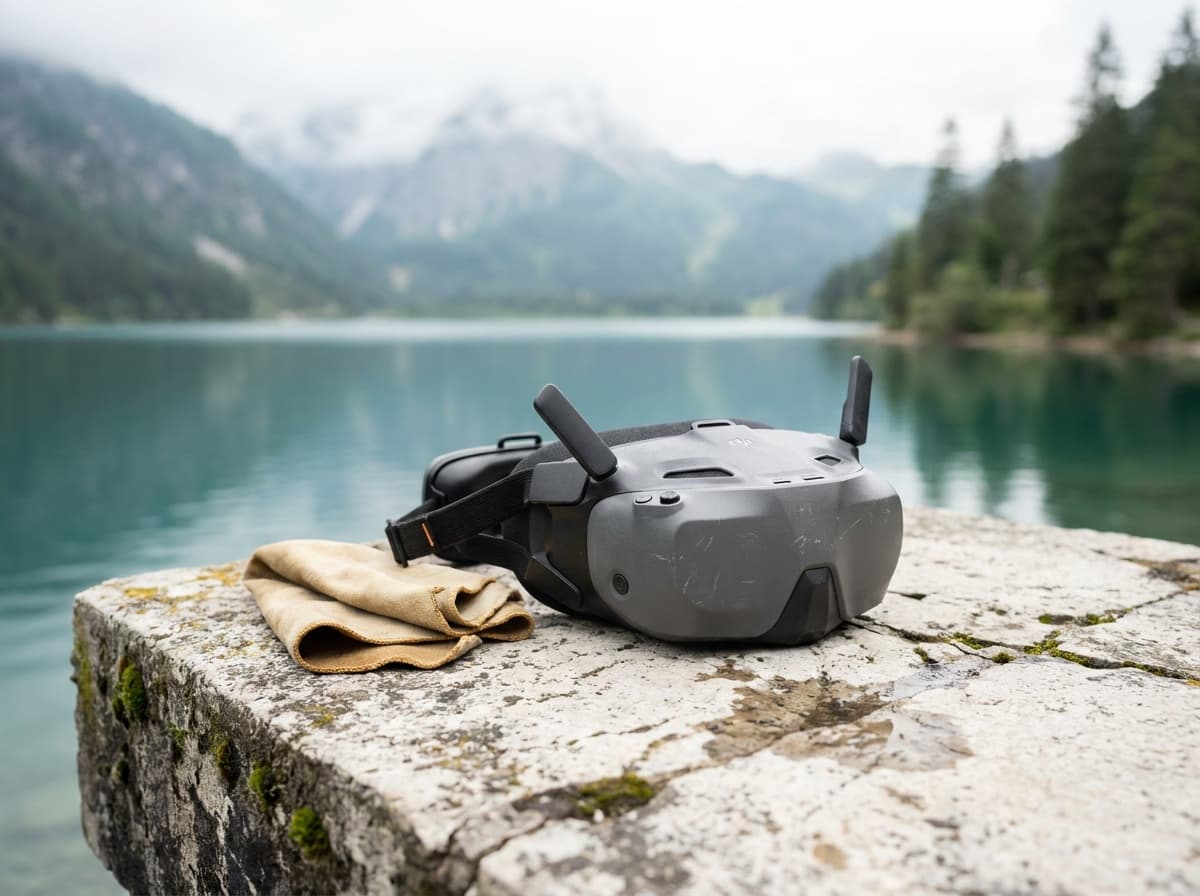
The finding
Best ValueNeo and Avata 2 owners who want goggle flying without the flagship price.
Price band only. Affiliate link: we may earn a commission at no extra cost to you. Disclosure
- Our score
- 8.0/10
- Typical price
- $160 – $230
- Category
- FPV goggles
Published figures
- Display
- Single 1080p/60 ultra-wide LCD, 54° FOV
- Transmission
- DJI O4, ~13 km max, 31 ms latency
- Glasses
- Fits over glasses: no diopters needed
- Battery
- ~2.7 hr built-in
- Works with
- Neo, Neo 2, Avata 2, RC Motion 3
Drone Authority score
Editorial composite from researching Goggles N3. Not a lab measurement, not an aggregate of retailer stars.
8.0/10
- Flight and cameraCapability for its lane
- Strong7.8
- Owner sentimentCross-checked owner reports
- Strong8.4
- Build and reliabilityHardware and dependability
- Strong7.8
- ValuePrice against category peers
- Excellent9.0
O4 digital transmission at a third of the flagship price.
In its favour
- Cheapest current path into DJI digital FPV
- Fits over prescription glasses
- Same O4 transmission as the flagship goggles
Buy it for this. Neo and Avata 2 owners who want goggle flying without the flagship price.
Against it
- Single LCD can't match Micro-OLED contrast or immersion
- No diopter adjustment and narrower headset feature set
Skip it if this matters. Single LCD can't match Micro-OLED contrast or immersion
The short answer
The Goggles N3 deliver the same O4 digital link as DJI's flagship headset for about a third of the price, trading dual Micro-OLED panels for one big 1080p LCD. For Neo and Avata 2 owners testing whether goggle flying sticks, this is the right first headset.
What changes the decision
01
The trade you are making
Transmission is not where DJI cut costs: the N3 runs the same O4 link with 31 ms latency. The savings are in the display: a single ultra-wide 1080p/60 LCD with a 54-degree field of view instead of two Micro-OLEDs. The image is bigger but flatter, with LCD contrast in bright scenes.
The roomy box design fits over prescription glasses, which the flagship goggles handle with diopters instead. Battery life is about 2.7 hours. Note the compatibility line carefully: the N3 works with the Neo, Neo 2, and Avata 2 with RC Motion 3, but not with the RC-N3 or RC 2 camera-drone controllers.
02
Buy them for a specific starter system
The N3 make the most sense as one part of a known Neo or Avata 2 setup. They do not have Real View, HDMI input, analog support, or a flight-simulator mode, so they are a poor foundation for a mixed fleet. They are an inexpensive door into DJI's current immersive-flight experience, not a universal workshop headset.
The box shape is larger than Goggles 3 but solves a practical problem: prescription glasses fit inside without dialing diopters. That is a meaningful advantage for occasional pilots who share the headset or do not want to order corrective inserts.
Compare it with the real alternatives
Sources behind this review
Manufacturer specifications set the hardware claims. Independent reviews are used to test that positioning and surface the practical tradeoffs. We did not receive or fly a review unit.
- DJI: Goggles N3 specifications
Display, latency, battery, and compatibility specs cited above.
- DJI: Goggles N3 support
Current aircraft compatibility, glasses fit, Real View, recording, and input limitations.
- Tom's Guide: DJI Goggles N3 review
Independent hands-on review, used to cross-check the use case and limitations stated above.
- DroneXL: DJI Goggles N3 review
Independent hands-on review, used to cross-check the use case and limitations stated above.
Before you choose
Are the N3 goggles worth it over the Goggles 3?
If you fly a Neo or Avata 2 casually, yes: same transmission, $300+ saved. If you fly often, in bright conditions, or with multiple aircraft, the Goggles 3 panels and diopters are worth the difference.
Can DJI Goggles N3 run an FPV simulator?
No. DJI's support documentation says the N3 do not support flight simulators or direct HDMI input. Use your radio with a normal computer display for simulator practice.
Ready to buy the DJI Goggles N3?
Typical price $160 – $230. Check availability before you commit. Buy through this link and we may earn a commission at no extra cost to you. Disclosure.
Compare with
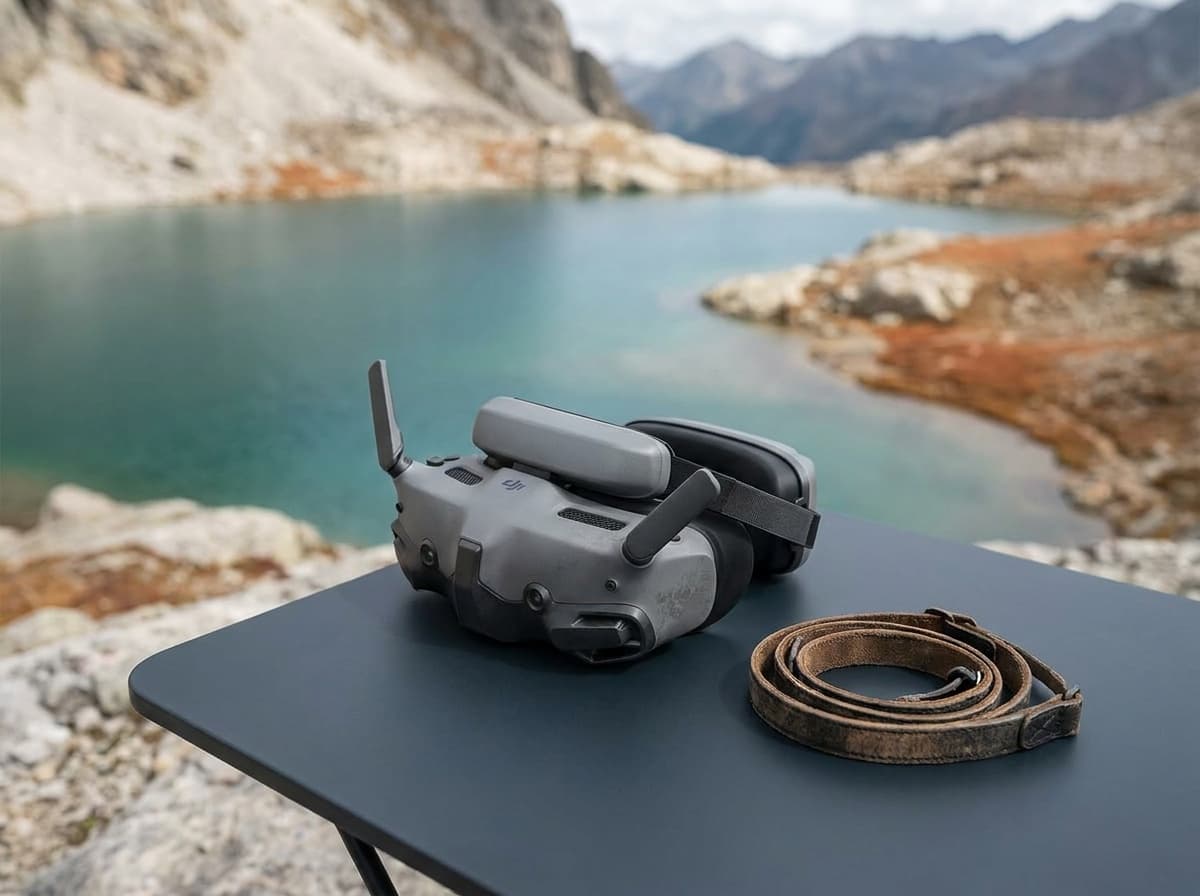
DJI
Goggles 3
DJI's flagship FPV headset: dual Micro-OLED screens, O4 digital transmission, built-in diopters, and Real View pass-through so you can check surroundings without lifting the goggles.
Strengths
- Best-in-class image quality and latency in the DJI ecosystem
- Built-in diopter adjustment: no prescription inserts needed for most
- Real View PiP pass-through is a genuine safety feature for VLOS discipline
Tradeoffs
- Locked to DJI's transmission ecosystem
- Premium price for casual pilots
- Display
- Dual 1080p Micro-OLED, up to 100 fps
- Transmission
- DJI O4, ~13 km max
- Diopters
- Built-in, -6.0 to +2.0
- Battery
- ~3 hr
- Works with
- Avata 2, Neo, Mini 4 Pro, Air 3/3S, O4 air units
Best for: DJI drone owners who want the best picture and the widest aircraft compatibility.
Amazon comes first when available. Official links stay visible for exact specs, stock, and manufacturer support. We may earn a commission at no extra cost to you. Disclosure
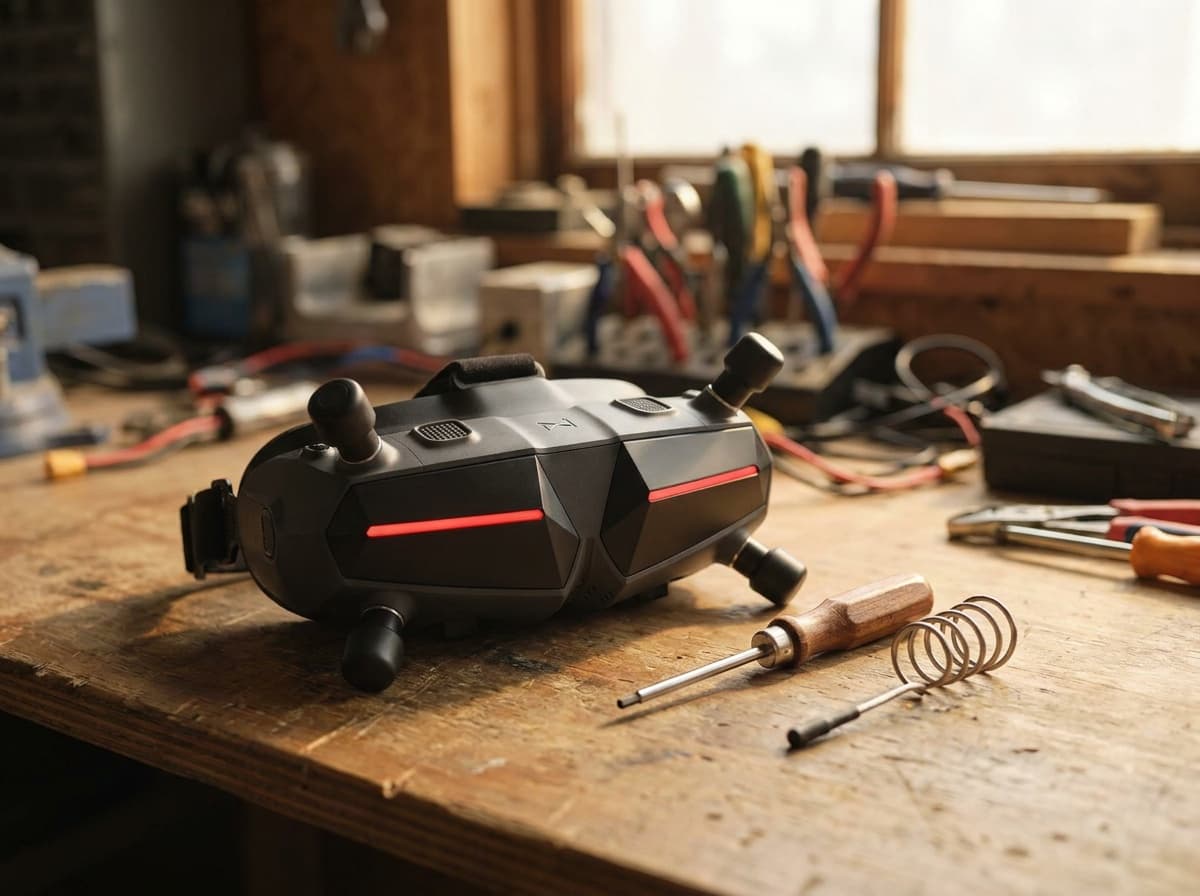
Walksnail
Avatar HD Goggles X
The self-built-quad answer to DJI goggles: Walksnail's digital HD system in a headset with replaceable receiver modules and HDMI/AV inputs, so one set of goggles covers digital builds, analog quads, and the sim.
Strengths
- Digital HD quality on custom-built freestyle and cinewhoop quads
- HDMI/AV input makes it a one-headset solution across systems
- Modular receiver keeps the goggles upgradeable
Tradeoffs
- Needs Walksnail VTX gear in the aircraft for the full digital experience
- Smaller ecosystem than DJI
- Display
- Dual 1080p, 100 fps, 50° FOV
- Transmission
- Walksnail Avatar HD, ~10 km, 22 ms
- Inputs
- HDMI / AV in: works with analog via module
- Diopters
- -6.0 to +2.0, replaceable lenses
- Head tracking
- Built-in gyro
Best for: Pilots building their own quads who want digital HD without DJI's closed ecosystem.
Amazon comes first when available. Official links stay visible for exact specs, stock, and manufacturer support. We may earn a commission at no extra cost to you. Disclosure
Aircraft to operation
Before first launch
Buying the aircraft is one decision. Use this sequence to get from the box to a deliberate, legal first flight.
Aircraft under consideration
DJI Goggles N3
- 01Check registration
Aircraft status
Set the registration path
Confirm DJI Goggles N3's takeoff weight and your operating purpose. Recreational and Part 107 flights follow different registration paths.
- 02Start the airspace check
Launch location
Check the exact airspace
The aircraft does not decide whether a location is clear. Check the launch point, planned altitude, date, and time for controlled airspace, restrictions, and local launch rules.
- 03Check commercial requirements
Only when it is work
ConditionalDecide whether Part 107 applies
A small drone does not create a business-use exception. If the flight serves a client, employer, listing, monetized project, or another non-recreational purpose, check the Part 107 path first.
- 04Open the first-flight checklist
Props still off
Run the first-flight preflight
Confirm aircraft condition, firmware, battery health, controller link, home point, return-to-home settings, weather, people, obstacles, and the lost-link plan before takeoff.
How we score
The score is an editorial composite of four axes: flight and camera capability, owner sentiment drawn from published reviews, build and reliability, and value for the money. It reflects research and cross-checking rather than lab measurement, and we do not invent star counts. Prices are typical U.S. street bands and move around, especially for DJI while the import freeze lasts.
Affiliate relationships do not change our scores or rankings. Read the full affiliate disclosure.