The FCC asks whether drones should be allowed to use ultra-wideband radios to land, with comments due December 2
An FCC proposal to rewrite its ultra-wideband rules, published in the Federal Register on November 2, asks whether UWB drone navigation and landing systems should be permitted. Today's rules bar UWB aboard aircraft.
By Joel Kelly
More onFCC & the Covered List
Read the Federal Register notice by Dec 2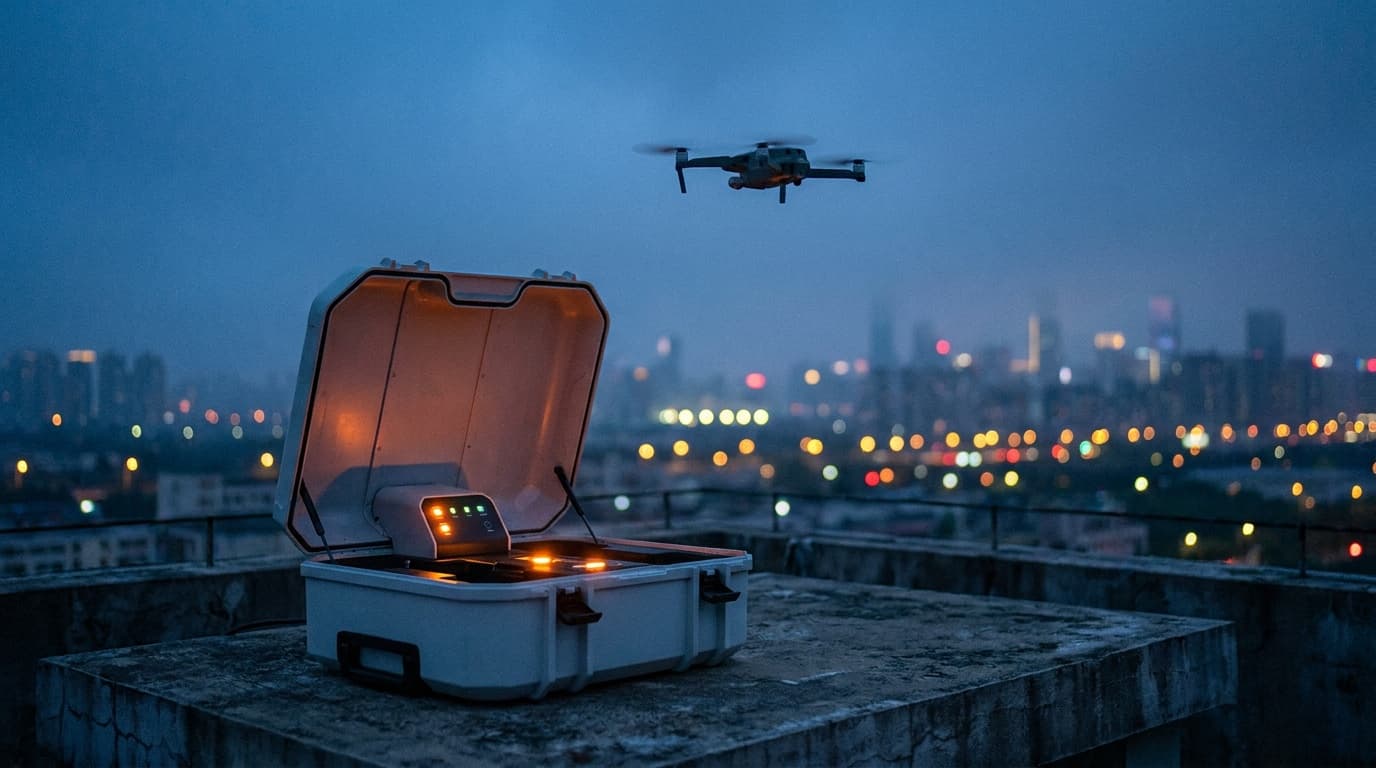
Decision brief
This is a proposal and a request for comment, not a final rule. If you build or fly drones that use ultra-wideband for precise landing, this is where to say what limits would work. Comments are due December 2 and reply comments January 4, 2027, in ET Docket No. 26-245.
- Comments due
- Dec. 2, 2026
- Docket
- ET 26-245
- Rule now
- No UWB aboard aircraft
Reply comments Jan. 4, 2027
FCC 26-66, adopted Sept. 30 and released Oct. 1, 2026
47 CFR 15.521(a); the proposed text keeps that line
The notice
The FCC wants to modernize rules first adopted in 2002.
The FCC published a proposal to update its ultra-wideband (UWB) rules in the Federal Register on November 2. The Notice of Proposed Rulemaking, FCC 26-66 in ET Docket No. 26-245, was adopted September 30 and released October 1. Comments are due December 2 and reply comments January 4, 2027. UWB radios use very wide channels, typically 500 megahertz or more, at low power. The FCC says they can find both distance and direction over a short range.
The drone question
UWB landing systems may not fit today's rules.
The current rules say UWB operation "onboard an aircraft, a ship or a satellite is prohibited." They also bar UWB in toys. The notice asks "whether UWB-based autonomous drone navigation and landing systems should be permitted under the UWB rules." The FCC says commercial systems now offer precise positioning without GNSS for indoor and outdoor landings of multiple drones. Some even use phones as landing beacons. The FCC says those systems "may not be permissible" under its current rules.
The limits
Indoor-only use, altitude caps, and taller installations are on the table.
The FCC asks what limits would protect other spectrum users. It lists indoor-only use, confined outdoor areas, controlled sites such as factories, altitude limits, power limits, and duty-cycle limits. It asks whether drone-based UWB could change how users share spectrum, and what safeguards, such as geofencing or altitude limits, UWB aboard aircraft would need. In a separate section on a possible new class of UWB devices, it asks about mounting-height limits. It asks whether to allow installations up to 20 meters "to support low altitude drone operations and other potential new UWB applications." On the toy ban, a footnote says it is "not obvious" when a drone sold for consumer or hobbyist use is deployed in a way that makes it more than a toy.
What is not proposed
The draft rule text still bars UWB aboard aircraft.
The airborne questions are open, not proposed rules. The rule text printed with the notice still says operation "onboard an aircraft" is prohibited. That text drops the toy ban and would allow UWB on ships within inland waters. The FCC says it does not intend "drastic or wholesale changes" in satellite, air, and space environments. It says its goal is to make UWB available there, and it wants commenters who back wider use to file technical analyses, including coexistence studies.
Source file
Verify the reporting
Continue on Drone Authority
Put the report to work
Continue this beat
More policy reporting

Rule watch · October 26, 2026
The FCC asks how its satellite rules should treat drones, with comments due November 25
Rule watch · October 29, 2026
The FCC votes November 19 on a drone control network at 450 MHz and drone-detection radar at 24 GHz
Rule watch · October 9, 2026