A federal judge said a New Jersey town's ban on drones below 400 feet is preempted, in a case a hobby pilot brought himself
In Palange v. Borough of Lodi, Judge Susan D. Wigenton denied the borough's motion to dismiss on September 24. She held that Lodi's ordinance is field preempted and conflict preempted by federal aviation law. She denied the pilot's request for a restraining order because the borough says he is not in violation.
By Joel Kelly
Decision brief
Towns can regulate takeoff and landing on their own land, zoning, privacy, and trespass. A rule that bans flight below 400 feet across a whole town is a different thing, and this judge said federal law pushes it aside. The opinion is marked not for publication and came at an early stage, so it binds no other court. It adds to a line of cases starting with Singer v. City of Newton in 2017. If your town has a blanket altitude ban, this is the argument that has worked, but a lawsuit is the path, not ignoring a summons.
- Decided
- Sept. 24, 2026
- Holding
- Preempted
- Relief
- TRO denied
Palange v. Borough of Lodi, D.N.J., Civ. No. 26-2375, letter opinion
Field and conflict preemption of the borough's below-400-foot ban
No imminent enforcement shown; motion to dismiss also denied
The case
A hobby pilot, three summonses, and a town-wide altitude ban.
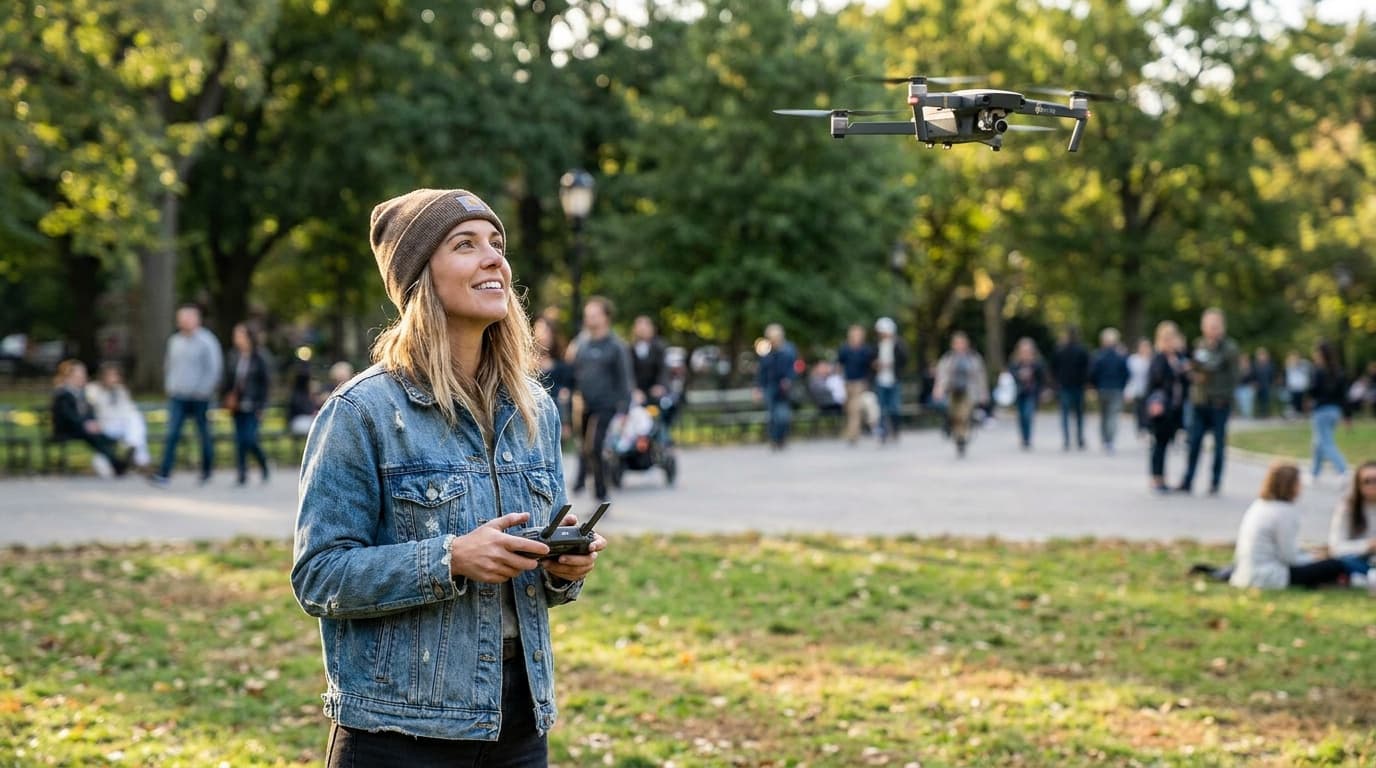
Paul A. Palange Jr. flies small drones registered with the FAA from his property in Lodi, New Jersey. According to the opinion, police visited him repeatedly from February through July 2025. He showed his FAA and LAANC paperwork and explained that his flights were recreational and launched and landed on private property, and officers confirmed his drone had no camera. In July 2025 he was served with the borough's ordinance, Chapter 217, and then three summonses. He sued the borough, the mayor, and the police chief on March 6, 2026, representing himself.
The ordinance bars any drone with a sensing device, such as a camera or microphone, from flying below 400 feet anywhere in the borough. It bars unmanned aircraft without sensors from flying below 400 feet over residential and commercial zones, roads, public buildings, parks, and other property. It exempts police and emergency services and says flights in accordance with FAA rules are allowed.
The ruling
Where a drone may fly is the FAA's call.
Judge Wigenton held the ordinance is field preempted because it in substance dictates where drones may fly and at what altitude, which are core questions of airspace management and aviation safety. She relied on the FAA's 2023 fact sheet on state and local regulation. It says limits on flight altitude or flight paths meant to protect people and property on the ground are likely preempted. The borough's privacy rationale did not hold up, she wrote, because the rule also covers aircraft with no sensors. The savings clause did not cure it, because even parallel local rules are barred in a field Congress occupies. She also found conflict preemption. With the FAA limiting small drones to 400 feet and Lodi banning flight below 400 feet, there is no meaningful altitude band left, which works as a ban across the town.
The limits
An early, unpublished opinion, but a familiar argument.
The pilot did not get the restraining order. The court found no irreparable harm, because he had not shown that his recreational flights were expressive conduct the First Amendment protects. The borough also told the court he is not in violation, so enforcement was not imminent. The opinion is a letter opinion marked not for publication, issued without oral argument, on a motion to dismiss. It does not end the case or bind other courts, but it follows the reasoning the District of Massachusetts used in Singer v. City of Newton.
Source file
Verify the reporting
Continue on Drone Authority
Put the report to work
Continue this beat
More policy reporting
Rule watch · September 25, 2026
California signed its 400-foot drone ban around outdoor events and amusement parks. It starts January 1, and a Part 107 certificate alone does not exempt you.
Rule watch · September 29, 2026
Using a drone in a federal crime will add at least 4 levels to the sentencing range starting March 15, 2027
Rule watch · September 27, 2026