
On this page
Step 1: Define the mission (before any hardware)
Programs die from vagueness. “We should be using drones” is a demo, not a mission. Write the sentence: we will capture [data] on [assets/sites] every [cadence] to replace [current method] at [cost/risk delta]. Roof and asset inspections replacing rope access, weekly construction progress replacing site walks, stockpile volumetrics replacing surveys: each implies different aircraft, sensors, pilots, and approvals. Our industry hubs map the standard missions per sector.
Step 2: Build in-house, contract out, or hybrid
Contract first: a few paid engagements with a service provider (find one via our provider directory) validate the data product before you own anything. Bring it in-house when frequency, turnaround, or site-access friction beats the loaded cost of internal capability. Hybrid is the steady state for most: internal for routine capture, specialists for LiDAR, thermal certification work, or one-off heavy lifts.
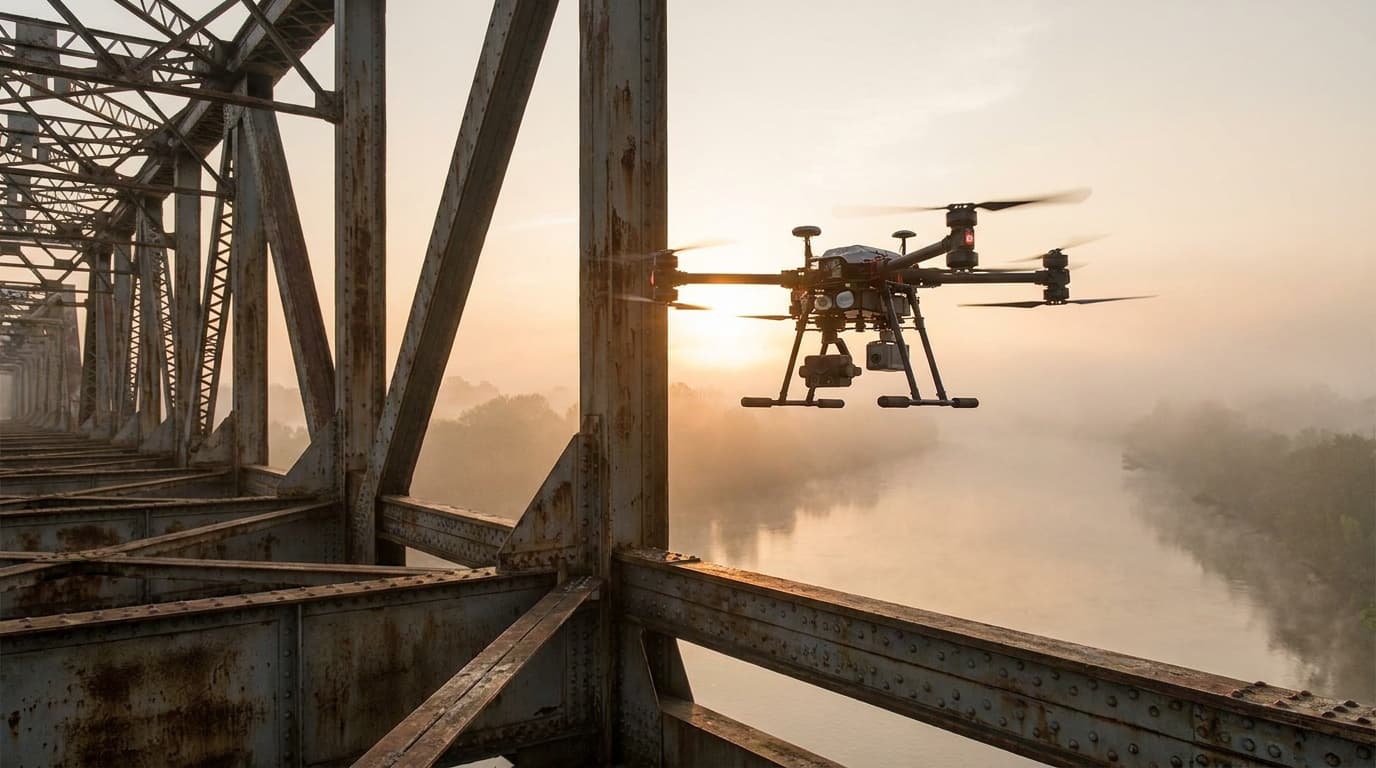
Step 3: Fleet selection is a compliance decision
Before comparing cameras, answer the funding question: any federal money, state restrictions, or defense-adjacent contracts anywhere near the program means NDAA-compliant hardware: full stop. The fork and both shortlists live in our enterprise drone guide and NDAA / Blue UAS explainer; sensor choices in the payloads guide. Standardize on one platform family if you can: spares, training, and SOPs all compound. Budget spares and batteries as consumables from day one.
The January 2028 horizon belongs in your plan
The FCC extended its Blue UAS and 65% U.S.-component exceptions through January 1, 2028, while equipment receiving Department of War Conditional Approval has a separate exception without a fixed expiration date. Chinese-hardware support continuity remains an open question, so any multi-year fleet plan should price both support and replacement scenarios.
Step 4: Pilots and training currency
Every business flight needs a Part 107 pilot: certificate two people minimum so the program survives turnover and PTO. Budget 15–25 study hours each (our free training hub covers the exam; the paid-course comparison is there if you want structured speed), plus recurrent training every 24 months, plus aircraft-specific proficiency: the certificate teaches airspace, not your gimbal. Write minimum flight-hour currency into the program: a pilot who hasn't flown in 90 days is a liability with a license.
Step 6: Insurance
Liability first ($1M is the working floor clients and sites expect), hull on aircraft whose loss would hurt, non-owned coverage if contractors fly under your program. Annual policies beat on-demand once you fly weekly. Full market detail: commercial insurance guide.
Step 7: SOPs, maintenance, and the data pipeline
The unglamorous 80%: written SOPs (pre-flight, site assessment, emergency procedures, battery handling per our battery guide), maintenance and firmware logs per airframe, flight logging for every mission (your insurance and FAA defense), and, most neglected, the data pipeline: where imagery lands, who processes it, retention policy, and privacy rules. A program that captures terabytes nobody processes is an expensive hobby.
Step 8: Financing and the ROI case
How the purchases actually get funded: equipment financing and leasing (standard business-equipment terms; vendors partner with financing platforms for 12–60 month structures), public-safety and ag grants (which immediately trigger the compliant-hardware requirement: write it into the application), or opex-style drone-as-a-service subscriptions that bundle hardware, software, and support. Build the ROI case on the replaced cost: rope-access days avoided, survey crew hours, site-walk time, insurance-claim documentation speed. Programs that log replaced-cost per mission from week one are the ones that get year-two budget.
Frequently asked questions
- How much does it cost to start a company drone program?
- A realistic single-aircraft pilot program: $8,000-$50,000 depending on compliance requirements (compliant hardware runs 2-4x Chinese equivalents), covering aircraft and spares, training and certification for two pilots, insurance, and software. Multi-aircraft programs with docks or advanced operations scale into six figures. The under-budgeted lines are always training time, insurance, and the regulatory work: hardware is the easy invoice.
- Should we build an in-house drone program or hire contractors?
- Contract first, build when frequency justifies it. The crossover math: if you're paying service providers more than roughly the annual loaded cost of an in-house capability (aircraft amortization + pilot time + insurance + training currency), or when data turnaround and site access make external crews operationally painful, bring it inside. Many programs run hybrid: in-house for routine capture, contractors for specialized sensors like LiDAR.
- Do our employees need Part 107 to fly for the company?
- Yes, any flight furthering the business requires a Part 107 Remote Pilot Certificate, even indoors-adjacent outdoor work, even unpaid. The exam is a 60-question knowledge test (~$175, no flight test). Plan 15-25 study hours per pilot; free structured prep exists. Public agencies have an alternative path (public COA), but most still certificate their pilots under 107.
- Does a company drone program need special insurance?
- Commercially, yes: liability coverage (typically $1M minimum) is demanded by clients, sites, and municipalities before wheels-up, and corporate risk management will require it regardless. Hull coverage on expensive aircraft and payloads, plus non-owned coverage if contractors fly for you. General business policies usually exclude aviation: assume a dedicated policy.
- Can we buy DJI drones for a company program in 2026?
- Private companies legally can, from remaining stock, but check three gates first: any federal money (grants, contracts) bars covered Chinese hardware; some states restrict agency and contractor use; and supply/support continuity risk is real with imports frozen. Programs planning multi-year fleets increasingly default to NDAA-compliant platforms to keep every future contract and grant open.
Next steps
Open the guide or tool that matches the next decision.