Drone Authority · Gear
Best beginner drones under $500 (2026)
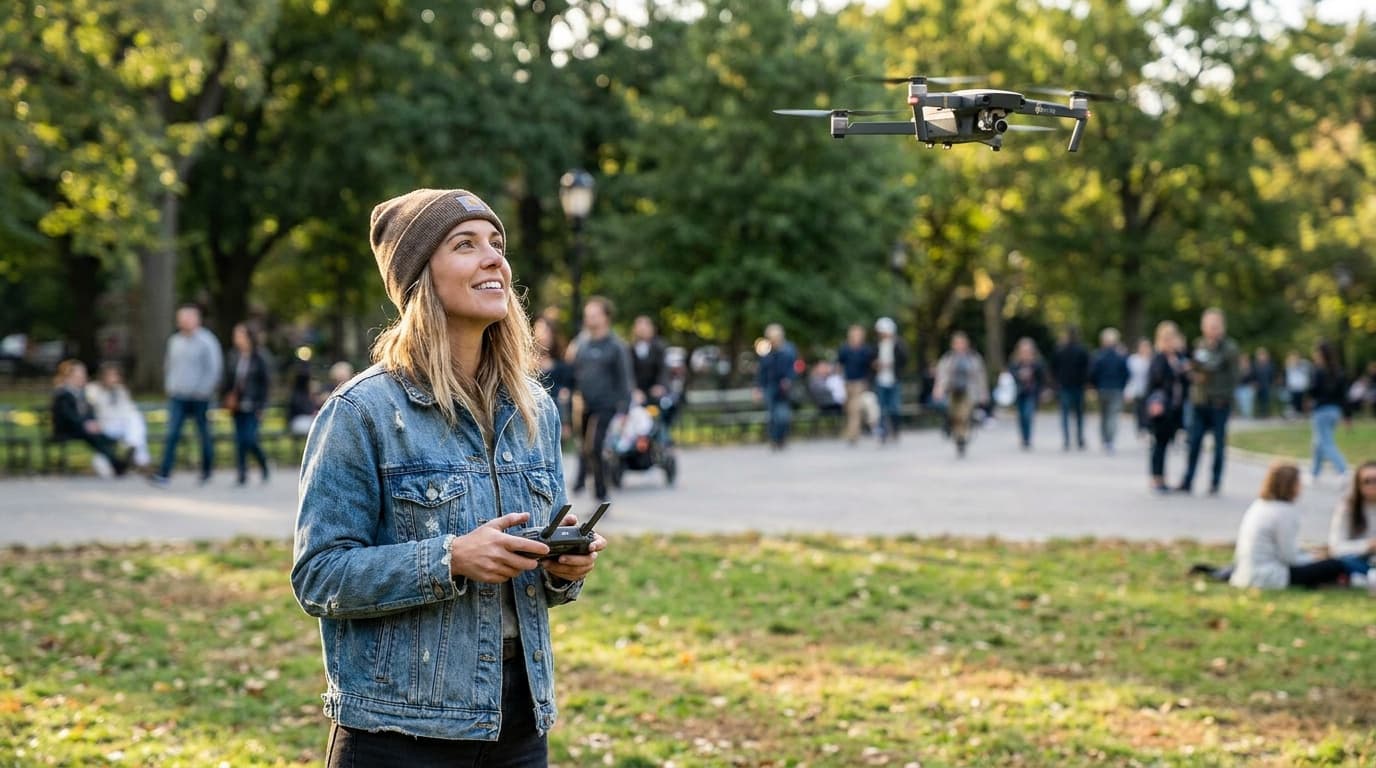
The short answer
DJI Flip is our best overall beginner pick when its current price is at or below $500. Choose the Potensic Atom for the strongest conventional non-DJI value, or the DJI Neo when palm launch and automatic selfie or follow clips matter more than a three-axis camera gimbal.
Six useful starting points
Best beginner drones under $500 compared
Start with the kind of flying you want to do. Weight, camera design, and control style matter more than a longer feature list.
| Pick | Best for | Camera | Weight | Typical price |
|---|---|---|---|---|
| 1. DJI Flip | Best forBest overall | Camera4K/60 HDR, 1/1.3in | WeightUnder 249 g | Typical price$440 – $520 |
| 2. DJI Neo | Best forHands-free clips | Camera4K/30 stabilized | Weight135 g (recreational registration exempt) | Typical price$200 – $250 |
| 3. Potensic Atom | Best forNon-DJI camera value | Camera4K, 3-axis gimbal | WeightUnder 249 g | Typical price$250 – $350 |
| 4. HOVERAir X1 | Best forAutomatic follow video | Camera2.7K stabilized | Weight125 g (recreational registration exempt) | Typical price$300 – $400 |
| 5. BETAFPV Cetus FPV Kit | Best forLearning FPV indoors | CameraFPV video feed | Weight35 g with battery | Typical price$170 – $230 |
| 6. Holy Stone HS720G | Best forLow-cost GPS practice | Camera4K with 2-axis gimbal and EIS | Weight377 g (register) | Typical price$200 – $300 |
We researched the current beginner drone field and cross-checked published specs against owner feedback to pick the ones we'd actually recommend under $500. We don't run a test lab and won't pretend otherwise; what follows is honest analysis, with the real tradeoffs called out for each.
One thing to know up front: since December 2025, DJI is on the FCC Covered List, so new DJI models can't be imported and U.S. stock is finite and drifting up in price. DJI still makes the best beginner hardware, so it's on this list, but we've included strong non-DJI picks too, and explained the situation in our DJI ban explainer.
These picks are about the hardware. Once you own one, getting cinematic, listing-ready results out of its camera is a craft of its own, and our sister site Aperture Authority covers it in drone photography and video.
Note
A quick note on weight and the law
Drones under 249 g don't need FAA registration for recreational flying, and several picks below are built to stay under that line. Heavier ones (marked “register” in the specs) need a $5 registration. Either way, recreational flyers must pass the free TRUST test. Not sure what applies to you? Use our free decision tool.
Buying disclosure: retailer links below are affiliate links. If you buy through one, Drone Authority may earn a commission at no extra cost to you. How affiliate links work
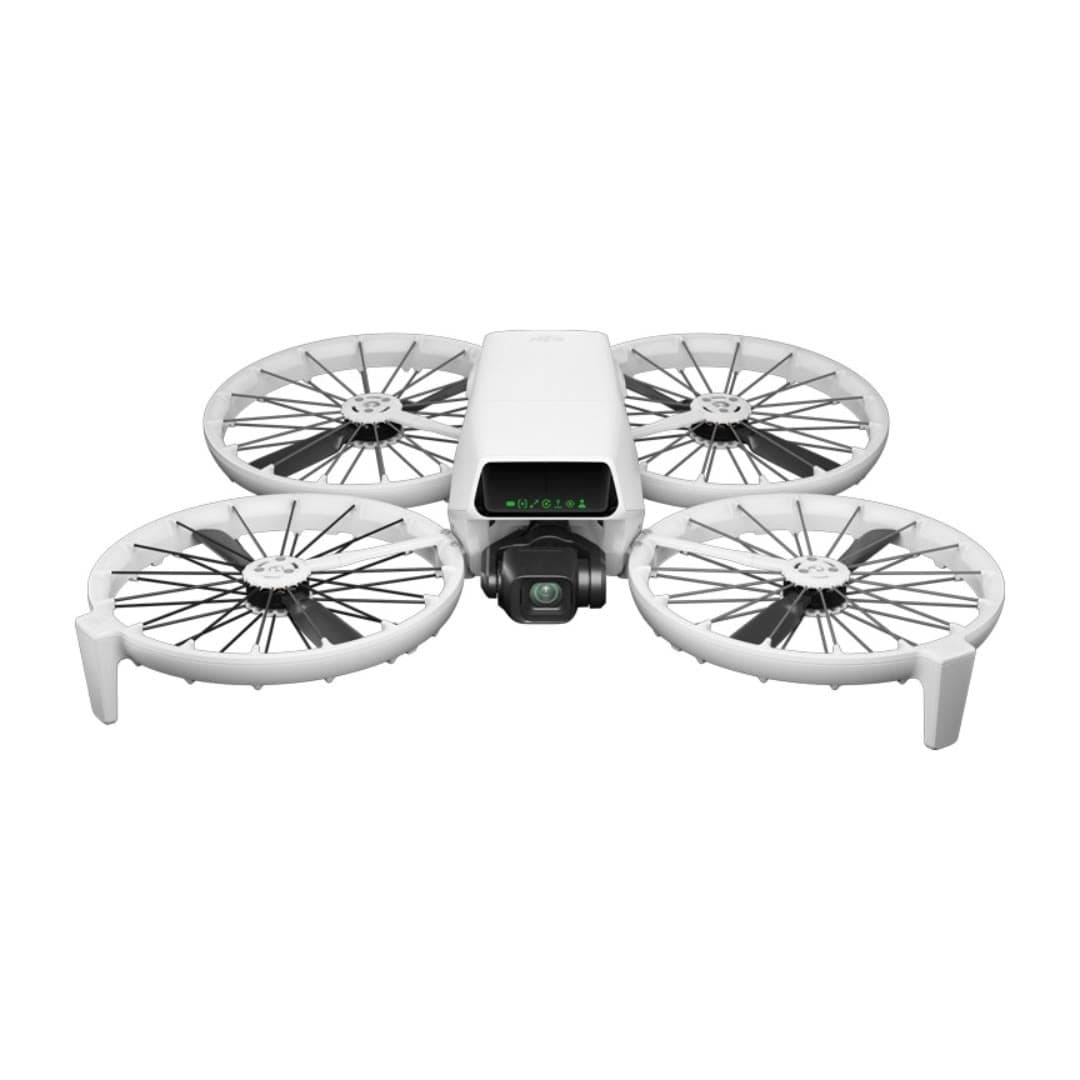
DJI
Flip
DJI's most beginner-friendly real camera drone: a strong 1/1.3-inch camera, folding full-coverage propeller guards, palm launch, and subject tracking without requiring a phone or controller.
Strengths
- Strong 1/1.3-inch sensor, RAW stills, 4K/60 HDR, and optional 10-bit D-Log M
- Built-in propeller guards reduce contact risk while learning; they do not create permission to fly over people
- Under 249 g, registration-free for recreational flying
Tradeoffs
- Forward infrared braking and downward positioning are not omnidirectional; tracking modes do not avoid obstacles
- Guards add bulk and slightly cut flight time vs. the Mini
- U.S. price and stock can move with DJI supply and regulatory pressure; verify the seller and warranty path
- Weight
- Under 249 g
- Camera
- 4K/60 HDR, 1/1.3in
- Flight time
- Up to 31 min in controlled conditions
- Safety
- Full prop guards
- Subject tracking
- Yes
- Wind resistance
- Level 5
Best for: Nervous first-time pilots who still want genuinely good 4K footage and a safety-first design.
Amazon comes first when available. Official links stay visible for exact specs, stock, and manufacturer support. We may earn a commission at no extra cost to you. Disclosure
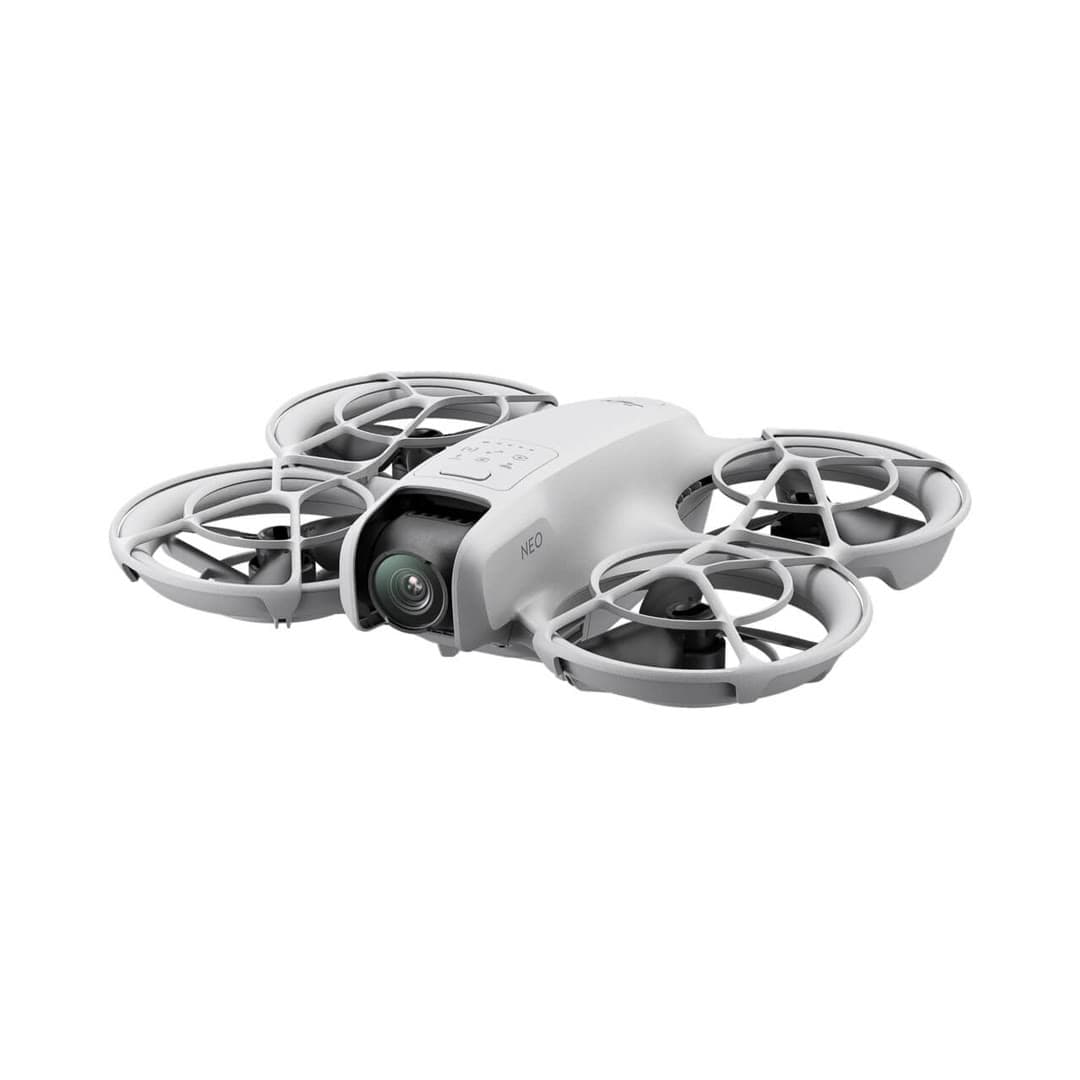
DJI
Neo
DJI's cheapest, lightest drone: it launches from your palm and tracks you with no controller, aimed squarely at quick social-media clips rather than serious aerial photography.
Strengths
- Takes off and lands in your hand; true no-controller flying
- 135 g means no FAA registration for recreational use
- Lowest-cost entry into DJI's app and accessory ecosystem
Tradeoffs
- No obstacle sensing and only digital (not gimbal) stabilization on some modes
- Short ~18-minute flight time and light-wind limits
- Fixed-focus camera is a clear step below the Mini line
- Weight
- 135 g (recreational registration exempt)
- Camera
- 4K/30 stabilized
- Flight time
- ~18 min
- Control
- Palm / phone / RC
- Wind resistance
- Level 4
- Best use
- Selfies, social clips
Best for: First-timers who mainly want hands-free selfie and follow clips, not landscape photography.
Amazon comes first when available. Official links stay visible for exact specs, stock, and manufacturer support. We may earn a commission at no extra cost to you. Disclosure
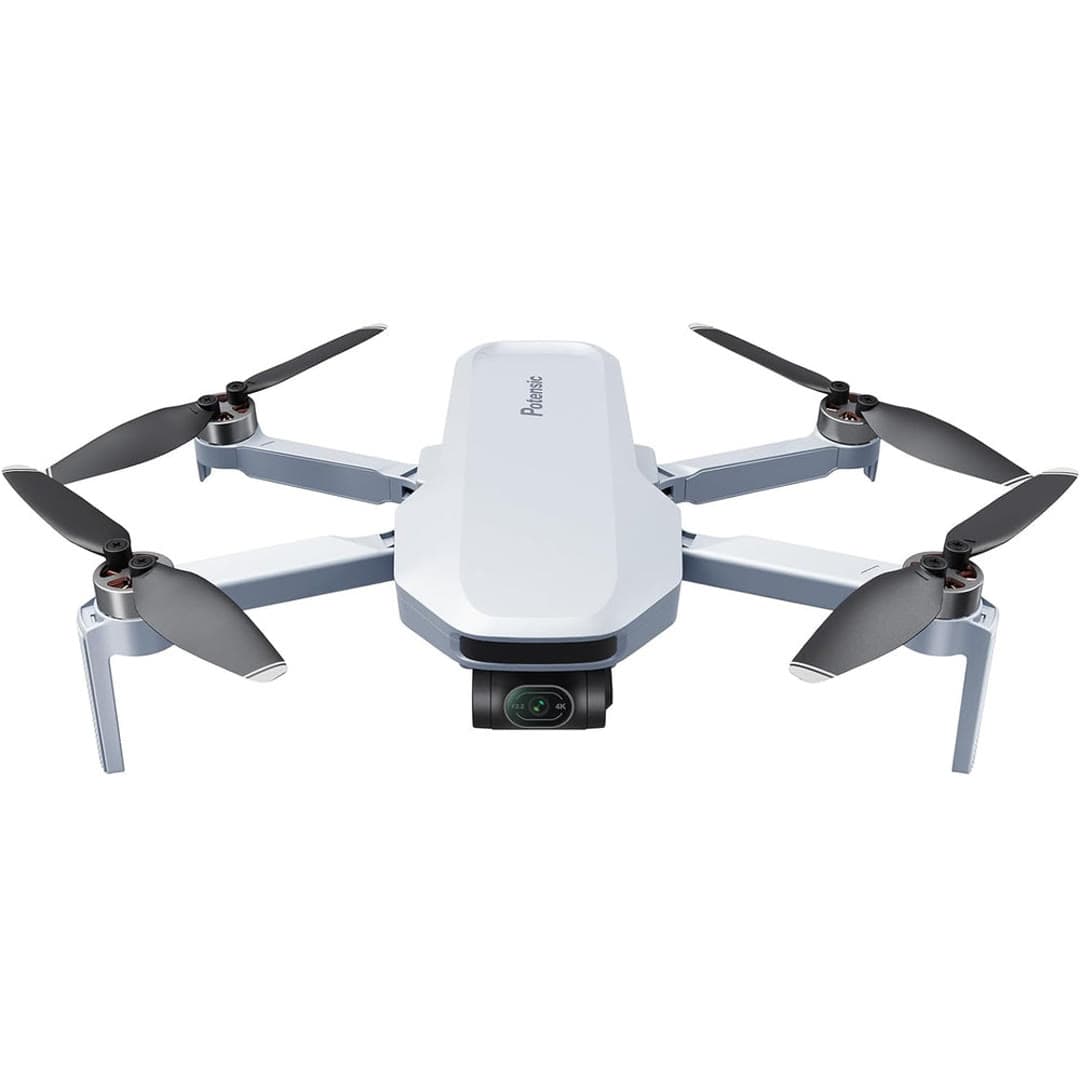
Potensic
Atom
The strongest non-DJI option under $350: a true 3-axis mechanical gimbal at a budget price, frequently bundled with extra batteries, and it's unaffected by the DJI import situation.
Strengths
- Real mechanical 3-axis gimbal, not just digital stabilization
- Battery bundles often undercut comparable DJI kits
- Not affected by the DJI FCC Covered List import freeze
Tradeoffs
- App and transmission reliability trail DJI in our research of owner reports
- Smaller accessory and repair ecosystem than DJI
- Image quality good for the price but below the DJI Mini line
- Weight
- Under 249 g
- Camera
- 4K, 3-axis gimbal
- Flight time
- ~32 min
- Stabilization
- Mechanical gimbal
- Transmission
- ~6 km (claimed)
- GPS
- Yes
Best for: Budget buyers who want gimbal-stabilized 4K and want to sidestep the DJI supply uncertainty.
Amazon comes first when available. Official links stay visible for exact specs, stock, and manufacturer support. We may earn a commission at no extra cost to you. Disclosure
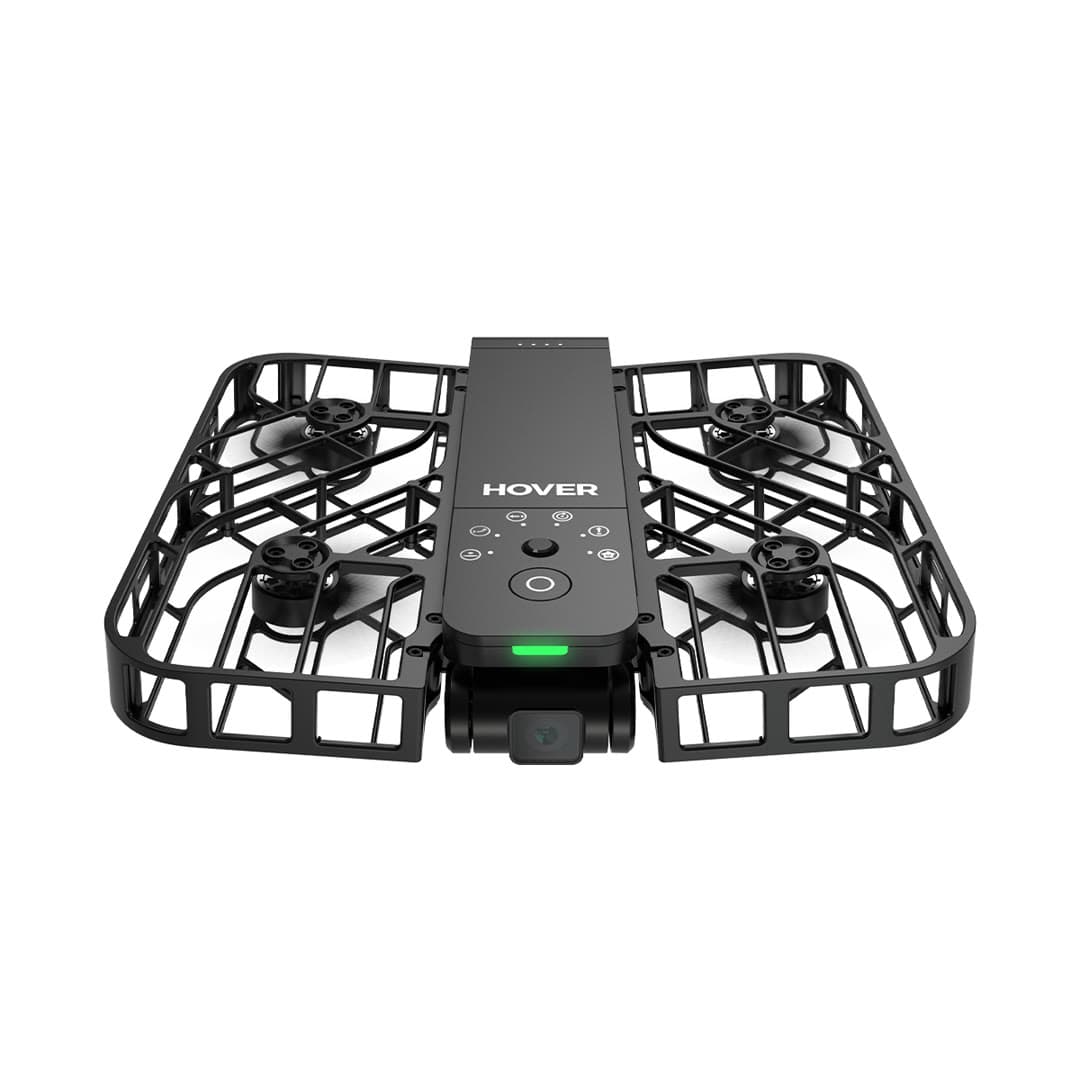
HOVERAir
X1
A pocketable, fully enclosed flying camera built for hands-free selfies and action follow shots, not a traditional manual-flying camera drone, and that's by design.
Strengths
- Self-flying, enclosed, and genuinely pocketable for content creators
- 125 g and recreational registration exempt; enclosed propellers reduce contact risk
- Not a DJI product, so no import-freeze supply concerns
Tradeoffs
- 2.7K camera and short ~11-minute flights limit serious use
- Automated flight paths only; little manual control or range
- Not built for landscape or long-distance photography
- Weight
- 125 g (recreational registration exempt)
- Camera
- 2.7K stabilized
- Flight time
- ~11 min
- Design
- Enclosed, foldable
- Control
- Fully automated / app
- Not DJI
- Unaffected by import freeze
Best for: Creators and athletes who want automatic follow-me video without learning to pilot.
Amazon comes first when available. Official links stay visible for exact specs, stock, and manufacturer support. We may earn a commission at no extra cost to you. Disclosure
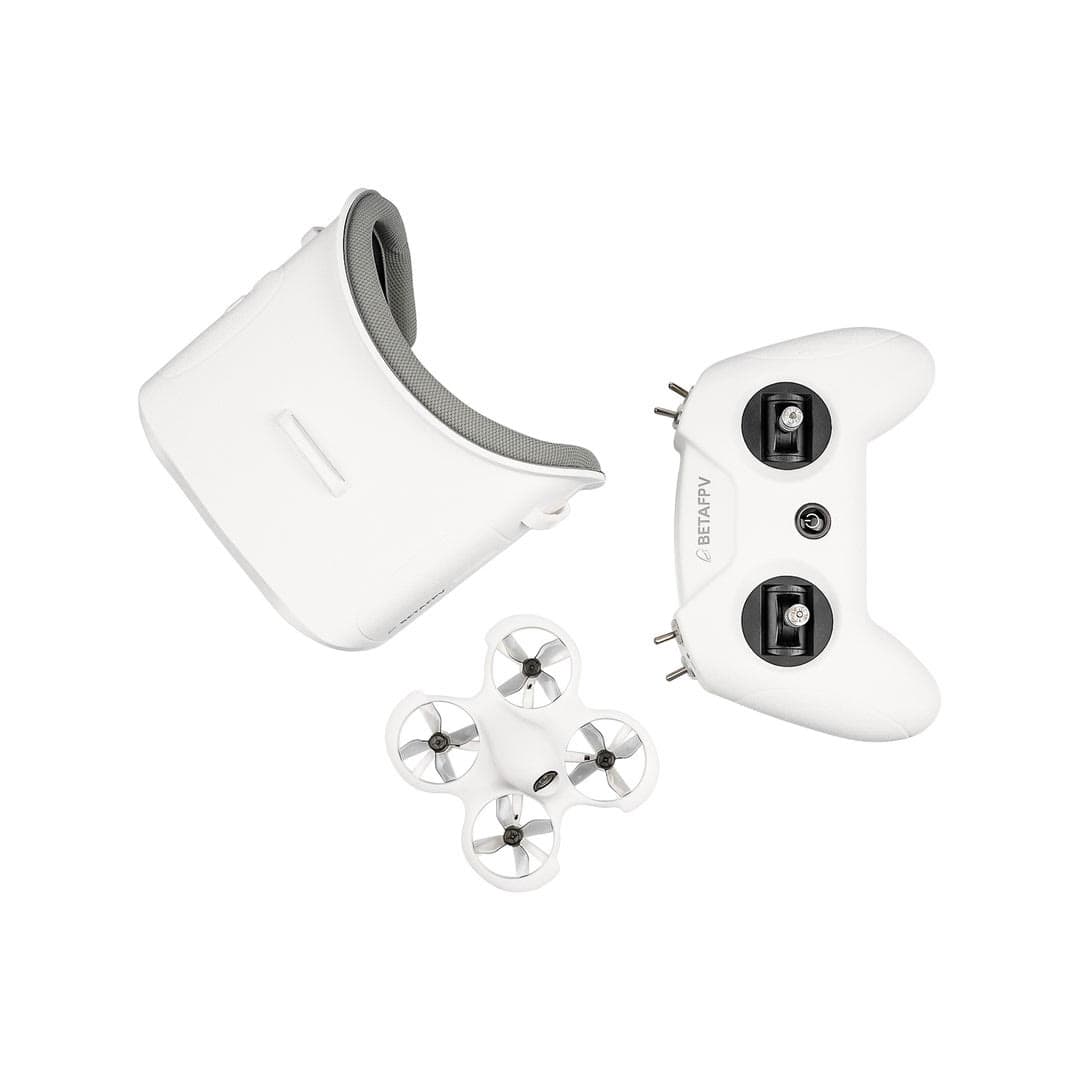
BETAFPV
Cetus FPV Kit
A complete, self-contained way to learn first-person-view flying: the kit includes the drone, goggles, and radio, with training modes that ease you from stabilized hovering toward full manual acro.
Strengths
- Everything to start FPV in one box: goggles and radio included
- Stepped flight modes safely bridge beginners to manual acro
- Light enough to crash indoors and keep practicing
Tradeoffs
- Very short ~4–5 minute flights; you'll want spare batteries fast
- Tiny-whoop performance is limited outdoors and in wind
- FPV has a steeper learning curve than GPS camera drones
- Type
- FPV, ready-to-fly
- Includes
- Drone + goggles + radio
- Weight
- 35 g with battery
- Flight time
- ~4–5 min per battery
- Modes
- Normal / Sport / Manual
- Best use
- Learning FPV indoors
Best for: Anyone who wants to learn FPV flying without assembling parts or a big outlay.
Amazon comes first when available. Official links stay visible for exact specs, stock, and manufacturer support. We may earn a commission at no extra cost to you. Disclosure
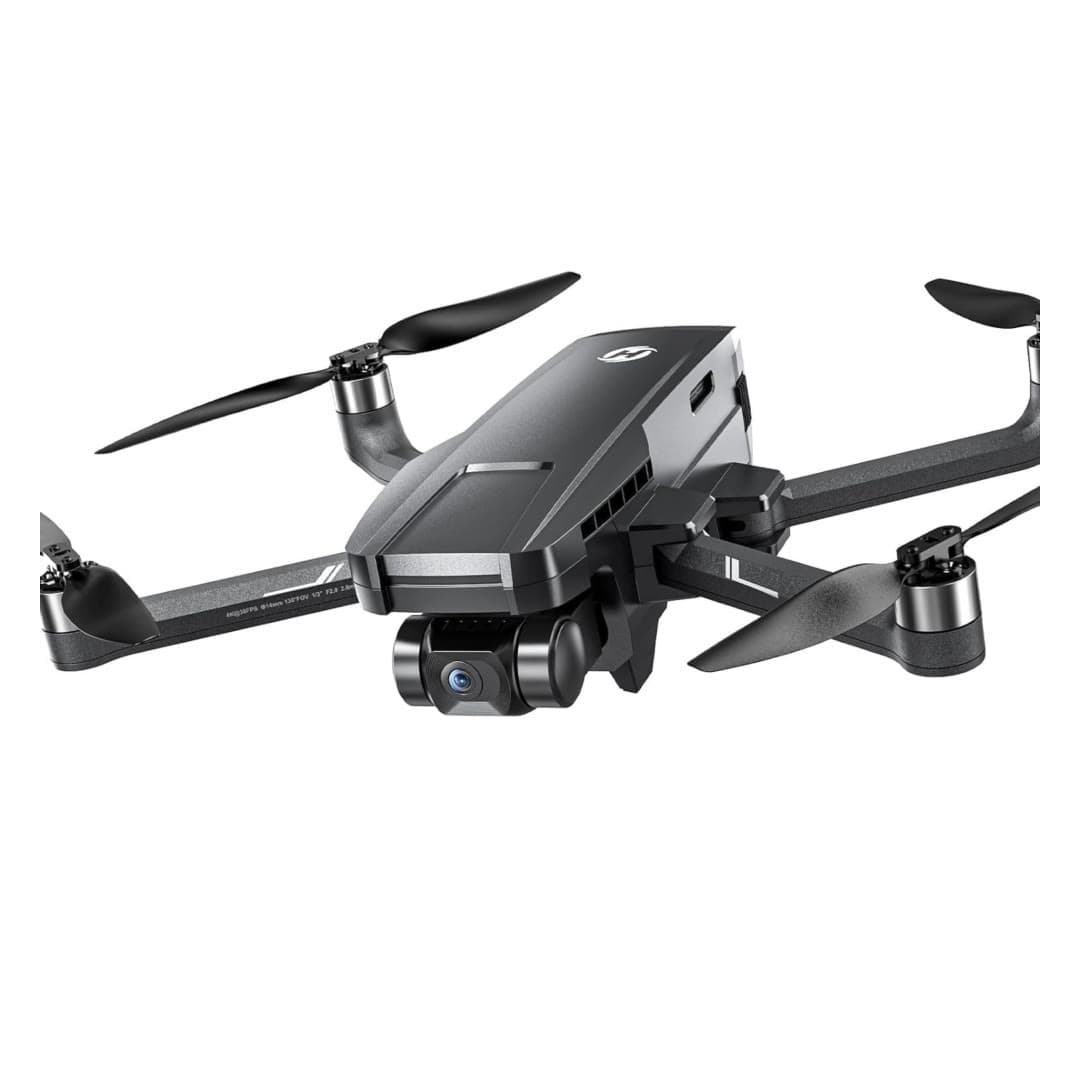
Holy Stone
HS720G
A straightforward GPS beginner drone that leans on forgiving flight features and a two-axis gimbal rather than premium camera hardware. Package contents vary by seller, so check the exact listing.
Strengths
- GPS hold and return-to-home make it forgiving to learn on
- Some retailer bundles add a spare battery or case; verify the exact listing
- Simple app and gentle learning curve
Tradeoffs
- Two-axis gimbal and EIS trail the smoother three-axis systems in stronger movement
- Over 250 g, so it requires FAA registration
- No obstacle avoidance
- Weight
- 377 g (register)
- Camera
- 4K with 2-axis gimbal and EIS
- Flight time
- ~26 min (per battery)
- GPS
- Yes, with return-to-home
- Standard package
- 1 battery; bundles vary
- Stabilization
- 2-axis mechanical gimbal + EIS
Best for: A true first drone for someone who wants to learn GPS flying cheaply before investing more.
Amazon comes first when available. Official links stay visible for exact specs, stock, and manufacturer support. We may earn a commission at no extra cost to you. Disclosure
How we picked
We weighed real capability for a beginner's needs (camera, stability, forgiving flight features), owner sentiment from published reviews, build and reliability, and value for the money. Ratings are editorial judgments from that research, not lab measurements. Prices shown are typical U.S. street-price ranges as of June 2026 and move around, especially for DJI. A model only belongs in the under-$500 answer while a current configuration is actually available at or below that cutoff.
Affiliate relationships do not affect the order of these picks. Read our full affiliate disclosure.
Source file