Drone Authority · Guides · Industries
Drones in public safety (2026)
By Joel Kelly
Last updated July 18, 2026. Regulations and hardware availability move quickly: verify current rules before operating.
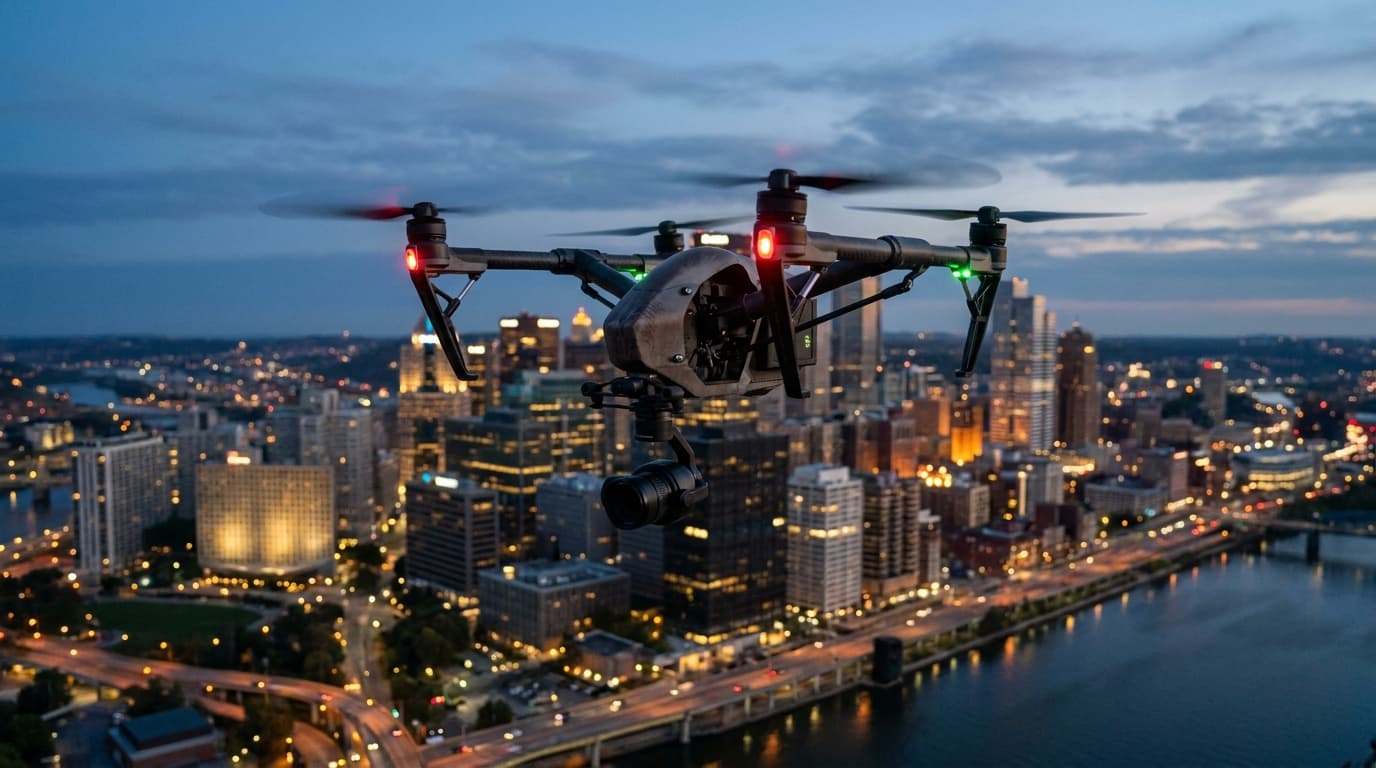
Public safety is the fastest-growing drone sector in the U.S.: hundreds of agencies now run programs spanning patrol support, search and rescue, fire attack, and full Drone-as-First-Responder operations. It's also the sector where law, funding rules, and hardware compliance interact most sharply: federal grant money bars Chinese-made aircraft, restriction states bar them outright, and advanced operations run on COAs and BVLOS waivers.
The standard missions
- •Drone as First Responder (DFR). Docked drones launching on 911 calls, arriving 1-3 minutes ahead of units: the flagship model, covered in depth in our DFR guide.
- •Search and rescue. Thermal-equipped area search, day or night: the mission with the clearest lives-saved record.
- •Tactical / interior. Purpose-built small aircraft (BRINC Lemur class) clearing structures ahead of entry teams.
- •Crash and scene reconstruction. Photogrammetry mapping that reopens highways hours faster than total-station workflows.
- •Fire operations. Thermal overwatch for hotspots, crew tracking, and hazmat plume assessment from standoff distance.
Hardware reality
Public-safety procurement effectively means NDAA-compliant hardware: federal grants (the dominant funding source) bar covered Chinese aircraft, and states like Florida restrict agency use regardless of funding. The working fleet: Skydio X10 for patrol/DFR and inspection, BRINC for tactical and DFR-native response, Teal 2 for night ISR, Parrot ANAFI USA for compact recon. Thermal is the payload that pays for itself first.
The regulatory picture
Agencies choose between operating under Part 107 (each pilot certificated, waivers for BVLOS/night-over-people edges) or as public aircraft operations under a COA: most mature programs run both. DFR programs live on BVLOS waivers with detect-and-avoid mitigations; 2026's multi-drone approvals let one pilot supervise several docked aircraft. Transparency policy is operationally load-bearing: publish flight logs and retention rules or watch community trust, and the program, evaporate.
Deep dives: DFR & docks guide · Part 108 BVLOS tracker · NDAA / Blue UAS explained
Frequently asked questions
- Do police drone pilots need Part 107?
- Usually yes in practice. Agencies can fly as public aircraft under a COA without individual Part 107 certificates, but most certificate their pilots anyway: it simplifies mutual aid, off-COA flying, and training standards. Officers moving into drone units should expect the exam either way.
- Can fire departments use DJI drones in 2026?
- Only where no federal funds touch the purchase and state law allows agency use: a shrinking window. Most new public-safety procurement is NDAA-compliant hardware, and grant applications should specify it from the first draft.
- How do I become a public-safety drone pilot?
- Two routes: sworn personnel joining their agency's unit (get Part 107 early; it's a differentiator), or civilian pilots supporting programs via contract work and SAR volunteer organizations. Our drone-pilot-jobs career hub covers the paths and pay.
Keep going
Educational, not legal advice. FAA rules, procurement law, and hardware availability change quickly: verify current requirements at faa.gov and with counsel before operating.