Drone Authority · Review · FPV goggles
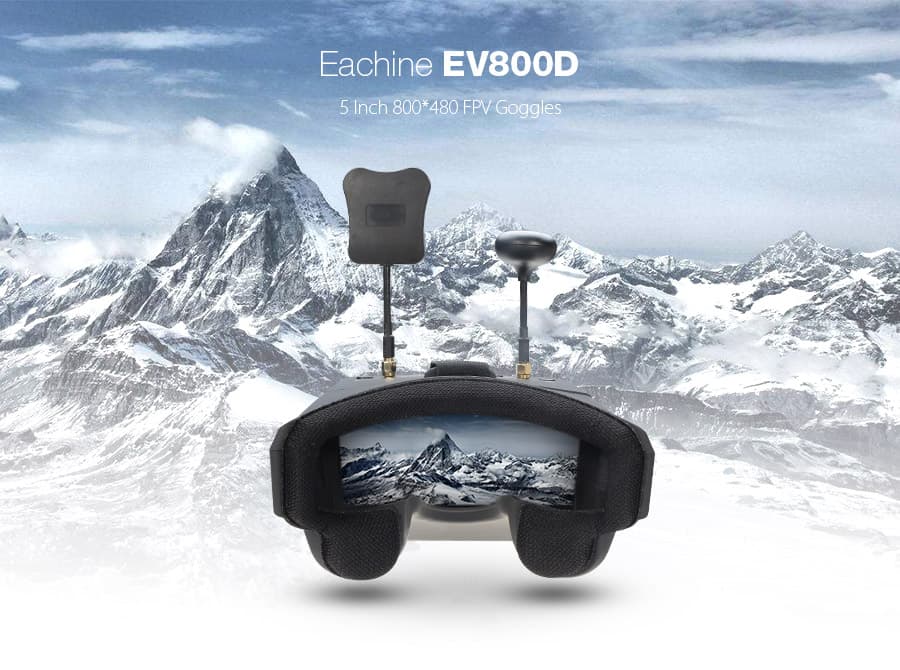
Eachine EV800D
Built from published specifications and cross-checked against the sources listed at the foot of this page. We have not flown this aircraft ourselves.
The finding
Budget AnalogFirst-time Tinywhoop pilots testing whether FPV is their hobby before spending real money.
Price band only. Affiliate link: we may earn a commission at no extra cost to you. Disclosure
- Our score
- 7.2/10
- Typical price
- About $130
- Category
- FPV goggles
Published figures
- Display
- 5-inch 800×480 LCD (box style)
- Receiver
- 5.8 GHz 40CH diversity, built-in DVR
- Battery
- Built-in 2S
- Works with
- Any analog 5.8 GHz quad (Tinywhoops, budget builds)
Drone Authority score
Editorial composite from researching EV800D. Not a lab measurement, not an aggregate of retailer stars.
7.2/10
- Flight and cameraCapability for its lane
- Mixed6.4
- Owner sentimentCross-checked owner reports
- Strong7.8
- Build and reliabilityHardware and dependability
- Solid6.8
- ValuePrice against category peers
- Excellent9.0
The classic cheap analog starter: diversity receiver and DVR for under $120.
In its favour
- Cheapest reliable route into analog FPV
- Diversity receiver and DVR included
- Box design works for glasses wearers
Buy it for this. First-time Tinywhoop pilots testing whether FPV is their hobby before spending real money.
Against it
- Standard-definition analog picture
- Bulky compared with slim goggle designs
Skip it if this matters. Standard-definition analog picture
The short answer
The Eachine EV800D remains the cheap, honest answer for a first analog headset: a 5-inch box goggle with a diversity receiver and DVR for around a hundred dollars. The picture is standard-definition analog and the body is bulky, and neither matters for finding out whether FPV is your hobby.
What changes the decision
01
What a hundred dollars buys
The EV800D pairs with any 5.8 GHz analog quad, which still describes most Tinywhoops and budget builds. The diversity receiver (two antennas, automatic switching) meaningfully reduces signal dropouts compared with single-antenna boxes, and the built-in DVR records flights for review: a feature missing from goggles at twice the price.
Treat it as a proving ground. If a season of whoop flying sticks, the upgrade path is a digital system and one of the headsets above; the EV800D then becomes the spare set for friends, which is how most of them end their service.
02
Buy the real EV800D, not a lookalike
The model has been copied for years, and visually similar listings may use one receiver while borrowing the EV800D name. The original's dual-receiver diversity system is the reason it remains useful: one antenna can favor broad nearby coverage while the other favors direction and range, and the headset switches to the stronger feed.
The ergonomics are the honest limit. A five-inch box display puts its mass in front of your face, there is no fine optical adjustment, and pilots with some prescriptions will struggle with focus. Buy from a traceable seller with returns, verify that the unit is the genuine diversity model, and treat comfort as the first reason you might eventually upgrade.
Sources behind this review
Manufacturer specifications set the hardware claims. Independent reviews are used to test that positioning and surface the practical tradeoffs. We did not receive or fly a review unit.
- Eachine: EV800D product page
Manufacturer listing for the screen, diversity receiver, battery, and DVR specification.
- Unmanned Tech: EV800D hands-on review
Independent checks of display brightness, receiver behavior, recording, balance, and SD-card requirements.
Before you choose
Analog or digital goggles for a Tinywhoop?
Analog. Most whoops ship with analog video, the latency is excellent, and crashing a $100 headset habit into furniture hurts less than a $500 one.
Can the EV800D record a flight?
Yes. Its built-in DVR records the analog feed to a microSD card. Use a suitable high-speed card and test recording before an important flight, because low-grade cards can corrupt files.
Ready to buy the Eachine EV800D?
Typical price About $130. Check availability before you commit. Buy through this link and we may earn a commission at no extra cost to you. Disclosure.
Compare with
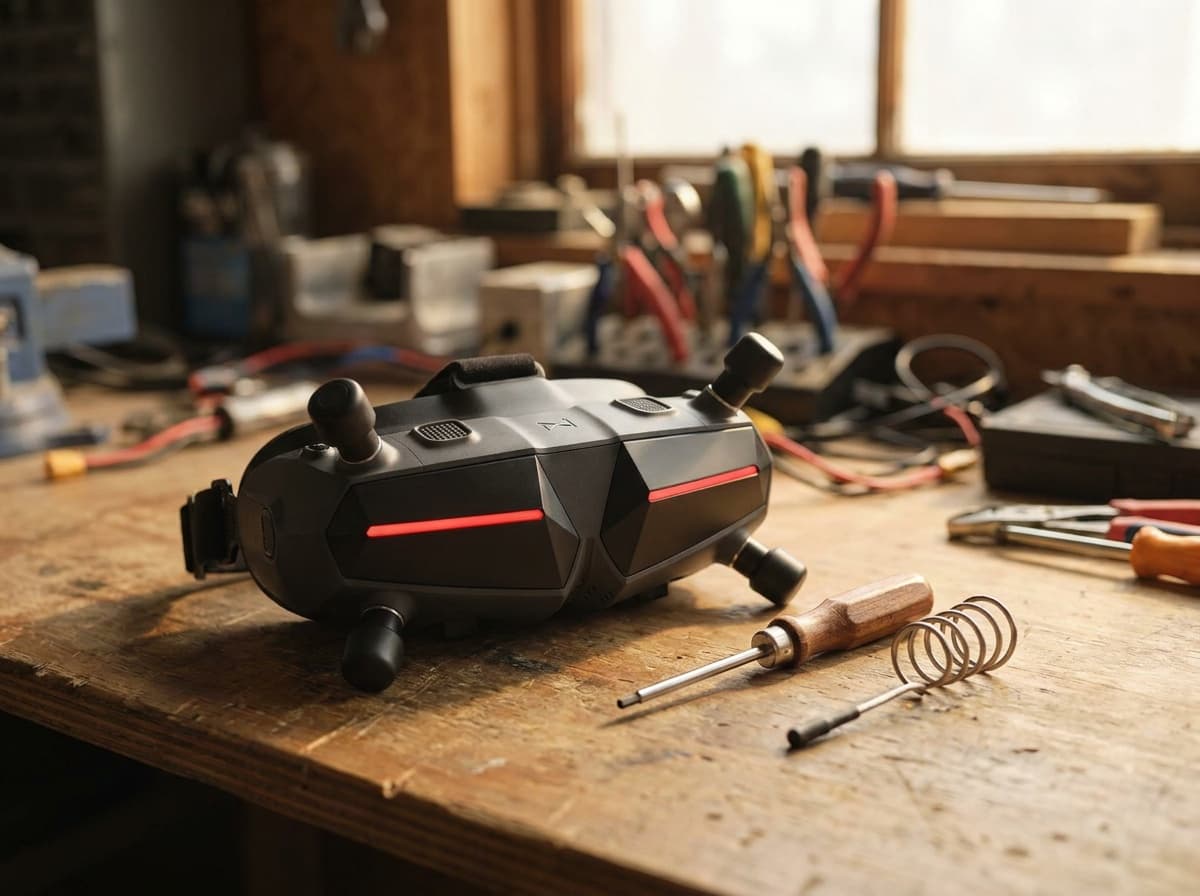
Walksnail
Avatar HD Goggles X
The self-built-quad answer to DJI goggles: Walksnail's digital HD system in a headset with replaceable receiver modules and HDMI/AV inputs, so one set of goggles covers digital builds, analog quads, and the sim.
Strengths
- Digital HD quality on custom-built freestyle and cinewhoop quads
- HDMI/AV input makes it a one-headset solution across systems
- Modular receiver keeps the goggles upgradeable
Tradeoffs
- Needs Walksnail VTX gear in the aircraft for the full digital experience
- Smaller ecosystem than DJI
- Display
- Dual 1080p, 100 fps, 50° FOV
- Transmission
- Walksnail Avatar HD, ~10 km, 22 ms
- Inputs
- HDMI / AV in: works with analog via module
- Diopters
- -6.0 to +2.0, replaceable lenses
- Head tracking
- Built-in gyro
Best for: Pilots building their own quads who want digital HD without DJI's closed ecosystem.
Amazon comes first when available. Official links stay visible for exact specs, stock, and manufacturer support. We may earn a commission at no extra cost to you. Disclosure
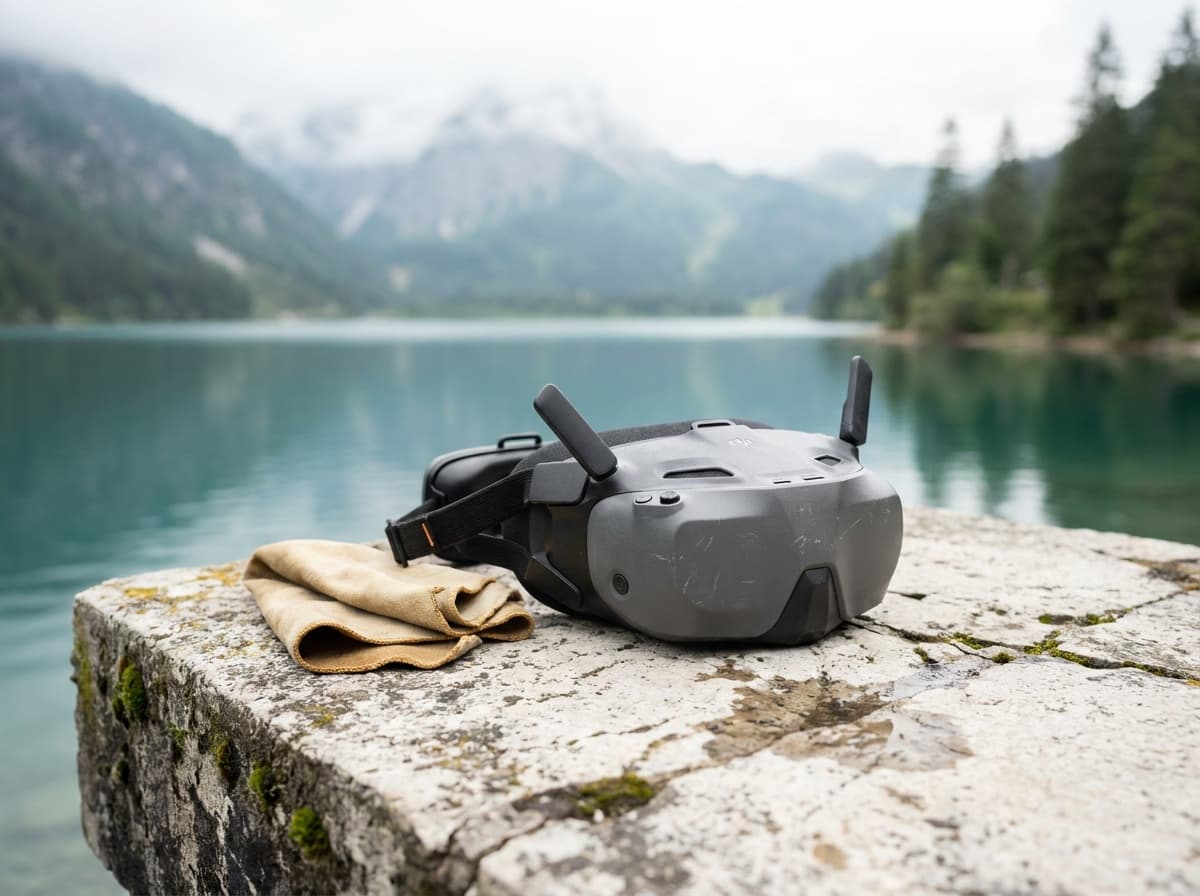
DJI
Goggles N3
The budget door into DJI goggle flying: one big 1080p screen instead of two Micro-OLEDs, the same O4 link, and room inside for glasses. Pairs naturally with a Neo or Avata 2.
Strengths
- Cheapest current path into DJI digital FPV
- Fits over prescription glasses
- Same O4 transmission as the flagship goggles
Tradeoffs
- Single LCD can't match Micro-OLED contrast or immersion
- No diopter adjustment and narrower headset feature set
- Display
- Single 1080p/60 ultra-wide LCD, 54° FOV
- Transmission
- DJI O4, ~13 km max, 31 ms latency
- Glasses
- Fits over glasses: no diopters needed
- Battery
- ~2.7 hr built-in
- Works with
- Neo, Neo 2, Avata 2, RC Motion 3
Best for: Neo and Avata 2 owners who want goggle flying without the flagship price.
Amazon comes first when available. Official links stay visible for exact specs, stock, and manufacturer support. We may earn a commission at no extra cost to you. Disclosure
Aircraft to operation
Before first launch
Buying the aircraft is one decision. Use this sequence to get from the box to a deliberate, legal first flight.
Aircraft under consideration
Eachine EV800D
- 01Check registration
Aircraft status
Set the registration path
Confirm Eachine EV800D's takeoff weight and your operating purpose. Recreational and Part 107 flights follow different registration paths.
- 02Start the airspace check
Launch location
Check the exact airspace
The aircraft does not decide whether a location is clear. Check the launch point, planned altitude, date, and time for controlled airspace, restrictions, and local launch rules.
- 03Check commercial requirements
Only when it is work
ConditionalDecide whether Part 107 applies
A small drone does not create a business-use exception. If the flight serves a client, employer, listing, monetized project, or another non-recreational purpose, check the Part 107 path first.
- 04Open the first-flight checklist
Props still off
Run the first-flight preflight
Confirm aircraft condition, firmware, battery health, controller link, home point, return-to-home settings, weather, people, obstacles, and the lost-link plan before takeoff.
How we score
The score is an editorial composite of four axes: flight and camera capability, owner sentiment drawn from published reviews, build and reliability, and value for the money. It reflects research and cross-checking rather than lab measurement, and we do not invent star counts. Prices are typical U.S. street bands and move around, especially for DJI while the import freeze lasts.
Affiliate relationships do not change our scores or rankings. Read the full affiliate disclosure.