On this page
The business model, honestly
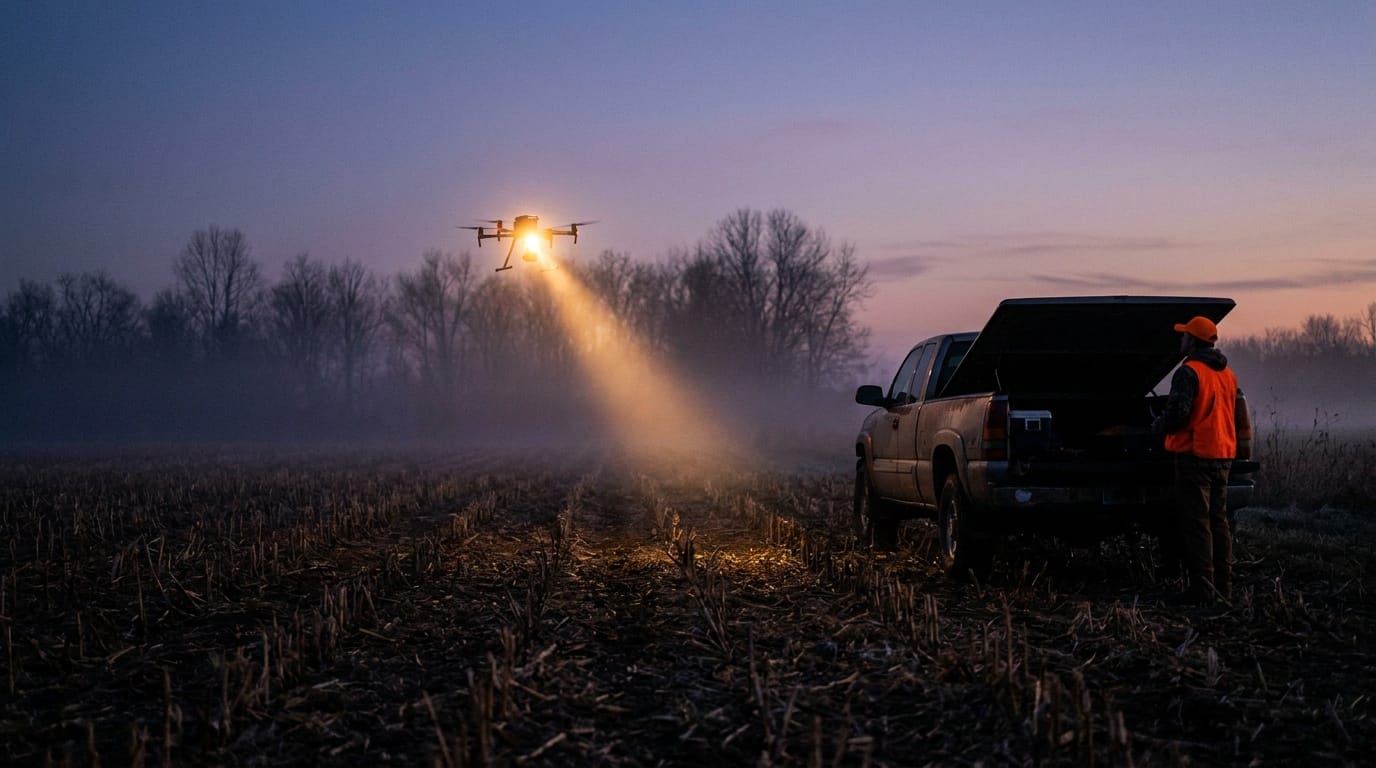
The pitch writes itself: a hunter puts a marginal hit on a buck at last light, tracking dogs are hours away if they exist at all, and a thermal drone can sweep 80 acres in twenty minutes: a deceased animal's heat signature stays detectable for many hours. Operators charge $150–$400 per callout plus mileage. The honest caveats: it's compressed into hunting season (with lost-pet work as the year-round base load), it's a night business with cold-weather battery math, and you're selling attempts: set the expectation that thermal finds bodies, not miracles. Treat it as the anchor line of a thermal-services portfolio, not a standalone income. Where it shines: almost no marginal cost per job, cash at the tailgate, and word-of-mouth economics that compound by county.
The legal stack (read this before buying anything)
- •Federal: paid recovery = commercial operation = Part 107 (free prep at our training hub). Night ops are routine with current recurrent training and 3-statute-mile anti-collision lighting. Standard airspace rules apply: know your local airspace before the season, not during a 9pm callout.
- •State game law, the existential layer: using a drone in the hunt is illegal nearly everywhere; whether recovery of downed game is permitted splits state-by-state (Wisconsin: expressly allowed with conditions; Michigan: treated as prohibited, in litigation; many states: gray). This decides whether your business can exist. Full framework and the five-minute state verification method: our deer-recovery legality explainer.
- •Everything else: liability insurance (clients won't ask; landowners and your lawyer will: see the insurance guide), landowner permission workflows for cross-property recoveries, and written flight logs for every job.
The line that protects your license
Recovery only. No scouting live deer, no relaying bedding locations, no “recovery” flights before a confirmed hit. One operator freelancing across that line invites the next prohibition, and hands wardens a case with your name on it.
The kit
- •Thermal aircraft: 640-class radiometric thermal is the working standard: it separates a deer-sized signature from brush at practical altitudes. Mavic 3T / Matrice 4T-class is the sweet spot; used enterprise thermal is the budget entry; see our payloads guide for the sensor fundamentals.
- •Searchlight: drone-mounted spotlight (plus strobes for FAA lighting): finding the deer is half the job; walking the hunter to it through dark timber is the other half.
- •Batteries: double your summer count: cold-weather recovery flights eat packs. Warm storage in the truck between flights.
- •The truck kit: landing pad or tailgate mat, monitor hood or high-brightness screen, printed permission/liability forms, and a card for every hunter you meet.
Sensor depth in the payloads guide; if public-safety contract work is in your future, factor the compliance question into the aircraft choice now rather than re-buying later.
Running recoveries
- •Intake call: confirmed hit? when? last blood? property boundaries and neighbors? This determines legality, search area, and whether you take the job.
- •Timing: deceased animals hold detectable heat for many hours; earlier is better for signature strength AND beating coyotes to the deer.
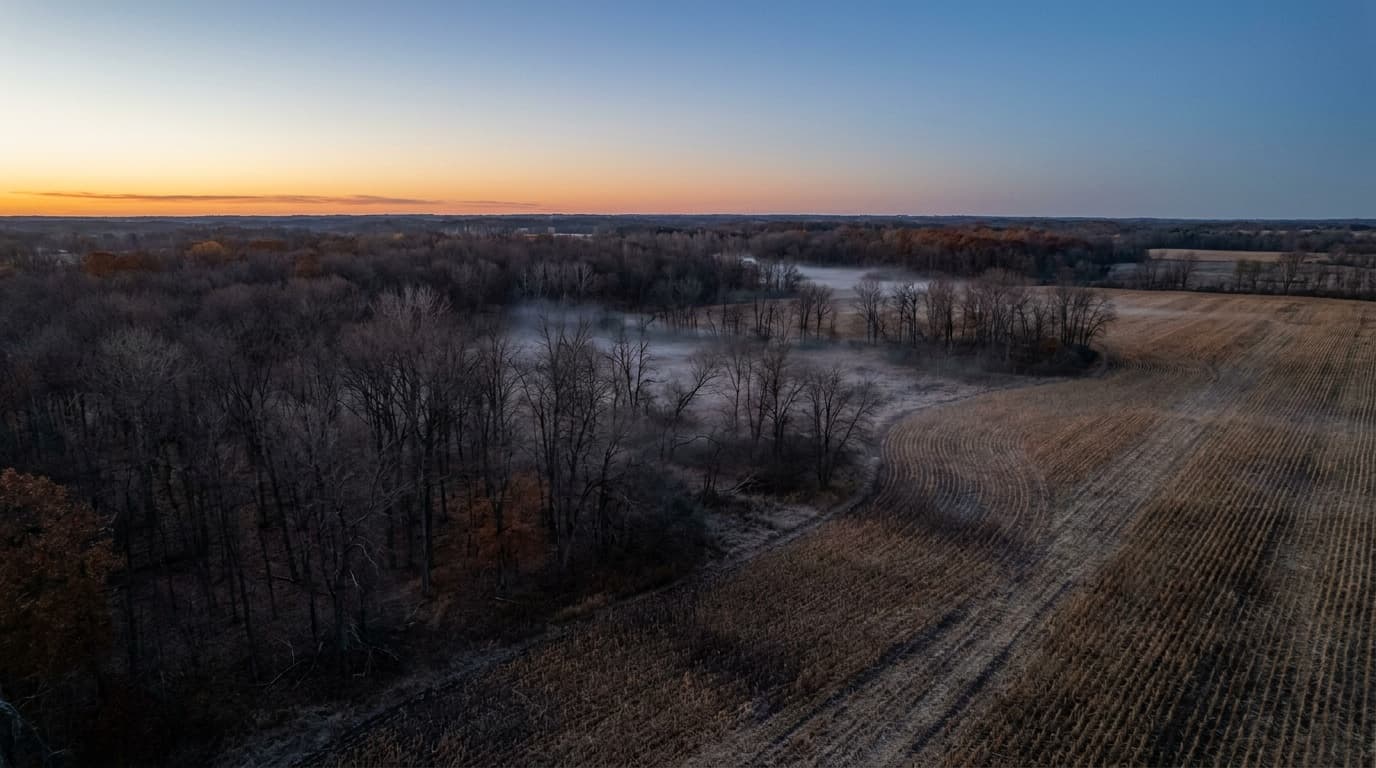
- •Search pattern: altitude high enough to clear obstacles and cover ground, low enough for signature separation; grid the likely travel corridors from last blood, then spiral the bedding cover.
- •Confirmation: drop altitude, spotlight the target, verify it's the animal (not a bedded live deer; see the legal line above) before sending anyone in.
- •The walk-in: GPS pin plus searchlight hold over the animal while the hunter tracks in. Cross-property? Permission first, every time.
- •Log everything: time, location, hit confirmation, outcome. Your records are the niche's best defense, and your marketing (recovery photos, with permission, sell the next ten jobs).
Getting customers
This business is won in October and paid in November. Before the season: introduce yourself to every deer processor and taxidermist in your radius (they hear “I lost one” first, leave a stack of cards), join the county hunting Facebook groups and answer questions without selling, connect with outfitters and lease managers, and get listed in any state recovery-operator directory or network that exists. During season: your marketing is answering the phone at 9pm and posting (permissioned) recovery wins. Pet recovery runs on the same playbook with shelters, vets, and lost-pet groups, and it carries the business from January to September.
Frequently asked questions
- How much do drone deer recovery services charge?
- Typical 2026 pricing: $150-$400 per recovery attempt (attempt, not success; thermal can't find what predators already moved), often structured as a base callout fee plus mileage beyond a radius, with some operators offering success bonuses or flat seasonal arrangements with outfitters. Lost-pet recovery runs similar per-callout economics year-round. Busy operators in strong whitetail regions report multiple calls per night during peak rifle season.
- What drone do I need for deer recovery?
- A radiometric-capable thermal aircraft with a decent spotlight. The working tiers: used/older enterprise thermal (Mavic 2 Enterprise Advanced, M30T class) if budget-constrained; current mid-tier thermal (Mavic 3T-class, Matrice 4T-class) as the sweet spot; heavy enterprise only if you're combining recovery with public-safety contract work. A 640-class sensor materially outperforms 256-class through light brush. Add a drone-mounted searchlight, walking the hunter to the animal is half the service, plus spare batteries for cold-weather burn rates. Compliance note: if you ever want public-safety or government-adjacent work, the NDAA question applies to your aircraft choice too.
- Do I need a license to run a recovery business?
- FAA side: yes, charging for flights makes it commercial, so Part 107, plus current recurrent training and anti-collision lighting for night work (routine since 2021, no waiver). State side: your game law must actually permit drone recovery: expressly legal in some states with conditions, treated as illegal in others, gray in many. That's the layer that decides whether the business can exist in your state at all; our legality explainer covers how to verify it.
- Is deer recovery a full-time business?
- Almost never alone: it's brutally seasonal, compressed into archery and firearm seasons with nightly peaks around opening weekends. Successful operators treat it as one revenue line in a thermal-services portfolio: lost-pet recovery (year-round), roof and solar inspections, ag scouting, and public-safety volunteer/contract work in the off-season. The same aircraft serves all of it, which is what makes the equipment math work.
- How do recovery operators find customers?
- Almost entirely through hunter networks, not ads: county Facebook hunting groups, taxidermists and deer processors (the classic referral sources; they hear about lost deer first), outfitters and hunting leases, local archery shops, and state recovery-operator directories/networks where they exist. Response speed is the product: the operator who answers the phone at 9pm in November owns the county.
Next steps
Open the guide or tool that matches the next decision.